Braised Beef Brisket with Mustard, Honey and Herbs
This slow-braised beef brisket is a Jewish-American-inspired main dish with a savoury-sweet sauce of Dijon mustard, honey, soy sauce, garlic, rosemary and thyme. Brown the meat first, then cook it gently in a tightly covered pot with beef stock until the connective tissue softens and the meat is fork-tender. A 1.8 kg brisket feeds six to eight people. Plan on about five hours, including resting, and slice across the grain for the most tender result. It is well suited to a Hanukkah dinner or other family gathering.
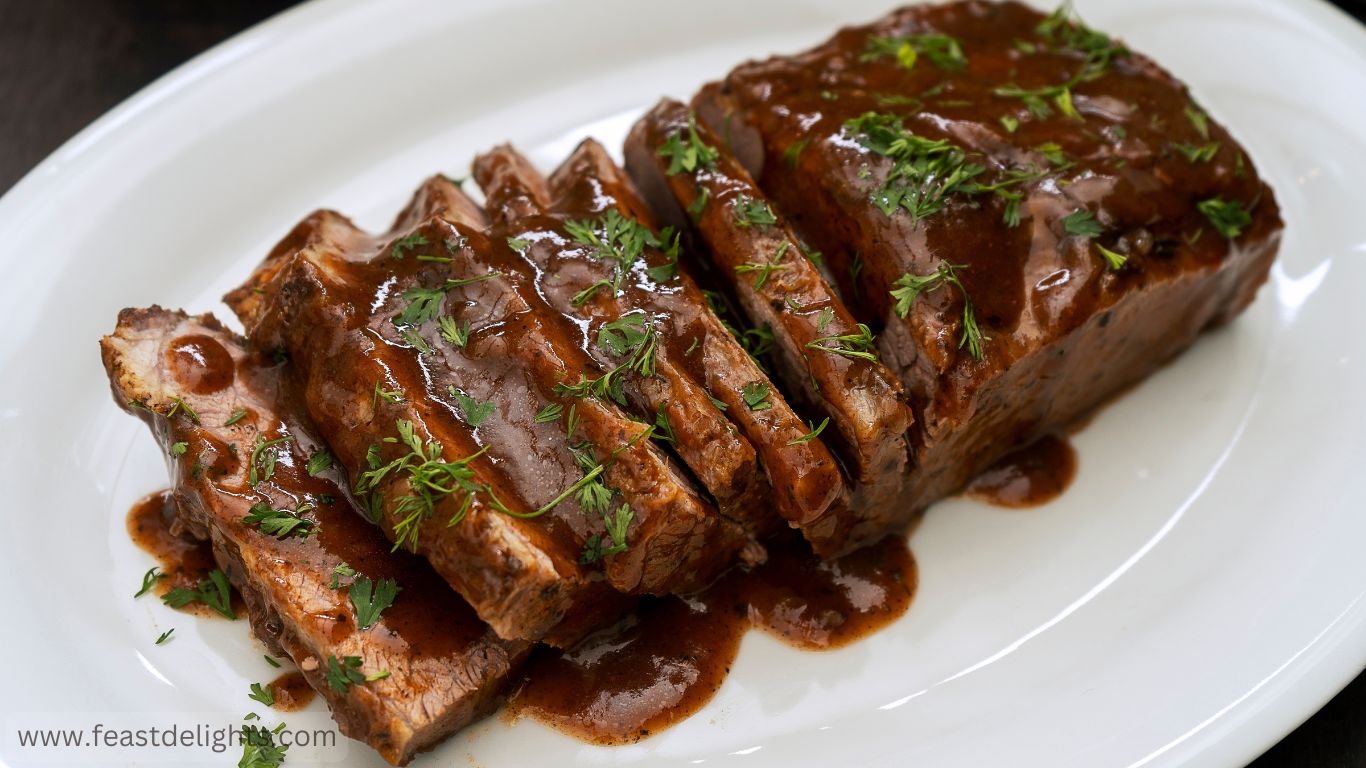
This braised beef brisket combines a 1.8 kg cut of beef with mustard, honey, soy sauce, garlic and fresh herbs. After browning, the meat cooks gently in beef stock in a covered pot until it is tender enough to slice across the grain. The recipe feeds six to eight people and takes approximately four hours and fifty-five minutes. Brisket is a familiar centrepiece at many Jewish holiday meals, including Hanukkah; this particular soy and honey sauce is a home-style adaptation rather than a universal traditional formula.
Choosing the brisket and braising ingredients
Choose an uncured beef brisket that fits comfortably in your oven-safe pot. A flat cut is convenient for carving, whereas a point cut contains more fat and may cook differently. Retain a modest fat layer but remove excessive hard fat if needed. Identify the muscle grain before seasoning because the direction may be harder to see once the meat is cooked. Dijon gives the sauce sharpness, honey balances it and soy sauce contributes salt and savoury flavour. Low-sodium beef stock provides the braising liquid without making the sauce excessively salty. Fresh rosemary and thyme infuse the liquid and can be removed before serving.
Equipment and planning
A heavy covered Dutch oven is useful because it can go from the stovetop to the oven. Choose a pot large enough for the brisket but not so large that the stock spreads into a very shallow layer. Have tongs, a carving board and a thermometer ready. Allow extra time if the cut is especially thick.
Recipe card
Braised Beef Brisket with Mustard, Honey and Herbs
Includes about 15 minutes browning, up to four hours braising and 20 minutes resting. Additional time may be needed for a particularly thick brisket or sauce reduction.
Equipment: Heavy 5–7 litre oven-safe Dutch oven or covered roasting pot, tongs, mixing bowl, whisk, carving board, sharp knife and instant-read thermometer.
Ingredients
Beef and searing
Braising liquid and herbs
Instructions
Season and brown the brisket
Preheat a conventional oven to 160°C (320°F). Pat the brisket dry and note the direction of the grain before cooking. Trim only excessive hard fat if needed. Season with the salt and pepper. Heat oil in a heavy oven-safe covered pot over medium-high heat and brown the brisket on all sides, about 10–15 minutes total. Transfer to a plate.
Prepare the braising sauce
Whisk the soy sauce, Dijon mustard, honey, minced garlic and low-sodium beef stock. Pour a little into the pot and scrape up the browned bits, avoiding any burnt residue.
Braise gently until tender
Return the brisket to the pot, add rosemary and thyme and pour the remaining sauce around the meat. Bring to a gentle simmer, cover tightly and transfer to the oven. Braise for 3–4 hours, turning once if practical and checking that liquid remains in the pot. Add hot unsalted stock if it becomes too dry. The meat should be fork-tender; continue in 20-minute intervals if necessary. Whole beef requires at least 63°C (145°F) and a 3-minute rest for safety, but brisket generally needs much longer cooking to soften.
Rest and finish the sauce
Transfer the brisket to a clean board and tent loosely with foil for 20 minutes. Remove the herb stems, skim excess fat from the sauce and taste. Reduce gently if too thin or dilute with unsalted stock if too salty.
Slice across the grain
Cut the rested brisket into thin slices perpendicular to the muscle fibres. Arrange on a warm platter, spoon over some sauce and serve the remaining sauce separately.
How to braise brisket until tender
Brown the dry seasoned meat before adding liquid. This creates a deeper savoury flavour. Scrape the browned residue from the pot with some stock and avoid incorporating burnt bits. Return the meat, add the herbs and cover tightly. The liquid should simmer gently rather than boil aggressively. Beef braising guidelines provide useful general cooking ranges, but thickness and the individual cut determine when this brisket becomes tender. Start checking at three hours. A fork should enter the meat without much resistance. The FoodSafety.gov temperature chart gives 63°C (145°F) with a three-minute rest as the minimum for whole beef cuts; that temperature alone is not a tenderness target for brisket. Continue braising until the connective tissue has softened.
Resting, slicing and sauce
Rest the cooked brisket for about 20 minutes under loose foil. Skim the surface fat from the sauce and remove the herb stems. Reduce an overly thin sauce gently before serving. Slice the brisket perpendicular to the visible muscle fibres. Long fibres make even thoroughly cooked beef seem chewy, so cutting across them matters.
Troubleshooting
The brisket is tough
Keep it covered and continue cooking until fork-tender. Check the liquid and add hot unsalted stock if needed. Do not rely on a fixed cooking time.
The sauce is too salty
Use a lower-sodium soy sauce and stock next time. Dilute the finished sauce with unsalted stock rather than reducing it further.
The meat seems dry
Slice thinly across the grain and coat with warm pan juices. Keep the pot covered during braising and avoid unnecessary high heat.
Serving and variations
Serve with crisp potato latkes, tomato-braised cabbage or roasted vegetables. For a different method, see our slow cooker brisket with onion gravy. A little orange zest is an optional addition to this sauce. For a kosher meal, verify the certification and suitability of all ingredients and equipment, rather than assuming that a holiday recipe is automatically kosher.
Make ahead, storage and allergens
Divide brisket and sauce into shallow covered containers and refrigerate at 4°C (40°F) or below within 2 hours (1 hour above 32°C/90°F). Use within 3 days, or freeze for up to 2 months for best quality. Thaw in the refrigerator and reheat gently in the sauce until the meat reaches 74°C (165°F). Contains soy and mustard; ordinary soy sauce may contain wheat. Check stock and other packaged ingredients for allergens and dietary suitability.
Frequently asked questions
Which brisket cut is best for braising?
A flat cut slices neatly; a fattier point cut can be richer and may take longer. Choose a piece that fits comfortably in the covered pot.
Why is my brisket still tough after three hours?
The connective tissue may need more time. Keep the pot covered, ensure liquid remains and cook in 20-minute intervals until a fork enters easily.
Can I make brisket the day before?
Yes. Slice or divide it for prompt cooling, refrigerate in its sauce and reheat gently to 74°C (165°F) before serving.
Can I replace soy sauce with tamari?
Yes, use a comparable lower-sodium tamari and check the label if avoiding gluten. Taste before adding more salt.
Do I need to cover the brisket?
Yes. A tight lid traps moisture and supports gentle braising. An uncovered roast may dry out before the connective tissue softens.
Is this brisket automatically kosher for Hanukkah?
No. Use appropriately certified ingredients, meat and equipment according to your requirements. The cooking method alone does not establish kosher status.
More recipes to try






Spotted a detail that needs correcting? Contact the FeastDelights editors.