Tomato-Braised Cabbage with Carrot and Dill
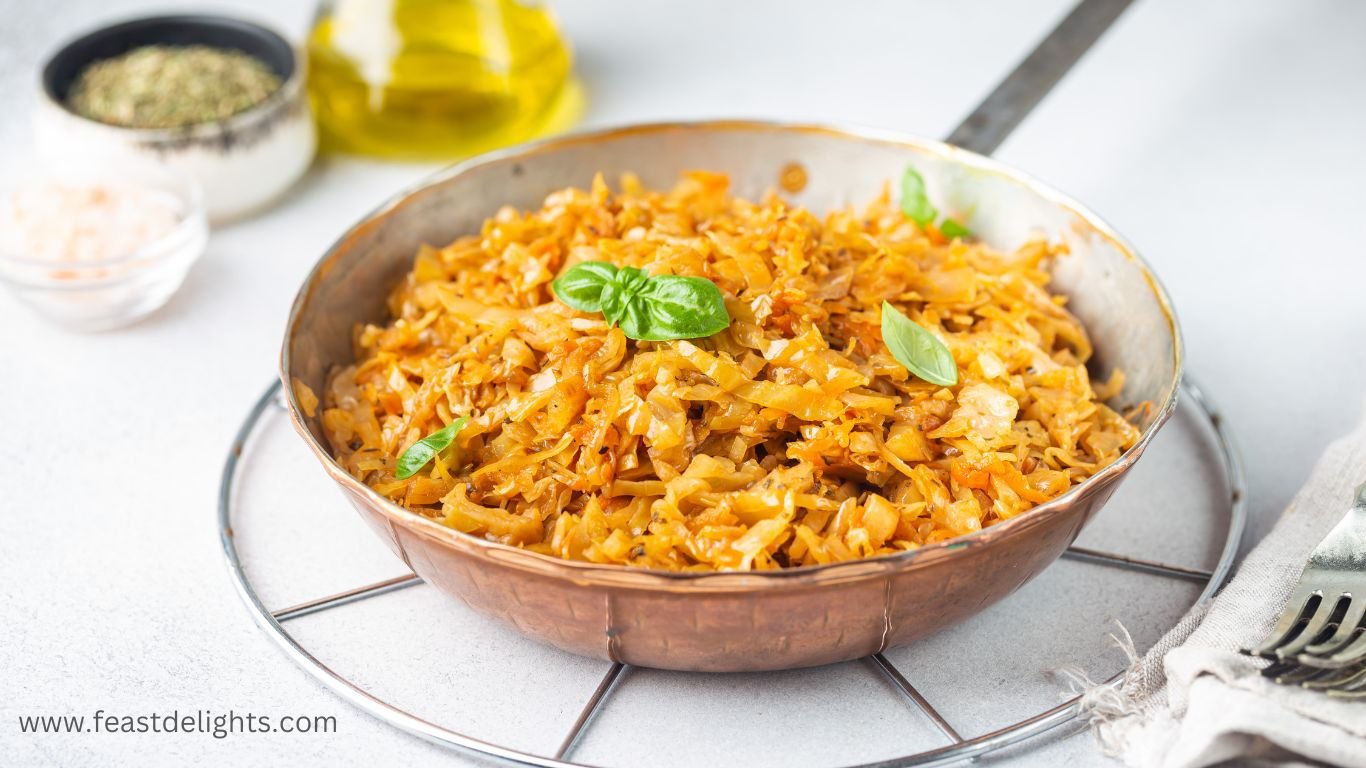
Tomato-braised cabbage is a comforting Eastern European-inspired vegetable side dish with tender ribbons of green cabbage, sweet carrot and onion, and a savoury tomato sauce. A bay leaf gives the braise a gentle aroma, while cider vinegar and fresh dill brighten the finished dish. Cook it slowly under a lid until the cabbage is soft but not mushy. This recipe makes six side servings in about 70 minutes. Serve warm with boiled potatoes, rye bread or a spoonful of sour cream.
This stewed cabbage uses fresh green cabbage rather than sauerkraut. The vegetables soften in their own juices and a little stock, with tomato paste and chopped tomatoes adding body. It is a useful meatless side that can also be served with grains or beans for a larger meal.
Ingredients and equipment
Choose a firm medium green or white cabbage weighing roughly 1 kg (2.2 lb). Remove damaged outer leaves and the tough central core. Slice the remaining cabbage into ribbons about 5 mm thick; uniform pieces soften evenly without disappearing into the sauce. Grate the carrot and thinly slice the onion. Their natural sweetness balances the acidity of the tomatoes. The 400 g of chopped tomatoes can be fresh or canned; if using fresh, choose ripe ones. Tomato paste contributes concentration and colour, while 250 ml (about one US cup) of vegetable stock or water supplies moisture. Use low-salt stock if possible, and add the measured salt gradually.
A deep 4–5 litre sauté pan or Dutch oven with a lid, knife, grater, measuring jug and spatula are sufficient. Fresh cabbage looks bulky before cooking, so add it in batches if it does not initially fit.
Recipe card
Tomato-Braised Cabbage with Carrot and Dill
Includes wilting cabbage, bringing the liquid to a simmer and final reduction; older cabbage may take longer.
Equipment: Deep 4–5 litre covered pan, knife, board, grater, measuring jug and spatula
Ingredients
Vegetables and oil
Tomato braise
To finish
Instructions
Soften onion and carrot
Heat oil in a large deep pan over medium heat. Cook sliced onion and grated carrot about 5 minutes until softened.
Wilt the cabbage in batches
Remove tough core and shred cabbage evenly. Stir into the pan in batches, allowing each batch to wilt before adding more.
Add the tomato braising liquid
Mix tomato paste, chopped tomatoes and vegetable stock or water. Pour over the cabbage, add bay leaf, salt and black pepper and bring to a gentle simmer.
Cover and simmer until tender
Cover, reduce heat and simmer gently for 35–45 minutes, stirring every 10 minutes. Add a splash of water if drying out. Check that the thickest cabbage ribbons are tender; uncover briefly to reduce excess liquid if needed.
Season with vinegar
Stir in cider vinegar to taste, remove bay leaf and adjust seasoning.
Finish with fresh dill
Scatter chopped dill over the cabbage and serve warm in six side portions.
How to braise cabbage without making it watery
Soften onion and carrot in oil over medium heat until the onion turns translucent. Add cabbage a handful at a time, stirring until the first batch begins to wilt before adding more. Mix the tomato paste with chopped tomatoes and stock before pouring into the pan so the paste distributes evenly. Add bay leaf and seasoning. Bring the liquid to a gentle simmer, then reduce the heat and cover. Stir every ten minutes, lifting cabbage from the base. The cabbage should soften gradually rather than fry dry or boil vigorously. If the base begins to catch, add a small splash of water.
After 35 minutes, test a thicker ribbon of cabbage. It should bend easily and be tender when bitten, but still retain its shape. If there is more liquid than desired, simmer uncovered for several minutes. Add cider vinegar near the end: its acidity gives a fresher finish than adding it before the long braise. Remove the bay leaf and scatter fresh dill over the dish.
Troubleshooting
Cabbage remains tough: cover and continue simmering in small increments, checking the thicker pieces. Too watery: uncover and reduce gently, stirring frequently. Too acidic: add a little more cooked carrot or a small pinch of sugar if necessary. Too salty: add unsalted cooked cabbage or a splash of water. Scorched base: reduce the heat, use a heavy pan and stir more frequently as the sauce reduces.
Variations and serving
White cabbage is a direct alternative; red cabbage will give a different colour and may take longer. Add separately browned mushrooms for more savoury depth, or a small pinch of caraway for a warmer flavour. For a non-vegetarian variation, stir in fully cooked sausage and heat through. Serve with homemade rye bread, Ukrainian potato deruny or vegan lentil meatballs. The basic recipe is plant-based when made with vegetable stock; optional sour cream contains milk.
Make ahead and storage
Shred the cabbage and prepare the aromatics the day before if desired, keeping them covered in the refrigerator. The cooked dish reheats well. Refrigerate in shallow covered containers within two hours, or one hour above 32°C (90°F). Keep at 4°C (40°F) or colder for up to four days. Freeze for up to two months for best quality; the cabbage may soften. Thaw in the refrigerator and reheat with a little water to 74°C (165°F). Follow FoodSafety.gov leftover guidance. Check stock for celery, wheat or other allergens.
Finish with vinegar and dill once the cabbage is tender, then taste before adding any extra salt. Serve warm with potatoes or bread.
Frequently asked questions
Can I use Savoy cabbage?
Yes. Its thinner leaves may soften sooner, so check early.
Can I use sauerkraut instead?
Not directly. Sauerkraut is already fermented and much more acidic; the liquid and vinegar would need adjusting.
Can I omit the vinegar?
Yes. Taste the tomatoes first; a little lemon juice is another finishing option.
Can I make this without tomato paste?
You can, but the sauce will be less concentrated. Reduce the liquid a little longer.
Should the cabbage be crunchy?
It should be tender but retain its shape. Cook longer if you prefer a softer texture.
Can I double it?
Yes, use a larger wide pot or two pans so the cabbage cooks evenly.
More recipes to try



Spotted a detail that needs correcting? Contact the FeastDelights editors.