Vegetarian Pesto Pasta with Basil and Pine Nuts
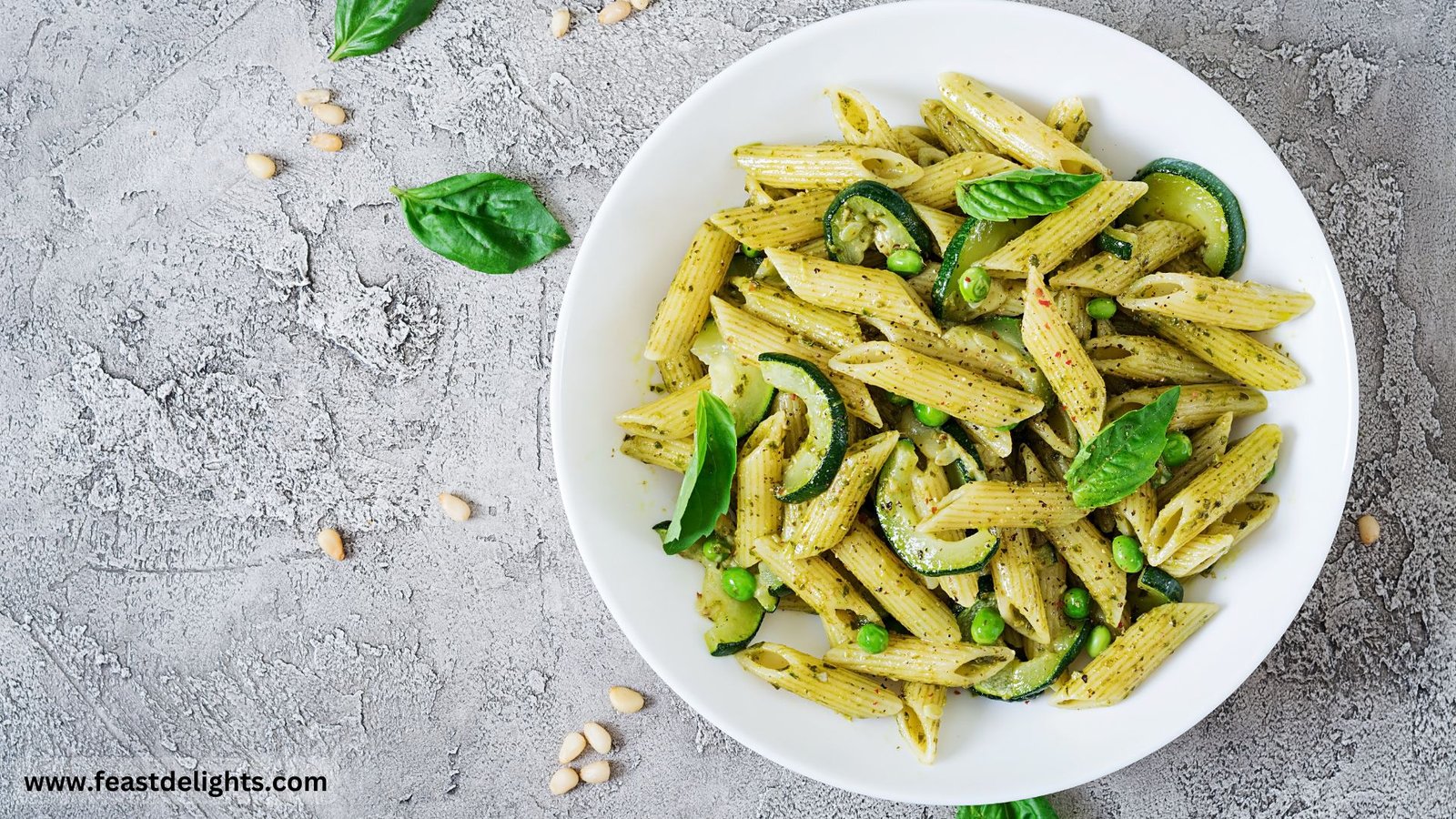
This vegetarian pesto pasta coats fusilli or penne in a fresh basil sauce with pine nuts, garlic, olive oil and finely grated vegetarian Italian-style hard cheese. The pesto stays uncooked, preserving its fragrant basil flavour, while a splash of starchy pasta water helps the sauce cling to the ridges and curves. Four servings take about 27 minutes, making this a practical weeknight main. Choose cheese labelled suitable for vegetarians rather than traditional Parmigiano Reggiano, and serve the pasta warm.
Vegetarian pesto pasta is a quick Italian-inspired main dish made with uncooked basil pesto, pine nuts, garlic and vegetarian Italian-style hard cheese. This version serves four and takes about 27 minutes. Reserved pasta water helps the pesto coat fusilli or penne without leaving the dish greasy.
Recipe card
Vegetarian Pesto Pasta with Basil and Pine Nuts
Equipment: Large saucepan, colander, heatproof measuring cup, food processor or mortar and pestle, fine grater and mixing bowl.
Ingredients
Pasta and seasoning
Basil pesto
Pasta and seasoning
Instructions
Cook the pasta and reserve water
Bring a large saucepan of salted water to a rolling boil. Add the pasta, stir and cook according to the packet, about 8–12 minutes, until tender with slight resistance and no chalky centre. Reserve 120 ml (1/2 US cup) of the cooking water before draining. Do not rinse.
Pulse the basil pesto
While the pasta cooks, pulse dry basil, pine nuts, garlic and grated vegetarian cheese in a processor. Scrape the bowl and drizzle in the oil while pulsing until spoonable and flecked with basil. Taste and add some of the measured salt if needed.
Toss off the heat
Return drained pasta to the saucepan off the heat. Add pesto and 2 tablespoons reserved water. Toss, adding more water a tablespoon at a time until evenly coated. Do not boil the pesto.
Season and serve
Add pepper and remaining salt to taste. Divide among four bowls. The pasta should look glossy without a pool of oil.
Choosing the ingredients
Short pasta with ridges or twists holds the small pieces of basil and nuts particularly well. Fresh basil is the defining ingredient; dried basil cannot reproduce its texture or fragrance. Wash and gently dry the leaves so they do not dilute the sauce.
Pine nuts add a mild, buttery flavour. Raw garlic gives the sauce its sharp edge, and extra-virgin olive oil carries the aroma. Choose an Italian-style hard cheese labelled suitable for vegetarians. Traditional Parmigiano Reggiano uses calf rennet, so the original 40 g cheese quantity is retained but the type is corrected to suit this recipe’s vegetarian intent.
How to get a silky pesto coating
Stir pasta during the first minute of cooking and taste a piece near the end of its package time. It should be tender with slight resistance, not hard or floury inside. Before draining, scoop out half a cup of cloudy cooking water. Do not rinse away the starch.
Make the pesto while the pasta boils. Pulse the processor in short bursts, scraping down the sides. A coarse texture is desirable; the mixture should be thick enough to scoop. Heating pesto in a frying pan can dull its colour and make the oil separate.
Start with two tablespoons of warm reserved water and toss the drained pasta and pesto off the heat. Add more water gradually. If the sauce looks watery, keep tossing before adding any more liquid. Taste before adding salt because both the cheese and cooking water contribute seasoning.
Troubleshooting and substitutions
If the pasta seems dry, add reserved water by the tablespoon. If the pesto is bitter, check the freshness of the nuts and oil. Lemon can balance the flavour but cannot fix rancid ingredients. Use a smaller garlic clove next time if the raw garlic tastes overpowering.
Walnuts can replace pine nuts by weight for a more earthy flavour. Sunflower seeds are another possible substitute, subject to individual allergy needs and label checks. For dairy-free cooking, try the separate vegan basil pesto pasta with cashews if cashews are suitable.
What to serve with pesto pasta
Serve with roasted tomatoes, grilled courgettes or leafy greens with a lemon dressing. Extra pesto can also be used for pressed vegetable panini. The classic basil pesto sauce is another useful starting point; use vegetarian cheese when appropriate.
Make ahead and storage
Homemade pesto contains raw garlic and oil, so keep it cold rather than on the counter. The National Center for Home Food Preservation recommends refrigerating fresh pesto for no more than three days or freezing it. Chill leftovers in shallow containers within two hours (one hour above 32°C/90°F), at 4°C (40°F) or colder. Use within three days. Reheat leftover pasta to 74°C (165°F), adding water to loosen the coating. The basil may darken. Freeze the sauce separately for best texture and thaw in the refrigerator.
Allergens: wheat, milk and pine nuts; some pasta contains egg. Check labels and avoid cross-contact when making substitutions.
Frequently asked questions
Is traditional Parmesan vegetarian?
Parmigiano Reggiano is made with calf rennet. Choose a hard cheese explicitly labelled suitable for vegetarians.
Why is the sauce oily?
Toss off the heat with a little warm starchy cooking water until the sauce clings.
Can I make pesto by hand?
Crush the basil, garlic and pine nuts in a mortar, then stir in cheese and oil for a rustic texture.
Can I use spaghetti?
Yes. Use the same dry weight and follow the package timing. Toss well to coat the strands.
Can I freeze pesto?
Freeze freshly prepared pesto in small sealed portions and thaw in the refrigerator. Do not keep homemade pesto at room temperature.
Can I make this vegan?
Use egg-free pasta and a dairy-free pesto, checking the labels for animal-derived ingredients.
More recipes to try






Spotted a detail that needs correcting? Contact the FeastDelights editors.