Vegan Basil Pesto Pasta with Cashews
This vegan basil pesto pasta combines fresh basil, cashews, garlic, extra-virgin olive oil, lemon and nutritional yeast in a vibrant green sauce. The nuts give the pesto body, while nutritional yeast adds savoury depth without Parmesan. Tossing the sauce with hot pasta away from direct heat preserves its fresh herbal flavour, and a splash of starchy cooking water makes it easier to distribute. Four servings are ready in about 25 minutes, with optional cherry tomatoes or roasted vegetables on the side.
Vegan pesto pasta is an Italian-inspired adaptation of basil pesto that uses cashews and nutritional yeast instead of the usual pine nuts and cheese. The method is simple: make the uncooked pesto while the pasta boils, then toss them together just before serving. Keep the sauce cool and avoid prolonged blending for the freshest basil flavour.
Choosing ingredients for dairy-free basil pesto
Use fresh, fragrant basil with green leaves. Remove the thick stems, rinse the leaves gently and dry them well before measuring the 50 g needed for the sauce. The exact cup volume varies according to leaf size and how tightly they are packed, so weighing is preferable. Wet basil can make the sauce watery. Cashews give this version a softer, creamier texture than pine nuts. Raw unsalted cashews are mild; lightly toasted cashews add a nuttier flavour. Let toasted nuts cool completely before adding basil.
Use extra-virgin olive oil that tastes pleasant on its own. Strongly bitter oil can dominate a delicate herb sauce, especially when blended at high speed. Nutritional yeast is an inactive, savoury seasoning, not bread yeast. Lemon juice adds acidity and lifts the flavour; it does not make homemade pesto shelf-stable. Fresh garlic is particularly assertive in an uncooked sauce, so taste carefully before adding more. Dried egg-free pasta is suitable for this recipe. Check its label and choose any shape with enough surface area to hold the sauce, such as fusilli, penne or spaghetti.
Equipment and timing
Use a large pot, colander, measuring jug, kitchen scale, food processor or blender, flexible spatula and serving bowl. Have a cup ready to scoop out cooking water before draining the pasta. The recipe takes about 25 minutes, with most of the pesto preparation taking place while the pasta water heats and the noodles cook.
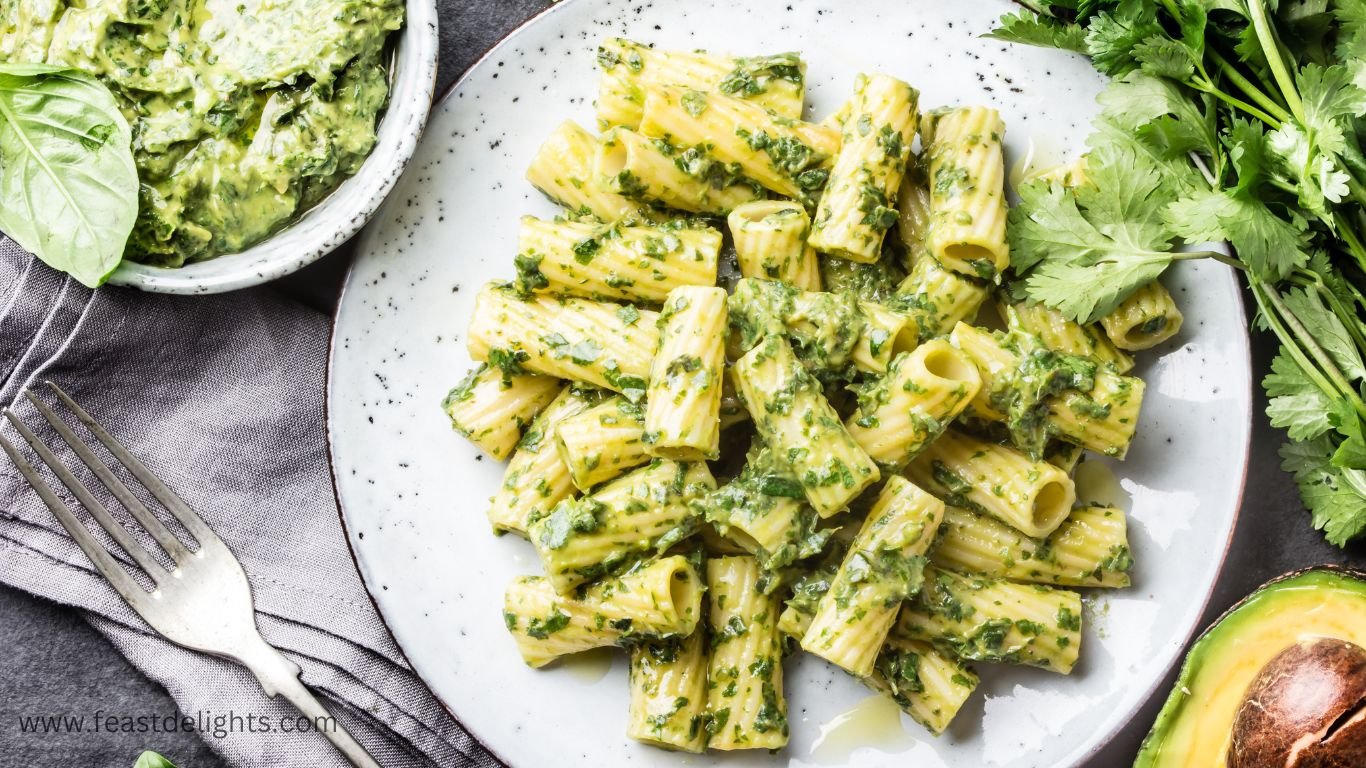
Recipe card
Vegan Basil Pesto Pasta with Cashews
Prepare the pesto while the pasta cooks.
Equipment: Large pot, colander, scale, measuring jug, food processor or blender, spatula and serving bowl
Ingredients
Pasta
Basil pesto
Instructions
Cook the pasta
Bring a large pot of salted water to a boil and cook the egg-free pasta according to the packet until al dente. Reserve at least 120 ml of cooking water, then drain.
Pulse the basil and cashews
Meanwhile pulse cashews and garlic in a food processor until roughly chopped. Add washed, dried basil leaves, nutritional yeast, olive oil, lemon juice, salt and pepper. Pulse in short bursts, scraping down the bowl until finely chopped and mostly smooth.
Loosen the pesto
Allow the reserved pasta water to cool briefly. Stir or pulse a spoonful at a time into the pesto until it coats a spoon but is easy to distribute.
Toss off the heat
Return the drained pasta to the warm pot with the heat off. Add the pesto and toss thoroughly, adding a little more of the reserved water if necessary until glossy.
Adjust seasoning
Taste and adjust lemon juice, salt and pepper if needed, taking the salt in the pasta water into account.
Serve warm
Divide into four bowls and serve straight away with optional extra basil or unsalted cashews.
How to make bright green pesto
Pulse the cashews and garlic first to break up larger pieces. Add basil, nutritional yeast, lemon juice, salt and pepper, followed by the oil, and pulse in short bursts until the leaves are finely chopped. Scrape the bowl between pulses rather than running the blades continuously. The pesto can retain small flecks of basil and nuts; it does not need to resemble a perfectly smooth cream sauce. Excessive blending warms the herbs and can make some olive oils taste more bitter.
Once the pasta is nearly ready, scoop out roughly half a US cup of its cooking water, plus a little extra if needed. Let it cool briefly before stirring it into the pesto a spoonful at a time. This helps the thick sauce coat the noodles without requiring more oil. A good consistency is loose enough to fall from a spoon but thick enough to cling to pasta. Return the drained pasta to its warm pot with the heat turned off. Toss with the pesto and adjust the consistency gradually rather than pouring in all the water. Taste for salt, as the cooking water may already be well seasoned.
Troubleshooting
Pesto turns dark: dry the basil, work quickly and avoid overheating it in the processor. Some darkening during storage is normal. Too thick: stir in more reserved cooking water, one tablespoon at a time. Too thin: stop adding water and, if necessary, pulse in a few extra cashews. Bitter flavour: use a milder olive oil, avoid prolonged blending and taste before adjusting with a little lemon juice. Strong raw garlic: add a little extra basil and nuts, or use less garlic next time. Pasta feels dry: toss with another small splash of warm cooking water just before serving.
Substitutions and variations
Walnuts produce a more earthy sauce, while sunflower seeds are a possible nut-free alternative if suitable for the person eating them. The flavour and texture will differ, and ingredients must be checked for cross-contact. Pine nuts are another option. Replace some basil with flat-leaf parsley for a less intensely basil-flavoured pesto. A pinch of chilli flakes provides gentle heat. For gluten-free pasta, choose an egg-free variety with appropriate allergen labelling; its cooking water may have different thickening properties.
Serving suggestions
Toss in halved cherry tomatoes or separately roasted courgette for a contrast with the green sauce. Serve with cauliflower, cucumber and tomato salad. For another creamy plant-based dinner, try cashew vegan Alfredo pasta or vegan tofu carbonara. The site’s vegetarian pine nut pesto pasta and classic basil pesto sauce are distinct alternatives; check their cheese ingredients if avoiding dairy.
Make ahead, storage and allergens
Prepare the pesto shortly before eating for the brightest colour. If making ahead, store the sauce separately from pasta. Refrigerate unused fresh pesto immediately in a clean covered container at 4°C (40°F) or colder and use within three days, or freeze promptly in small portions for up to two months for best quality. Do not store homemade garlic-and-herb pesto at room temperature or attempt to make it shelf-stable. Refrigerate cooked pasta in shallow containers within two hours (one hour above 32°C/90°F) and use within three days. Reheat leftovers to 74°C (165°F) throughout. The CDC’s guidance on homemade garlic and herb oils explains why refrigeration and short storage periods matter. An oil layer may reduce contact with air but is not a preservation method. This recipe contains cashews (tree nuts) and normally wheat. Check nutritional yeast, pasta and alternative seeds for allergen information.
Add only as much cooking water as the pesto needs to coat the noodles. Finish with fresh basil or a few cashews and serve while the pasta is warm.
Frequently asked questions
Do cashews need soaking for pesto?
No. This pesto is meant to have a finely textured consistency. A food processor can break raw or lightly toasted nuts into small pieces.
Can I use dried basil?
No. Dried basil cannot replace the volume, moisture and fresh flavour of the leaves in this recipe.
Is nutritional yeast the same as active yeast?
No. Nutritional yeast is inactive and used for its savoury flavour. Active bread yeast is not a suitable replacement.
Can pesto be made without a food processor?
Yes. Use a large mortar and pestle, crushing garlic and nuts first, then incorporating basil and the remaining ingredients gradually.
Can I eat this pasta cold?
Yes, if cooled promptly and kept refrigerated. Add a little extra pesto or lemon juice just before serving if it seems dry.
Does the lemon juice make pesto safe to store at room temperature?
No. This is a fresh refrigerated or frozen sauce, not a tested shelf-stable preserve.
More recipes to try


Spotted a detail that needs correcting? Contact the FeastDelights editors.