Vegetarian Pad Kee Mao with Thai Basil
Vegetarian pad kee mao, or Thai drunken noodles, combines wide rice noodles with garlic, red chillies, crisp-tender broccoli and carrot in a savoury, lightly sweet soy-based sauce. Thai basil adds a distinctive herbal fragrance when folded through the hot noodles at the end. This Thai-inspired version makes three servings in about 32 minutes and uses vegetarian oyster-style sauce instead of seafood-based seasonings. Have the vegetables chopped, sauce mixed and noodles drained before heating the wok so the stir-fry stays quick and the noodles do not turn mushy.
Vegetarian pad kee mao (drunken noodles) is a Thai-inspired stir-fry of broad rice noodles, vegetables, garlic, chilli and basil. This version serves three in about 32 minutes. A mix of light and dark soy sauce, sugar and vegetarian oyster-style sauce coats the noodles without needing fish sauce.
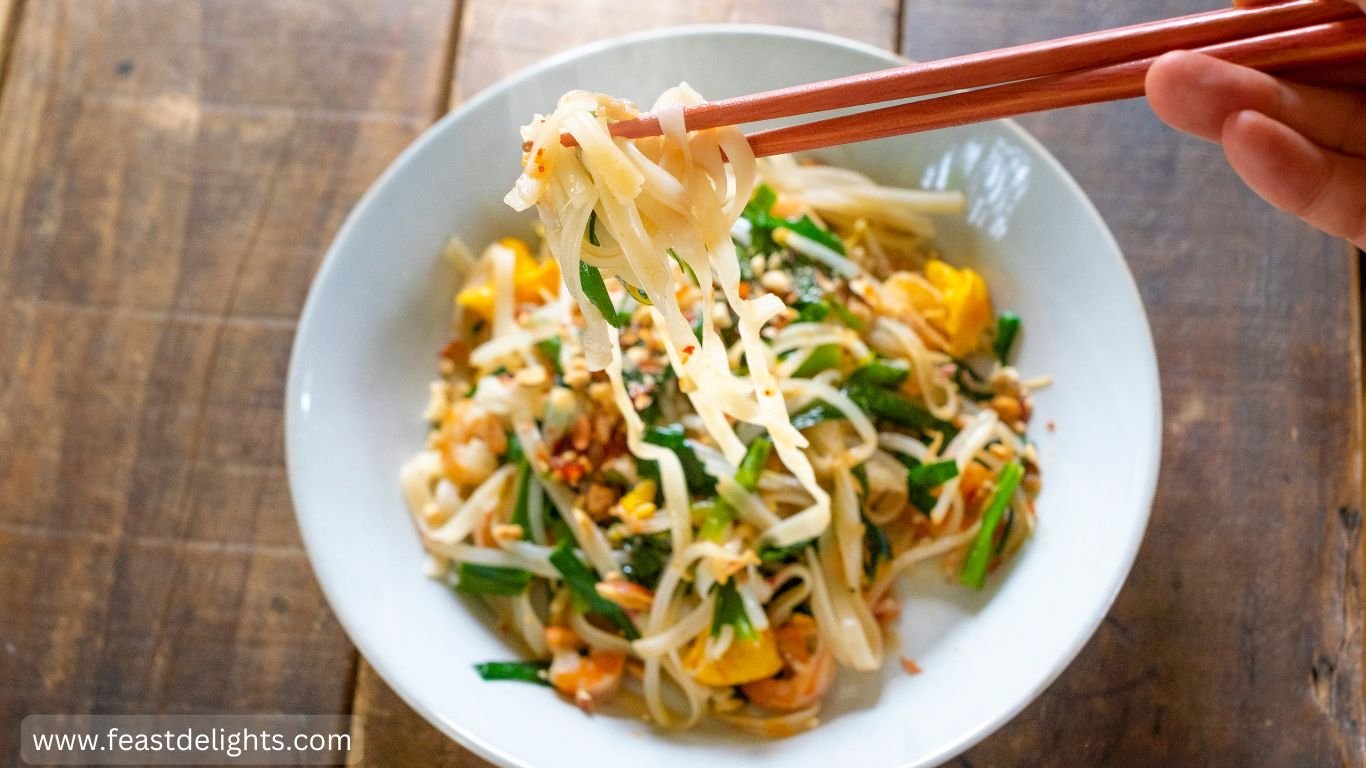
Recipe card
Vegetarian Pad Kee Mao with Thai Basil
Equipment: Wok or large skillet, saucepan or heatproof bowl for noodles, colander, knife, chopping board, small bowl and tongs.
Ingredients
Noodles
Stir-fry
Sauce
Finish
Instructions
Prepare the wide rice noodles
Follow the packet directions for soaking or boiling the dried noodles, stopping when pliable but still slightly firm. Drain thoroughly and rinse briefly with cool water if the packet permits. Do not leave them sitting in water.
Mix the stir-fry sauce
Stir light soy, dark soy, brown sugar, vegetarian oyster-style sauce and sesame oil together until the sugar is mostly dissolved. Keep beside the wok.
Fry garlic and chilli briefly
Heat a stable wok or large skillet over medium-high to high heat, within the cookware's heat limits. Add neutral oil, then garlic and chillies. Stir for about 20 seconds until fragrant, without letting garlic darken.
Stir-fry the vegetables
Add the thin carrot sticks and small broccoli florets with 2 tablespoons of water. Toss for 2–3 minutes until the broccoli is bright green and the vegetables are crisp-tender.
Toss noodles with sauce
Add the drained noodles and sauce. Lift and turn gently with tongs for 2–3 minutes until the noodles are tender, hot throughout and evenly coated. If they stick, add a tablespoon of water; if still firm, cook briefly longer.
Fold in basil and serve
Turn off the heat and fold in the Thai basil until just wilted. Divide into three portions and serve with lime wedges.
Choosing the noodles and basil
Wide dried rice noodles offer a soft, chewy texture and a broad surface for the sauce. Different brands require different soaking or boiling times, so follow the packet rather than a universal soaking time. The noodles should bend easily but still have a little firmness before they reach the wok. Drain thoroughly: water trapped between the noodles can dilute the sauce and cause steaming.
Holy basil is commonly used in Thai pad kee mao; this adaptation uses Thai basil for its fragrant, slightly anise-like character. Either works, but the flavour differs. Add the leaves at the end rather than frying them with the garlic. Ordinary sweet basil is a possible substitute when neither Thai variety is available, though the result will taste different.
How the sauce works
Light soy sauce provides salt and savoury flavour; dark soy contributes colour and depth. Brown sugar balances chilli and salt. Choose a vegetarian oyster-style sauce, often mushroom-based, rather than regular oyster sauce. Check labels carefully because seafood-derived ingredients can appear in Asian seasoning sauces. Mix the sauce before cooking so the sugar disperses evenly and the noodles do not sit in the hot wok while you measure ingredients.
Stir-frying without soggy noodles
Cut carrots into thin sticks and broccoli into small florets so they cook in similar time. Use a wide pan with enough space for tossing. Heat it within the manufacturer’s limits, then stir garlic and chilli briefly in oil. If the garlic starts browning immediately, lower the heat before adding vegetables.
A little water helps the broccoli cook through without scorching. Once the vegetables are bright and crisp-tender, add the noodles and sauce. Lift rather than chop through the noodles with a spatula. If the pan is crowded, divide into batches. Taste a noodle before serving: it should be supple, coated and hot, with no dry core. Fold in basil off the heat and serve with lime.
Troubleshooting and substitutions
Sticky noodles usually need a little moisture or more room in the pan. Add water by the tablespoon, not more soy sauce. If the sauce is too salty, toss in extra cooked unsalted vegetables rather than adding sugar alone. If the noodles become mushy, reduce the initial soaking time next time. Chinese broccoli can replace ordinary broccoli; slice its thick stems separately so they soften at the same rate as the leaves.
For a more substantial meal, add separately browned firm tofu. The tofu and vegetable stir-fry is another option for a soy-and-sesame sauce. For a tangier noodle dish, try vegan tofu pad Thai or vegetable pad Thai with egg and tamarind. Pad Thai has a different sauce profile; it is not another name for pad kee mao.
Serving, storage and allergens
Serve immediately with lime wedges or a refreshing cucumber salad. Chop vegetables and mix the sauce ahead, refrigerating them separately, but prepare the noodles close to cooking time. Chill leftover noodles promptly in shallow containers at 4°C (40°F) or colder within two hours, or one hour above 32°C (90°F). Use within two days and reheat once to 74°C (165°F). Add a little water to loosen the noodles. Freezing can make their texture brittle or soft. See FoodSafety.gov for safe cooling and reheating.
Allergens: soy and sesame; soy sauce and vegetarian stir-fry sauce may contain wheat. Check all labels and cross-contact risks. Handle chillies carefully and wash hands before touching eyes.
Frequently asked questions
Does drunken noodles contain alcohol?
This recipe contains no added alcohol. The name refers to the dish, not an ingredient required for this version.
Can I use holy basil?
Yes. Holy basil is traditional in pad kee mao and gives a peppery herbal flavour. Thai basil has a more anise-like aroma.
Why are my rice noodles breaking?
They may be too soft before frying. Drain when just pliable and lift gently with tongs instead of stirring vigorously.
Is oyster-style sauce vegetarian?
Only if the product is labelled vegetarian and contains no oyster, fish or other animal ingredients.
Can I add tofu?
Yes. Brown firm tofu separately and fold it in with the noodles. Avoid crowding the wok; extra ingredients may require batch cooking.
Can I make this less spicy?
Use one chilli or a milder variety, and remove seeds and membranes if desired. Taste before adding more.
More recipes to try


Spotted a detail that needs correcting? Contact the FeastDelights editors.