Crispy Vegetable Tempura with Sparkling Water Batter
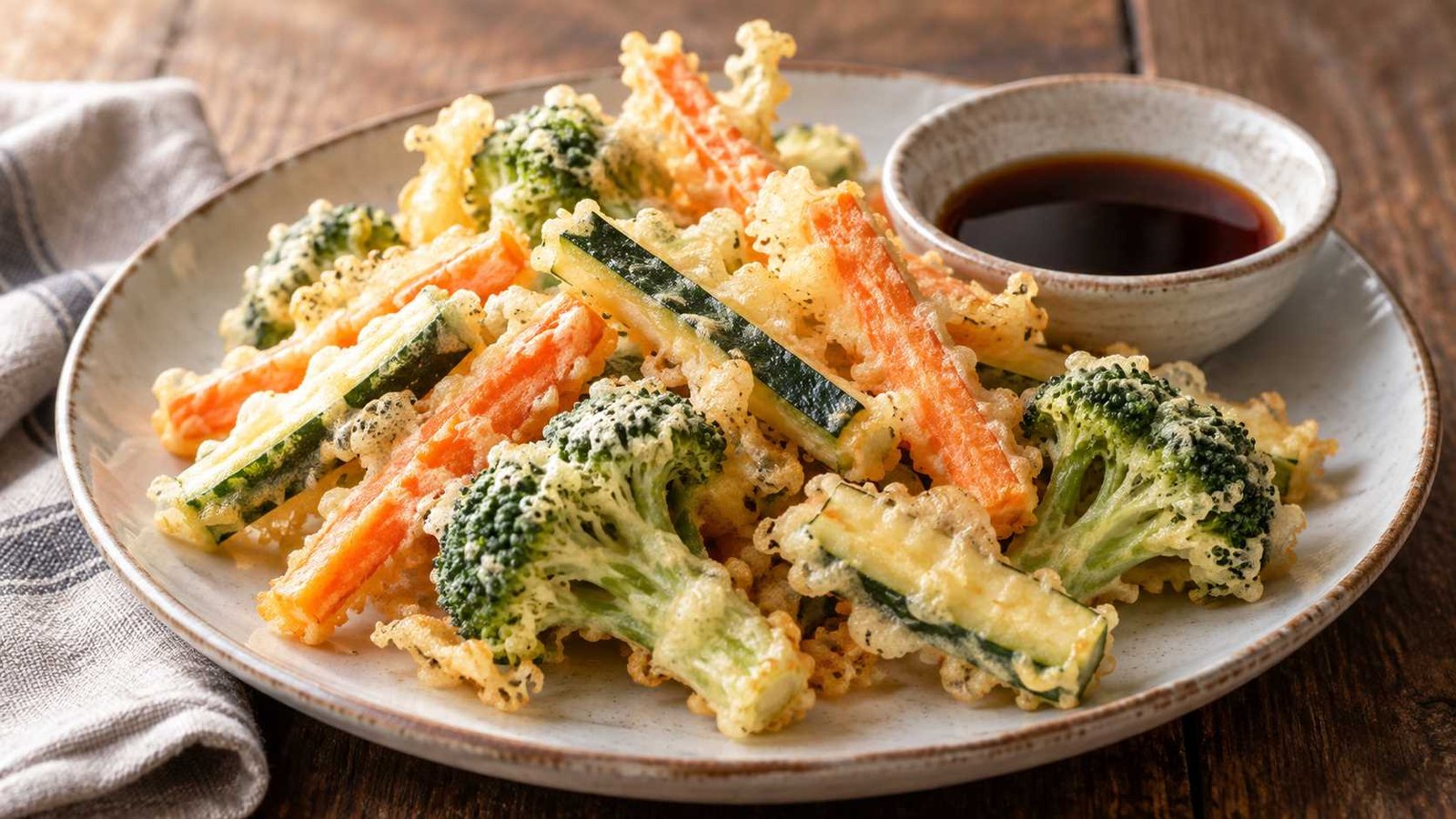
Vegetable tempura gives broccoli, courgette (zucchini) and carrot a delicate, pale-golden crust while keeping the vegetables pleasantly tender inside. This Japanese-inspired version uses flour, cornstarch and ice-cold sparkling water rather than eggs. The batter is mixed briefly and the vegetables are fried in small batches, so the coating stays light instead of becoming thick and greasy. Allow about 45 minutes for four side servings. Serve the pieces straight from the draining rack with soy sauce for dipping, while the crust is still crisp.
Vegetable tempura is a Japanese-style dish of vegetables dipped in a light batter and quickly fried. Here broccoli, courgette and carrot are coated with an egg-free sparkling water batter that crisps into a delicate shell. The recipe makes four side servings in approximately 45 minutes.
Choosing vegetables and batter ingredients
Small broccoli florets hold a little batter in their branching tops. Trim thick stems so the centres cook in the short frying time. Courgette contains more moisture than carrot, so pat the cut surfaces particularly well. Cut carrot thinner than courgette; matching the cooking time matters more than making every vegetable the same shape.
All-purpose flour (plain flour) provides structure, while cornstarch reduces the proportion of gluten-forming flour. Weigh both if possible. Cold sparkling water makes a loose coating; do not shake the bottle or whisk the batter vigorously. Use a neutral oil suitable for frying, such as refined sunflower or canola oil. The measured oil is a frying supply, not the amount absorbed by the vegetables.
How to make vegetable tempura
Prepare a wire rack over a tray before heating the oil. Arrange the vegetables nearby and keep the water cold. Mix the batter only when the oil is ready, and fry a few pieces at a time.
Recipe card
Crispy Vegetable Tempura with Sparkling Water Batter
Equipment: Deep heavy saucepan with metal lid, frying thermometer, tongs, slotted spoon, wire rack and tray, mixing bowl, knife and chopping board
Ingredients
Vegetables
Batter
Frying
To serve
Instructions
Cut and dry the vegetables
Rinse the vegetables and dry them thoroughly. Cut broccoli into small florets, courgette into roughly 1 cm thick batons and carrot into thinner 5 mm batons so the denser carrot cooks through quickly.
10 minHeat the frying oil safely
Use a deep, heavy, stable saucepan. Pour in only enough neutral oil to give room for the vegetables without filling more than one-third of the pan. Heat to 175°C (350°F), checking with a frying thermometer. Keep a fitted metal lid nearby and stay at the stove.
8 minMix a cold, lightly lumpy batter
Mix flour, cornstarch and salt in a bowl. Add the ice-cold sparkling water just before frying and stir briefly with chopsticks or a fork. Stop when no large dry pockets remain; small lumps are fine. Do not beat until smooth.
2 minFry in small batches
Dip a few dry vegetable pieces at a time, letting excess batter drip back into the bowl. Lower them gently into the oil away from your body using tongs. Fry for 2–3 minutes per batch until the batter is set, pale golden and crisp and the vegetables are tender with some bite. Allow the oil to recover to 175°C between batches.
20 minDrain and serve immediately
Lift each batch with a slotted spoon onto a wire rack set over a tray. Keep pieces apart rather than piling them up. Serve promptly with the measured soy sauce. Turn off the heat and allow the oil to cool completely before handling.
2 min
What crisp tempura should look like
The coating should be thin and irregular, with small bubbles and a light golden colour. It does not need to turn deep brown. If the batter darkens before the carrot softens, check the oil temperature and slice the next carrot pieces thinner. If a coating slides off, dry the vegetable again and let excess batter drip away before lowering it into the oil.
A thick, bready crust often results from overmixing or too much batter clinging to the surface. Stop stirring while small lumps remain. If the measured batter is unusually thick because of your flour, add a teaspoon of chilled water at a time. When several pieces go into the pan together, the oil temperature falls; wait for it to recover between batches. Drain on a rack rather than stacking on a plate so steam can escape.
Frying safely at home
Choose a stable, deep saucepan, not a shallow skillet, and never fill more than a third with oil. The exact amount needed depends on the pot. Keep all water away from hot oil, dry the vegetables and utensils, and do not leave the pan unattended. Lower food gently to avoid splashing. If oil smokes, turn off the heat if safe to do so. If it catches fire, never use water or move the pan; leave the area and call emergency services if the fire cannot be safely contained.
Serving and variations
Offer soy sauce in small dipping bowls, or stir a little lemon juice into individual portions for a brighter taste. Grated daikon makes a refreshing accompaniment. Try the tempura beside our vegan ramen with tofu, avocado and cucumber nori rolls or daikon and carrot namasu. Serve immediately rather than letting the fried vegetables soften in soup or sauce.
Thin sweet potato slices or small cauliflower florets are useful alternatives, but test a piece for tenderness before serving the batch. A gluten-free tempura flour blend may work if prepared according to the package; use suitable gluten-free tamari instead of ordinary soy sauce and check cross-contact.
Make ahead, storage and allergens
Cut the vegetables in advance, refrigerate them and pat dry again just before frying. Measure the flour and starch separately from the water. Tempura is best fresh. Refrigerate leftovers in a shallow covered container within two hours, or one hour above 32°C (90°F), and use within 2 days. Reheat once on a rack in a 190°C (375°F) oven until crisp and steaming hot throughout (74°C/165°F). Freezing is not recommended for this recipe because the vegetables soften. This recipe contains wheat and soy; check oil, flour and dipping sauce labels for other allergens. Nutrition figures are not supplied because actual oil uptake has not been measured.
Frequently asked questions
Why is my tempura greasy?
The oil may have cooled too much or the batter may be too thick. Fry fewer pieces at once and let the oil return to 175°C before adding more.
Why use sparkling water?
Cold sparkling water helps make a light batter. Brief mixing is more important than trying to keep every bubble.
Can I use plain cold water?
Yes. Ice-cold still water can work; the batter may be slightly less airy.
Do I need an egg?
No. This version uses flour and cornstarch for structure and does not include egg.
Can I make the batter ahead?
Mix the dry ingredients ahead and chill the water, but combine them just before frying.
Can I use other vegetables?
Thin sweet potato slices, green beans or small cauliflower florets work as variations. Adjust the thickness and frying time until the vegetables are tender.
Can I use an air fryer?
This wet batter is designed for hot oil. It may drip through an air-fryer basket and will not produce the same crust.
More recipes to try



Spotted a detail that needs correcting? Contact the FeastDelights editors.