Daikon and Carrot Namasu for Japanese New Year
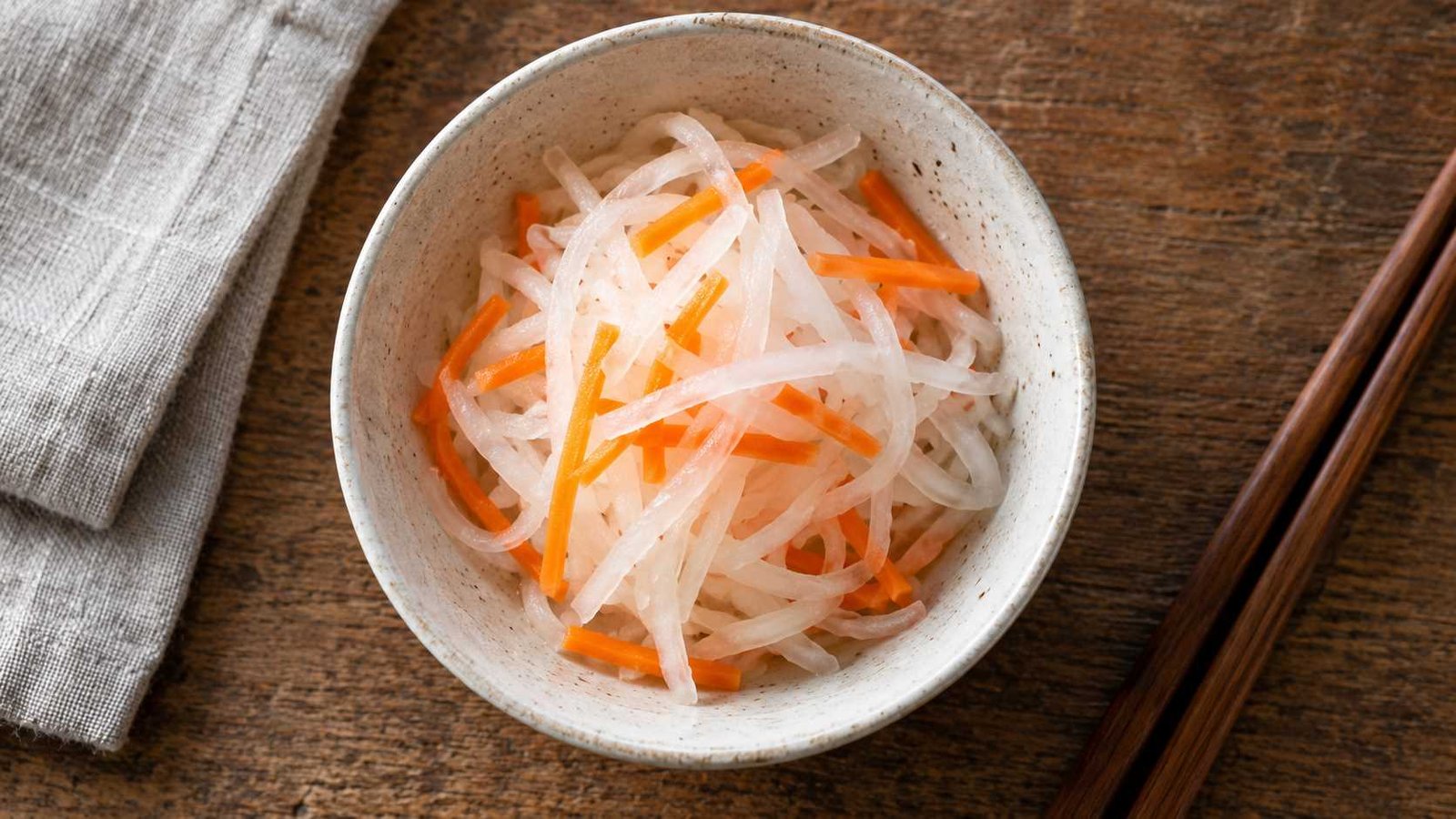
Namasu is a refreshing Japanese salad of finely sliced daikon radish and carrot dressed with sweetened rice vinegar. Salting the vegetables first removes excess moisture while preserving a delicate crunch. The white daikon and orange carrot form a colourful side dish often served as part of osechi, the Japanese New Year meal. This recipe makes six small servings and takes about 65 minutes including salting and chilling, with no cooking required. Serve cold alongside cooked fish, rice or other festive dishes.
Daikon and carrot namasu is a Japanese sweet-and-sour salad made with finely cut root vegetables, rice vinegar, sugar and salt. This no-cook recipe makes six small side servings in about 65 minutes, including salting and chilling. The bright white and orange colours are particularly appropriate for osechi ryori, the assortment of foods served at Japanese New Year. Namasu is one dish in that assortment, rather than a complete holiday menu.
Choosing the vegetables and vinegar
Choose firm, fresh daikon with smooth skin and a crisp carrot. Cut both vegetables into thin, even matchsticks so they soften at a similar rate. Unseasoned rice vinegar provides a mild acidity; seasoned rice vinegar already contains sugar and salt and may make the salad too sweet or salty. The two measured salt quantities serve different purposes: the first draws moisture from the vegetables, and the second seasons the dressing.
Equipment
Use a sharp knife, peeler, cutting board and two bowls. A mandoline can make uniform strips, but always use its hand guard. Have a clean covered container ready for chilling.
Recipe card
Daikon and Carrot Namasu for Japanese New Year
Includes 15 minutes salting and 30 minutes refrigeration; no heat is required.
Equipment: Vegetable peeler, sharp knife or guarded mandoline, cutting board, two mixing bowls, colander and covered refrigerator container.
Ingredients
Vegetables
Sweet vinegar dressing
Instructions
Slice the vegetables
Wash daikon and carrot under running water before peeling. Cut into thin matchsticks of similar thickness, approximately 2–3 mm wide. Use a sharp knife or a guarded mandoline.
Salt and drain
Toss the vegetables with 1 teaspoon salt and let stand for 15 minutes. Gently squeeze handfuls over a clean bowl to remove excess liquid, then discard the liquid.
Make the vinegar dressing
Whisk the rice vinegar with the sugar until dissolved. Stir in the separate ¼ teaspoon salt, using less if the drained vegetables already taste salty.
Dress the salad
Toss the drained vegetables with the dressing in a clean bowl until evenly coated.
Chill and serve
Cover and refrigerate for at least 30 minutes. Toss again before serving in six small portions. Lift the vegetables from excess dressing if desired.
How to keep namasu crisp rather than watery
Salt the cut vegetables for 15 minutes before dressing. The salt draws out moisture and makes the strips more flexible. Squeeze gently rather than crushing the vegetables. Discard the released liquid, then add the sweetened vinegar. This is consistent with the general technique described in Just One Cookbook’s namasu recipe. A short refrigerator rest allows the dressing to season the vegetables without cooking them.
Troubleshooting
The salad is watery
Drain and squeeze the salted vegetables more thoroughly next time. Use a slotted spoon when serving if extra dressing collects at the bottom.
The flavour is too sharp
Stir a little extra sugar into the dressing and taste again. Avoid replacing rice vinegar with a stronger vinegar at the same volume without adjusting the balance.
The vegetables are too salty
Reduce or omit the dressing salt if the drained vegetables are already well seasoned. Taste before making this adjustment.
Serving ideas and variations
Serve with teriyaki-style salmon, miso soup with tofu or vegetable tempura. A little yuzu zest makes an optional aromatic garnish. The salad is also useful as a small side dish outside the New Year season.
Make ahead and food safety
Refrigerate in a clean covered container at 4°C (40°F) or below and use within 3 days for best quality. Serve with clean utensils. This is a refrigerated salad, not a shelf-stable preserve. Freezing is not recommended because the vegetables lose their crisp texture. Wash produce under running water and use clean cutting equipment, following FoodSafety.gov produce-handling advice. The listed ingredients contain none of the major US allergens inherently, but check packaged vinegar and avoid cross-contact where relevant. The vinegar dressing does not make the salad safe for unrefrigerated long-term storage.
Frequently asked questions
What is namasu?
This version is a Japanese sweet-vinegar salad of daikon and carrot, traditionally associated with New Year celebrations.
Can I use seasoned rice vinegar?
Unseasoned is preferred because seasoned vinegar already contains sugar and salt. If substituting, adjust the added sugar and salt to taste.
Why squeeze the vegetables?
Daikon releases considerable moisture when salted. Removing the liquid helps prevent dilution of the dressing.
Can I prepare namasu the day before?
Yes. Cover and refrigerate it. Toss again before serving and use clean utensils.
Can I substitute small red radishes?
They are usually sharper and have a different texture. Daikon is preferred for this particular salad.
Can I keep this salad at room temperature?
No. It is a refrigerated salad, not a tested canning recipe. Return unused portions to the refrigerator promptly.
More recipes to try





Spotted a detail that needs correcting? Contact the FeastDelights editors.