Ukrainian Potato and Farmer Cheese Varenyky
These Ukrainian varenyky are tender half-moon dumplings with a soft mashed potato and farmer cheese filling, gently sweetened by golden onion. The flour, egg and water dough rests before rolling so the wrappers are easier to shape and seal. Boil the dumplings in small batches and serve them hot with sour cream, browned onions or dill. The recipe makes about 32 dumplings for four servings; allow time for the dough to rest and the filling to cool before you start assembling.
Ukrainian potato and farmer cheese varenyky are boiled half-moon dumplings with a tender wrapper and savoury filling. This recipe makes about 32 dumplings, enough for four servings. Allow approximately 45 minutes of active preparation, 40 minutes of cooking and a 30-minute dough rest; cooling and batch sizes may affect the elapsed time.
Unlike plain potato dumplings, these include fresh curd cheese for a mild tang and a softer filling. Serve with sour cream or golden onion.
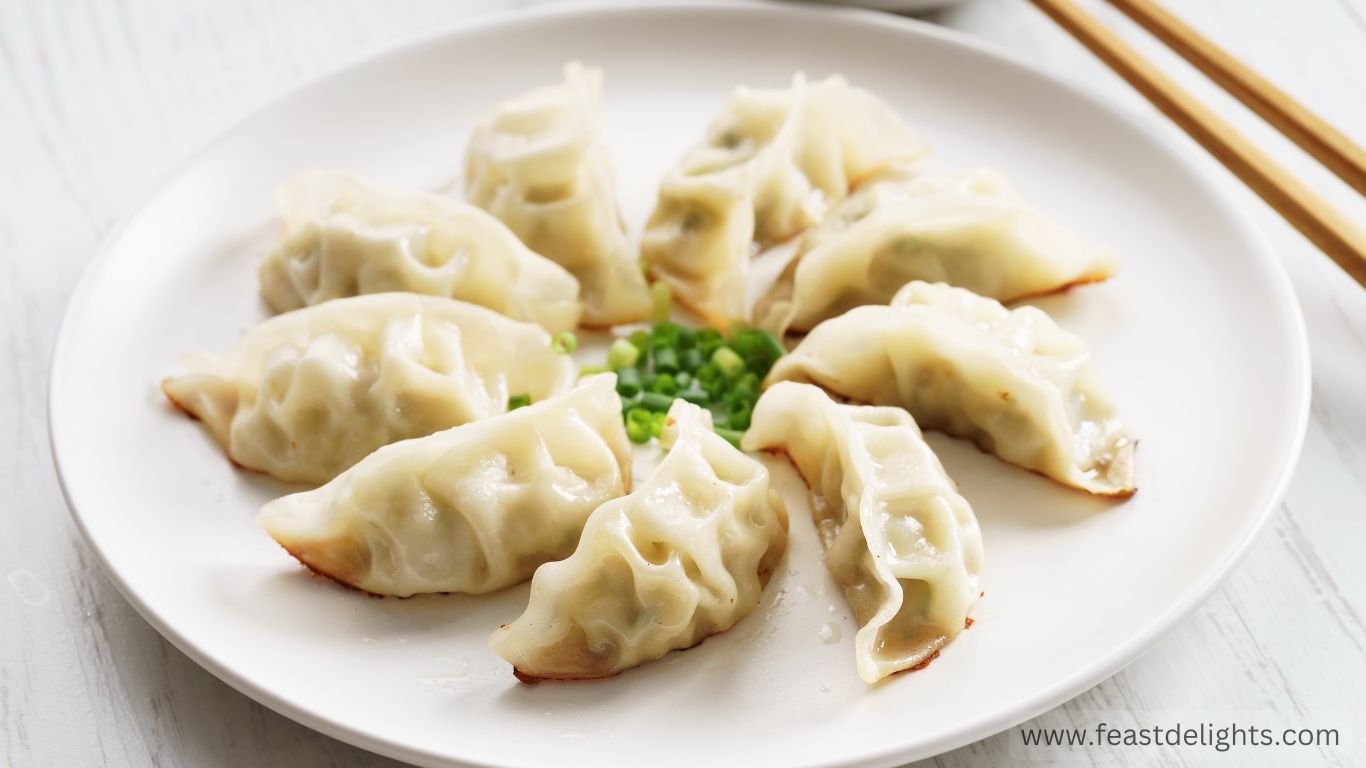
Recipe card
Ukrainian Potato and Farmer Cheese Varenyky
Rest dough for 30 minutes while the filling cools; allow extra time if needed. Batch cooking time varies with pot size.
Equipment: Large pot, colander, potato masher, skillet, mixing bowl, rolling pin, 8 cm (3 inch) round cutter, tray, slotted spoon
Ingredients
Dough
Filling
To serve
Instructions
Boil and drain the potatoes
Boil the peeled, quartered potatoes in salted water for 15–20 minutes until a fork slides through easily. Drain thoroughly, return to the warm pot briefly off the heat to let excess steam escape, and mash without adding milk.
Prepare the potato and cheese filling
Cook the diced onion in the measured butter over medium-low heat for 6–8 minutes until soft and golden, not burnt. Stir into the mashed potatoes with farmer cheese, filling salt and pepper. Spread in a shallow dish to cool promptly; refrigerate if not using soon.
Knead and rest the dough
Combine the flour and dough salt. Whisk the egg, lukewarm water and oil, then stir into the flour until shaggy. Knead for 6–8 minutes until smooth; if dry, add the reserved tablespoon of water gradually. Cover and rest for 30 minutes.
Roll and cut the wrappers
Divide the dough into manageable pieces and keep the unused pieces covered. Roll on a lightly floured surface to approximately 2 mm thick and cut 8 cm (3 inch) circles. Gather scraps and reroll once after a brief rest.
Fill and seal the half-moons
Place a heaped teaspoon of cooled filling in the middle of a circle, adding a little more only if the wrapper closes without stretching. Fold into a half-moon, gently press out trapped air and pinch the clean edges firmly. Keep shaped dumplings covered on a lightly floured tray. Refrigerate or freeze any surplus filling separately; do not force it into the wrappers.
Boil in batches
Bring a large pot of salted water to a gentle boil. Lower in a few dumplings at a time and stir gently once to release them from the bottom. Once they float, cook 2–3 minutes longer. Cut one open to confirm the wrapper is tender with no raw flour in the seam and the filling is hot throughout. Lift out with a slotted spoon.
Drain and serve
Drain well and serve with optional sour cream. A little additional butter or golden fried onion can be offered as a separate topping if desired.
Choose potatoes and cheese for a firm filling
Starchy potatoes mash easily and absorb less excess moisture when drained thoroughly. Avoid adding milk to the mash; a soft, loose filling makes the seams difficult to seal. Farmer cheese should be crumbly enough to mix through the potatoes. If cottage cheese is your only option, strain it in a fine sieve until excess whey has drained, then break up large curds with a fork.
Golden onion adds savoury sweetness. Dice it finely so there are no large pieces to tear the wrapper. Cook it slowly in butter rather than over high heat, and let the filling cool promptly before assembly. Warm filling softens the dough and is harder to portion.
How to roll and seal varenyky
The rested dough should be smooth and pliable rather than sticky. If it springs back while rolling, cover it and wait a few minutes. Roll in sections to about 2 mm thickness, using just enough flour to prevent sticking. Too much flour makes the edges difficult to join. Cut circles about 8 cm across with a round cutter or a drinking glass of similar diameter.
Start with a heaped teaspoon of filling. You can add a little more if the edges meet easily, but never stretch the wrapper around a large mound. Fold one side over the filling, press out air and pinch from the centre towards the ends. If a dry seam refuses to stick, dampen just the edge with a fingertip dipped in water. Arrange the dumplings apart on a lightly floured tray and cover while shaping the rest.
Boiling and troubleshooting
Use a roomy pot and a gentle boil rather than a rolling boil. Too many dumplings at once cool the water and encourage sticking. Stir once carefully after adding them. Floating is a useful cue but does not prove the thick pinched edge is cooked. Allow another two to three minutes, then cut one open and check that the wrapper has no raw flour layer and the centre is hot. Frozen dumplings need longer.
If a dumpling bursts, check the next batch for trapped air or a poorly sealed edge. If wrappers are tough, roll them more evenly and avoid working scraps repeatedly. If there is leftover filling, keep it chilled and use separately; wrapper thickness and filling portion determine the actual yield.
Serving ideas and related recipes
Serve hot with a dollop of sour cream, dill or extra browned onion. For a meal with contrasting texture and acidity, add vinegret beet salad. Try potato-only varenyky with golden onion if you prefer a filling without cheese, or sweet cottage cheese varenyky for a different course.
Make ahead, freezing and reheating
The filling can be prepared the day before: cool promptly, cover and refrigerate. Freeze uncooked dumplings in a single layer on a tray until solid, then transfer to a sealed bag. Cook directly from frozen in small batches, allowing extra time. For best quality use within two months. Refrigerate cooked leftovers within two hours, or one hour above 32°C (90°F), at 4°C (40°F) or colder, and use within three days. Reheat to 74°C (165°F) in gently simmering water or a covered skillet with a splash of water before browning if desired.
Allergens and food safety
The recipe contains wheat, egg and milk. Use pasteurised dairy, keep the filling refrigerated when not assembling and avoid tasting raw dough. Check packaging and equipment for cross-contact. See FoodSafety.gov’s safe handling guidance.
Frequently asked questions
What is farmer cheese?
It is a fresh, usually mild pressed curd cheese. Choose a dry, crumbly variety rather than a soft spread. Well-drained cottage cheese can substitute, but drain off excess whey.
Why do my varenyky split in the pot?
Filling may have contaminated the seam, the wrappers may be overfilled or the water may be boiling too violently. Keep the rim clean, pinch firmly and cook at a gentle boil.
How do I stop the dough shrinking when rolling?
Cover it and let it rest for another 10 minutes. The gluten relaxes and the dough becomes easier to roll without springing back.
Can I freeze uncooked varenyky?
Yes. Freeze on a lightly floured tray without touching, then pack into a sealed bag. Boil from frozen and allow extra time until the wrapper is cooked and the centre hot.
Can I prepare the filling in advance?
Yes. Cool it promptly in a shallow container, cover and refrigerate at 4°C/40°F or colder. Use the next day, keeping it chilled until assembly.
Why is there filling left over?
Wrapper thickness and filling portions vary. The stated yield is approximate; use only as much filling as each circle can hold securely. Refrigerate or freeze the excess rather than overfilling.
More recipes to try

Spotted a detail that needs correcting? Contact the FeastDelights editors.