Walnut Turkish Delight with Rose Water
Walnut Turkish delight, or lokum, is a sweet, chewy starch-set confection with a gentle rose fragrance and pieces of walnut throughout. This home-style version uses a sugar syrup and a separately cooked cornstarch paste, rather than gelatine. The two mixtures are slowly combined and concentrated before the walnuts and food-grade rose water are added. Allow approximately 90 minutes for cooking and a full overnight set before cutting the slab into small, dusted squares. The recipe targets 36 pieces; its revised water ratio is research-based and still requires a FeastDelights kitchen test.
Walnut Turkish delight with rose water is a homemade version of lokum, the sweet, chewy confection associated with Türkiye. Instead of setting with gelatine, it relies on a cooked combination of sugar syrup and cornstarch. Chopped walnuts bring a contrasting bite to the soft sweet, and a small amount of rose water adds floral fragrance. The recipe targets 36 small pieces from an 8-inch square tin. Plan on around 20 minutes of preparation, roughly 90 minutes of cooking and a 12-hour set, including cooling.
Editorial update, 26 November 2026: The original recipe used 240 ml water in total, half of it for 100 g cornstarch. This has been increased to 520 ml (120 ml for syrup and 400 ml for starch) to allow better starch hydration. The sugar, starch, walnuts and rose water remain at their previous weights. The adjustment is informed by published recipes from SBS Food and The Cooking Foodie, which use approximately 3.7 and 5.4 ml water per gram of starch in their separate pastes. This version uses 4 ml per gram; the exact walnut formula, cooking time and final texture have not yet been verified in a FeastDelights kitchen.
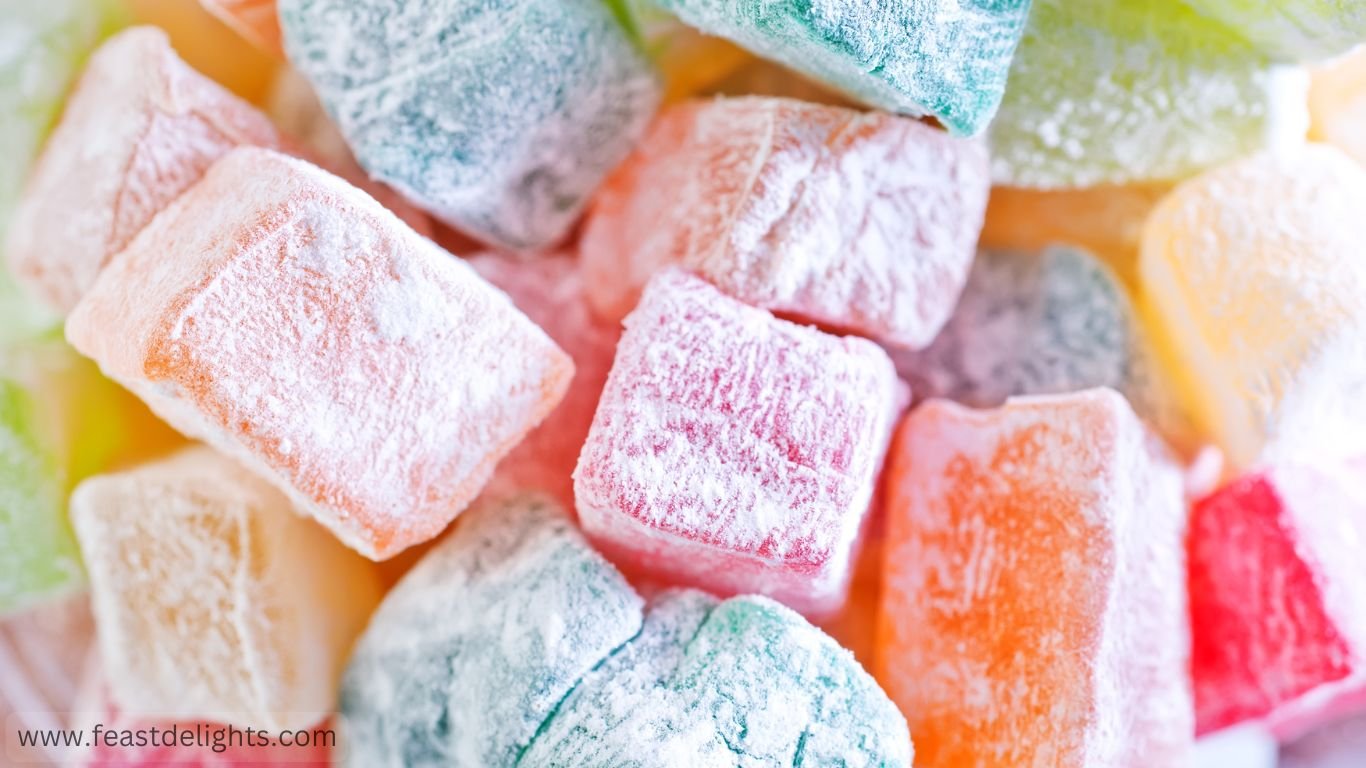
Recipe card
Walnut Turkish Delight with Rose Water
Allow about 90 minutes for syrup and paste preparation and concentration; longer may be needed depending on pan width and heat. Set about 12 hours, including cooling. Time and yield are estimates pending kitchen verification.
Equipment: Digital scale, measuring jug and spoons, two deep heavy saucepans, candy thermometer, long heatproof spatula and whisk, oven gloves, 20 cm (8 inch) square heatproof tin, baking parchment, sieve, clean cutting board and knife
Ingredients
Sugar syrup
Starch paste
Flavour and nuts
Coating
For the tin
Instructions
Prepare the tin and measure ingredients
Line a 20 cm (8 inch) square heatproof tin with baking parchment, leaving enough overhang to lift the slab later. Brush the parchment lightly with neutral oil. Sift the coating sugar and separate coating cornstarch into a bowl. Measure all remaining ingredients before heating. Chop the walnuts into small pieces and keep them dry. Set out a long heatproof spatula, oven gloves and candy thermometer.
Cook the sugar syrup to soft-ball stage
In a deep, heavy saucepan combine the 400 g sugar, 120 ml water and lemon juice. Warm over low to medium heat, stirring gently until the sugar dissolves. Once boiling, stop stirring and monitor closely with a candy thermometer, keeping the probe above the base. At sea level, remove the pan from the heat when the syrup reaches 115°C (239°F). Use an altitude-adjusted target if necessary; do not taste or touch the hot syrup.
Cook a smooth cornstarch paste
In a second, larger heavy saucepan whisk the 100 g cornstarch, cream of tartar and 400 ml cold water until evenly dispersed with no lumps. Heat over medium-low heat, stirring and scraping the bottom as it thickens. Continue until the mixture forms a cohesive, smooth, partly translucent paste rather than a thin milky liquid. Reduce the heat and remove the pan briefly from the burner before adding syrup.
Combine and concentrate over low heat
Keep both pans on a stable surface. Carefully add the hot syrup to the starch paste in small portions, stirring each addition with a long heatproof utensil before adding the next. Keep hands and face clear of steam and splashes. Return the combined mixture to very low heat. Stir frequently, then almost continuously as it thickens, scraping the bottom and corners. Allow roughly 45–75 minutes or longer as needed. Look for a glossy, cohesive, pale golden mass that slowly pulls away from the pan; a spatula drawn across the base should leave a trail that closes slowly. If checking a small sample, let it cool completely on a heatproof plate before touching it. The cooled sample should hold its shape and feel pliable, not flow like syrup. Do not cook by the clock alone.
Add walnuts and rose water and set
Turn off the heat and fold in the dry chopped walnuts and food-grade rose water with the heatproof spatula. Using oven gloves, carefully transfer to the lined tin and level without touching the hot mixture. Leave in a protected cool, dry place until fully cool, then loosely cover and allow about 12 hours in total to set. Do not cut while warm or if the slab still flows.
Cut into squares and dust
Once cool and firm, lift out the slab onto a lightly dusted board. Cut into six rows and six columns for about 36 small pieces using a clean, lightly oiled knife. Dust each exposed side with the icing sugar and cornstarch mixture, making more of the same mixture if needed. Separate pieces with parchment in a clean container and serve at room temperature.
What makes walnut Turkish delight different?
Lokum is known for its elastic, soft bite and concentrated sweetness. The base is mostly sugar, water and starch. Its texture is different from a gelatine jelly, and it should not be confused with a hard sugar sweet or a flour-based pastry. Rose is one of many possible flavours; nuts such as walnuts, pistachios and hazelnuts bring contrasting texture. This version is particularly suited to serving small pieces with tea or coffee at a celebration, including Eid.
Ingredients and why they matter
Granulated sugar: Sugar provides sweetness and much of the finished structure. This is confectionery, not a cake batter, so reducing the sugar or substituting a low-calorie sweetener changes the way the mixture concentrates. Weigh the sugar and use the listed quantity rather than making a reduced-sugar version without a separate formula.
Cornstarch: Use pure white cornstarch, called cornflour in many countries, not yellow cornmeal or maize flour made from the whole grain. Dispersing the starch in cold water before heating reduces clumping. As it cooks, starch granules absorb water and thicken the mixture. The extended cooking stage then concentrates the combined sugar and starch mixture. Do not exchange cornstarch for flour or gelatine on a one-to-one basis.
Water: Measure the syrup water and starch water separately. Water is needed to dissolve the sugar and disperse the starch; much of it subsequently evaporates. Adding water to hydrate the paste does not mean the finished confection should be wet. The consistency near the end of cooking is therefore more important than simply waiting a fixed number of minutes. The revised hydration is a proposed editorial correction, not a promise of an identical result on every stove.
Lemon juice and cream of tartar: These acidic ingredients are retained from the original formula. The lemon juice goes into the syrup, while the cream of tartar is added to the starch paste. Acid helps control sugar crystallisation, but excessive acid or prolonged aggressive cooking can change the starch texture. Do not increase the acid to make the sweet taste more like lemon.
Walnuts and rose water: Use fresh, unsalted walnuts that taste pleasant rather than bitter or rancid. Chop them into small pieces to make the finished slab easier to cut. Keep them dry; wet nuts add uncontrolled moisture. Food-grade rose water is a mild culinary ingredient, not perfume or a concentrated flavouring oil. Add it after removing the pan from the heat, when the long cooking stage is over.
Equipment and syrup temperature
A sugar thermometer is particularly helpful in this recipe. Use deep, heavy-based pans: one for the syrup and a larger one for the starch paste and combined mixture. A wide pan may evaporate water faster than a narrow pan, so pan size affects cooking time. A long heatproof spatula makes it easier to reach the base and corners without bringing your hand close to splashes. Have the lined heatproof tin ready before beginning so you do not have to prepare it while handling hot candy.
The syrup target of 115°C (239°F) is the soft-ball stage at sea level. Keep the thermometer probe immersed in the syrup but clear of the metal base, which can give a misleading reading. At higher elevations, water boils at a lower temperature; adjust the target relative to your local boiling point rather than blindly applying the sea-level number. Once sugar has dissolved and the syrup boils, avoid unnecessary stirring or scraping dried crystals from the sides into the liquid. Remove the syrup from the heat when it reaches the target.
How to combine the syrup and starch without lumps
Whisk the cornstarch and cream of tartar with cold water until there are no dry clumps. Heat gradually and keep the utensil moving across the base of the pan. When the mixture starts thickening, it may do so unevenly at first. Continue stirring gently until the paste becomes cohesive. The starch need not become crystal clear; the important change is from a watery dispersion to an evenly cooked paste.
Take the paste pan off the heat briefly and add the syrup carefully in small portions. Stir each addition through before continuing. A deep pan with headroom reduces the risk of hot splashes. Once all syrup is incorporated, use very low heat and scrape the bottom and sides regularly. The mixture may temporarily become looser after the syrup is added; do not immediately add more starch. Let water evaporate gradually instead.
How to judge the final consistency
The cooking time after combining is an estimate, not a fixed endpoint. As water evaporates, the mass becomes shinier and more resistant to stirring. It should gradually pull away from the pan and a spatula drawn along the base should leave a visible trail that closes slowly. Colour may deepen to pale amber, but colour alone does not establish the correct texture. Different sugars, pans and heat settings can change how it looks.
If uncertain, place a small sample on a heatproof plate using a long utensil and wait until it is completely cool before assessing it. The sample should be cohesive and pliable rather than spreading into a puddle. Never handle or taste hot candy to check its texture. If the mass remains watery, continue gently cooking while stirring. If it has become stiff enough that it is difficult to move, remove the heat rather than forcing it through more cooking. The exact final moisture and firmness need confirmation by kitchen testing.
Setting, cutting and coating
Fold the walnuts and rose water into the finished mass after turning off the heat. Transfer carefully to the lined tin with oven gloves. Do not use your fingers to level the hot confection. Set the pan somewhere protected from dust and accidental contact. Once the slab is cool, cover loosely and leave until fully set, allowing about 12 hours. A warm slab may look firm at the edges while remaining soft inside, so avoid cutting it too early.
Cut the 20 cm square into a six-by-six grid to obtain approximately 36 squares. Use a lightly oiled knife and wipe it if the cut edges begin to stick. The size and thickness depend on how much water has evaporated. Sift the icing sugar and coating starch together before dusting all sides. If necessary, mix a little more in the same proportion. The dry coating reduces surface sticking, but it does not correct a wet centre.
Troubleshooting common problems
Grainy texture: Sugar crystals may have formed if the syrup was stirred after boiling or dried sugar was scraped into it. Dissolve sugar thoroughly before bringing it to a boil and use the thermometer to avoid overshooting the target. Lumpy paste: Start with cold water and whisk before heating. If clumps form early, lower the heat and work them out before adding syrup. Burnt flavour: High heat and insufficient stirring can scorch the thick mass. Use a heavy pan and lower the burner as the mixture concentrates. Do not scrape burnt material into the finished batch.
Sticky or soft slab: The mixture may not have lost enough water, or it may have been cut too soon. Let it set for the stated period and assess a completely cooled sample. Humidity can make the outside tacky even when the centre is firm. Dust again if only the surface is affected. A slab that still flows has not reached the intended texture. Do not assume that adding more icing sugar will make it shelf-stable. Very firm candy: Too much evaporation can make the mass difficult to spread and chew. For the next batch, begin checking the cooled sample earlier rather than increasing the water randomly after cooking.
Substitutions and flavour variations
Keep the sugar and starch quantities fixed when trying this formula for the first time. Walnuts can plausibly be exchanged for dry, unsalted pistachios or hazelnuts of similar size by weight, but that adaptation has not been kitchen-tested here. Omitting the nuts gives a plain rose version with a different finished weight. For an orange blossom variation, use a food-grade culinary product and account for its strength. Concentrated extracts are not equivalent to floral waters. Avoid adding fresh fruit puree, milk or large amounts of juice to this version because they introduce additional water and change the setting and storage requirements.
Serving ideas for Eid and other gatherings
Serve a few pieces with strong coffee or unsweetened tea. The sweetness of lokum means small portions are appropriate, and the walnut pieces provide a nutty contrast. For a festive assortment, try our Eid walnut baklava, date and pistachio maamoul-style cookies or basbousa semolina cake. The separate rosewater and pistachio lokum recipe uses its own proportions and should not be treated as the same formula.
Make ahead and store
Prepare the tin, coating and measured ingredients before starting. Plan to cook the confection the day before serving so it has time to set. Once fully cooled and firm, keep pieces apart with parchment in a clean airtight container. Refrigerate and use within three days as a conservative storage precaution: commercial lokum may have a longer shelf life, but the moisture content and shelf stability of this adjusted homemade formula have not been measured. Refrigeration may alter the texture or cause condensation, so remove only the portion needed and re-dust if necessary. Freezing is not recommended for quality because the starch gel may release moisture after thawing.
Allergens and hot sugar safety
This recipe contains walnuts, a tree nut allergen. Check all ingredients and utensils for cross-contact, particularly when preparing an assortment of sweets. Pure cornstarch does not contain wheat by itself, but check the label and shared equipment before serving anyone with gluten-related dietary requirements. Hot sugar syrup can adhere to skin and cause serious burns. Keep children and pets away from the stove, keep pan handles secure, use oven gloves and avoid splashes. If a burn occurs, cool it under cool running water for 20 minutes and seek medical assistance for a serious burn, following the NHS burns guidance. Do not use ice or touch hot syrup to test its consistency.
Frequently asked questions
What is walnut lokum?
It is a Turkish-style sugar and starch confection containing chopped walnuts. This version uses a little rose water for aroma and a dry icing sugar and starch coating.
Why has the water quantity been increased?
The earlier formula supplied only 120 ml water to 100 g cornstarch before heating. The revised 400 ml gives the starch more liquid to disperse and swell before the syrup is added. This is a research-based adjustment, not a kitchen-tested result.
Can I make Turkish delight without gelatine?
Yes. Cornstarch supplies the setting structure here. Do not replace it with gelatine in the same quantity because the ingredients behave differently.
Why is the mixture lumpy?
Starch may have been added to hot water or not dispersed before heating. Whisk it into cold water first, then cook gently while scraping the pan. Add syrup gradually and stir until evenly combined.
Why is my lokum sticky after setting?
It may contain too much residual water, may not have set fully, or may have absorbed humidity. Allow the full setting period and dust all cut sides. A slab that still flows has not reached the intended consistency; coating alone cannot fix it.
Can I replace walnuts with pistachios?
Dry unsalted chopped pistachios are a plausible weight-for-weight alternative, although texture and flavour differ. For a separate formula, see the linked FeastDelights pistachio lokum recipe.
Can I use rose essence instead of rose water?
Not in the same amount. Concentrated essence is much stronger; follow the manufacturer’s food-use dilution instructions. Use food-grade products only.
How do I store the homemade squares?
Once fully set, separate with parchment in a clean airtight container and refrigerate. As shelf stability has not been established for this revised formula, use within three days as a conservative precaution. Bring a serving portion to room temperature and re-dust if needed.
Can I double the recipe?
Not for a first attempt. A larger batch concentrates at a different rate and is harder to stir and transfer safely. Use the stated quantities until the texture has been confirmed in your kitchen.
More recipes to try

Cream Cheese Cheesecake Danish with Lemon and Vanilla

Fresh Fruit Salad with Orange Honey Dressing

Ptichye Moloko Bird’s Milk Mousse with Chocolate Glaze
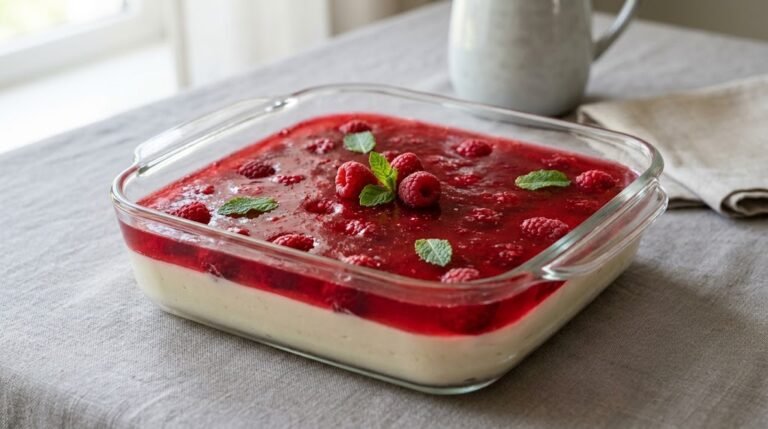
Bird’s Milk Jello with Creamy Mousse and Raspberry Jelly
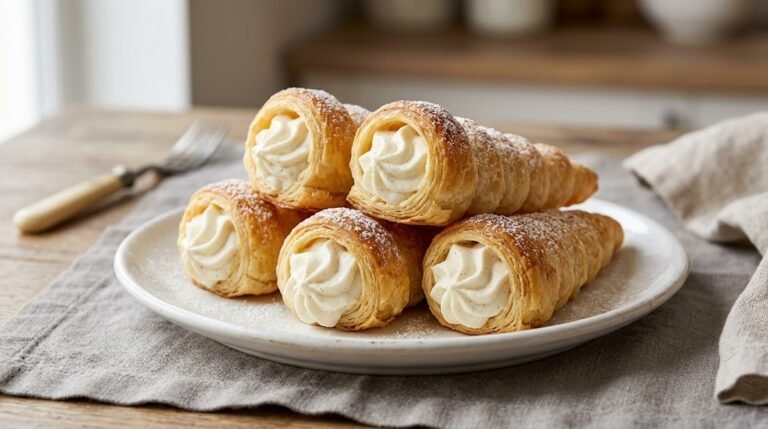
Cream Horn Trubochki with Vanilla Cream Filling
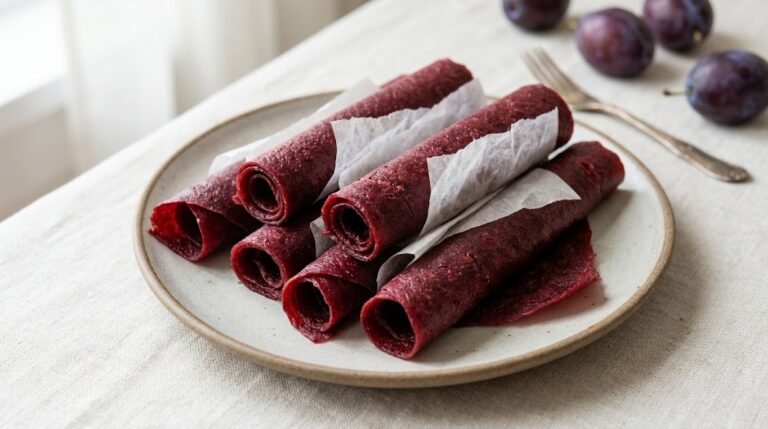
Homemade Plum Fruit Leather with a Little Lemon
Spotted a detail that needs correcting? Contact the FeastDelights editors.