Basbousa Semolina Cake with Almond and Lemon Syrup
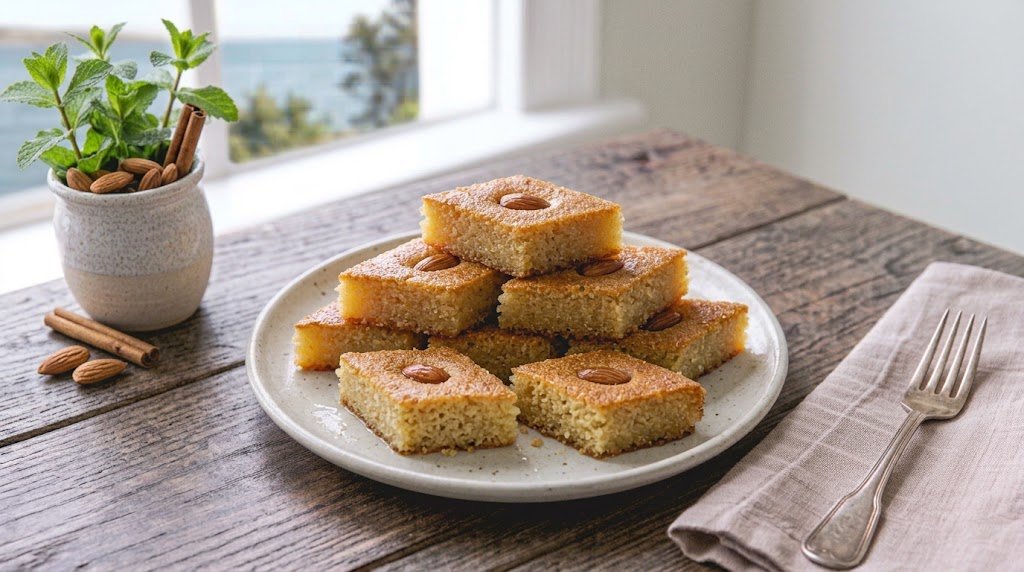
Basbousa is a syrup-soaked semolina cake with Egyptian roots and many regional variations. This version combines fine semolina, plain yogurt and melted butter for a moist, fine-grained crumb, then adds a sweet almond-and-lemon syrup while the cake is hot. Baked in a 23 cm square pan, it makes nine generous squares. Allow roughly two hours for mixing, hydration, baking and soaking, plus additional cooling if needed. Serve with tea or coffee at a festive gathering, including Eid.
What is basbousa?
Basbousa is an Egyptian-origin semolina cake soaked in sugar syrup, with related versions enjoyed throughout the Middle East and beyond. The texture is different from a fluffy wheat-flour sponge: semolina creates a slightly grainy, tender crumb that absorbs syrup. Some regional recipes use coarse semolina, coconut, ghee or whole almonds. This version uses fine semolina, yogurt and almond extract, preserving the existing recipe rather than claiming to represent all regional traditions.
Choosing semolina and yogurt
Semolina is milled durum wheat. Use the specified fine grind, as coarse grains absorb water differently and can need longer resting. Weigh it separately from the sugar. Plain unsweetened yogurt brings moisture and a little acidity. Avoid flavoured yogurt, which may change the sweetness. Melt the butter and allow it to cool slightly before mixing, so it combines evenly without heating the yogurt excessively.
The formula contains substantial sugar in both batter and syrup. The expected result is a sweet dessert, not a lightly sweet breakfast cake. The syrup uses almond extract rather than ground almonds; a little goes a long way. Check the extract label if tree-nut allergies are a concern, because products vary.
Resting and baking the batter
Mix just until the semolina is evenly moistened. Leave the mixture covered for 30 minutes. This allows the grains to hydrate and helps prevent an unpleasant dry or chalky texture. Spread into a greased or lined 23 cm square pan. Use a spatula to level the batter, but do not compress it firmly.
Bake at 180°C (350°F) and start checking at 30 minutes. The top should be golden and the centre set rather than wobbly or wet. A skewer should not bring out raw batter. Do not remove the cake solely because the edges are brown; the centre must be baked before it can absorb syrup evenly.
Recipe card
Basbousa Semolina Cake with Almond and Lemon Syrup
Includes 30 minutes resting the semolina batter and at least 30 minutes soaking and cooling after baking. Prepare the syrup during baking. Allow extra cooling time if needed.
Equipment: Digital scale, mixing bowl, spatula, 23 cm (9 inch) square metal baking pan, pastry brush, small saucepan, measuring jug, skewer and cooling rack.
Ingredients
Semolina cake
Almond-lemon syrup
Instructions
Mix and hydrate the semolina
Stir semolina, sugar and baking powder together. Add plain yogurt, cooled melted butter and vanilla, mixing just until evenly moistened. Cover and rest 30 minutes so the semolina hydrates. Preheat oven to 180°C (350°F) toward the end of resting.
Bake until golden and set
Grease a 23 cm square pan with a little extra butter or line with parchment. Spread the thick batter evenly and level the surface without pressing hard. Bake on the middle rack for 30–40 minutes, or until golden, firm in the centre and a skewer comes out without wet batter.
Prepare the almond-lemon syrup
While the cake bakes, combine the syrup water and sugar in a small saucepan. Stir over medium heat until dissolved, then gently simmer for 5 minutes. Remove from heat and stir in almond extract and lemon juice. Keep warm; handle hot syrup carefully.
Soak and cool the cake
Place the hot baked cake on a heatproof surface. Pour the warm syrup slowly over the surface in several additions, pausing to let it absorb. Stop briefly if liquid pools. Rest at least 30 minutes or until the syrup has absorbed and the cake can be cut safely. Slice into nine squares when sufficiently cool.
How to soak the cake without making it soggy
Make the syrup while the cake is baking. Dissolve the sugar in water and simmer gently. Add lemon juice for brightness and almond extract off the heat so its aroma is not exposed to prolonged boiling. Handle the saucepan carefully: hot syrup can cause burns.
Pour the warm syrup slowly over the freshly baked cake, allowing the liquid to disappear into the crumb between additions. If syrup pools, pause until the cake absorbs it. The original formula makes a generous amount; absorption varies with the semolina and baking time, so do not force excess syrup into a saturated cake. Let it rest before cutting. For the best shape, allow the crumb to settle and cool rather than slicing immediately.
Troubleshooting
Hard or gritty crumb: Check the semolina grind and hydration time. Dry cake: Avoid overbaking, and distribute the syrup over the entire surface. Wet middle: Bake the batter until fully set before soaking. Overly sweet: Serve smaller portions with unsweetened tea; reserve any unabsorbed syrup rather than adding extra sweetness. Crumb breaks when cut: Cool longer and use a sharp knife, wiping it between cuts.
Serving ideas and related sweets
Cut into nine squares or smaller portions for a dessert table. Pair with tea or coffee. For other festive sweets, try Eid walnut baklava, rosewater and pistachio Turkish delight or kefir mannik semolina cake. Each uses a different technique and should be prepared according to its own recipe.
Storage and allergens
Cool the cake promptly, cover and refrigerate within two hours. Avoid wrapping tightly while it is steaming hot, as condensation can make the surface sticky. Freeze portions if needed, noting that the texture may change. This recipe contains wheat and milk. Almond extract may contain almond-derived ingredients; check the label and avoid cross-contact when needed. Do not taste uncooked semolina batter. See CDC guidance on raw flour and dough.
Frequently asked questions
Can I use coarse semolina?
Coarse semolina gives a more pronounced grain texture and may need longer hydration. This formula uses fine semolina; changing the grind can alter absorption.
Can I use Greek yogurt?
Very thick Greek yogurt can make the batter stiff. Ordinary plain yogurt is preferable; thin a thick yogurt with a little water if necessary.
Why is my basbousa dry?
The cake may have baked too long, the semolina may not have hydrated, or syrup may have been added too quickly. Check doneness early and allow the syrup to soak gradually.
Why is syrup pooling on the surface?
Give each addition time to absorb. If the cake is already saturated, reserve remaining syrup for serving rather than flooding it.
Can I replace almond extract?
Yes. Use rosewater or orange blossom water to taste, following the product's strength; the resulting cake will have a different aroma.
Can I make basbousa the day before?
Yes. Let the syrup soak in, cool promptly and refrigerate covered. Bring individual portions out shortly before serving.
Is this recipe gluten-free?
No. Semolina is made from wheat. It is not interchangeable with a gluten-free flour in this recipe.
More recipes to try






Spotted a detail that needs correcting? Contact the FeastDelights editors.