Eid Walnut Baklava with Honey Lemon Syrup
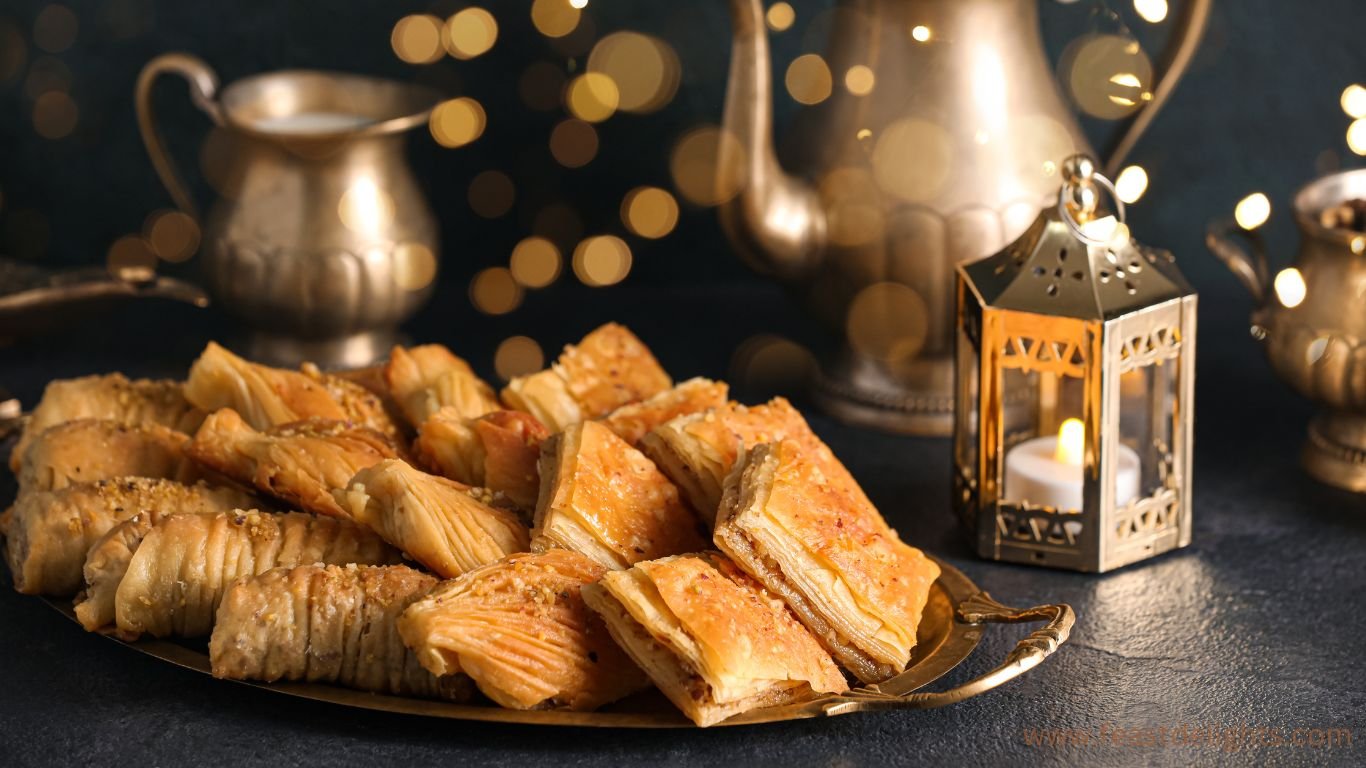
This walnut baklava for Eid layers thin filo pastry with cinnamon-scented walnuts and melted butter. After baking to a deep golden colour, the pastry is soaked with cooled honey and lemon syrup, then rested for at least six hours. The top should remain flaky while the lower layers absorb the fragrant syrup. A 23 × 33 cm tray makes 24 small pieces, ideal for sharing with tea or coffee. Prepare it the day before your celebration for easier slicing and serving.
This Eid walnut baklava is a layered filo dessert with cinnamon-spiced walnuts, melted butter and honey-lemon syrup. It makes 24 pieces in a 23 × 33 cm tray. Allow about 7 hours 35 minutes, mostly for syrup absorption. Baklava is enjoyed across several culinary traditions; this particular tray version is suitable for sharing during Eid rather than a claim to represent every regional celebration.
Choosing the pastry, nuts and syrup ingredients
Use a 450 g pack of thin filo (also called phyllo), thawed according to its label. Sheet counts differ between brands, so check the package before layering. Walnuts should be finely chopped so they spread evenly without becoming oily paste. Unsalted melted butter separates the fragile layers. Cinnamon flavours the nuts; lemon balances the sweetness of the honey syrup. Vanilla is added after simmering. Have a metal baking tray, pastry brush and sharp knife ready.
How to handle delicate filo
Unroll the pastry only when the butter, nuts and pan are ready. Keep the stack covered with a barely damp towel, not a soaking one. Work with one sheet at a time and brush a thin coat of butter over it. Small tears in the middle layers are not a problem; patch them with overlapping pieces. Reserve enough intact sheets for the top.
Recipe card
Eid Walnut Baklava with Honey Lemon Syrup
Syrup preparation overlaps pastry preparation and cooling overlaps baking. Allow extra time if filo needs thawing or the syrup has not cooled.
Equipment: 23 × 33 cm (9 × 13 inch) baking pan, saucepan, pastry brush, sharp knife, chopping board, kitchen scale and heatproof trivet.
Ingredients
Filo layers
Walnut filling
Filo layers
Honey lemon syrup
Instructions
Prepare and cool the syrup
Combine sugar and water in a saucepan and simmer for 5 minutes, stirring until dissolved. Add honey and lemon juice and simmer 2 minutes. Remove from heat, stir in vanilla and leave to cool completely while you assemble and bake the pastry.
Build the bottom layers
Preheat a conventional oven to 175°C (350°F). Butter a 23 × 33 cm (9 × 13 inch) metal baking pan. Thaw filo according to its package, count the sheets and trim to fit. Keep unused sheets covered with a barely damp towel. Lay 8 sheets in the pan, brushing each lightly with melted butter.
Layer walnuts and filo
Mix finely chopped walnuts with cinnamon. Spread half evenly over the base, add 6 sheets of filo, brushing each with butter, and spread the remaining nuts over them. Finish with all remaining filo sheets, buttering each. If your pack contains a different number of sheets, allocate roughly equal substantial bottom and top layers and a smaller middle layer.
Cut and bake
Use a sharp knife to cut through all the layers into 24 squares or diamonds. Bake for about 45–55 minutes until deeply golden and crisp across the entire top. Shield the surface loosely with foil if the edges brown too quickly.
Add syrup and rest
Set the hot pan on a heatproof surface. Slowly pour the cooled syrup evenly over the hot baklava, especially along the cuts. Take care around hot steam and syrup. Leave to absorb for at least 6 hours at cool room temperature, protected from contamination, then recut the lines and lift the pieces.
How to achieve crisp layers and even syrup absorption
Spread the walnuts in two even layers so every square contains filling. Cut all the way through the pastry before it goes into the oven. Deep golden colour across the surface is a better cue than a pale top or the timer alone. If the edges brown prematurely, protect them with foil. The cooled-syrup-over-hot-pastry technique is also used in California Walnuts’ holiday baklava recipe. Pour slowly along the cuts and allow at least six hours for absorption. Avoid covering the pan tightly while it is hot, which traps condensation.
Troubleshooting
The pastry is soggy
Bake until the layers are thoroughly golden before adding syrup. Avoid leaving the pastry tightly covered while steaming. The lower layers should be moist, but the upper layers should retain some crunch.
The pieces fall apart
Cut before baking and allow the syrup to settle completely. Run the knife along the original cuts before lifting pieces.
The top cracks during assembly
Keep the unused filo covered and avoid excess moisture. Use the best intact sheets for the visible top.
Serving and variations
Serve with tea, coffee or fresh fruit. For a different nut filling, try our pistachio baklava with cardamom or walnut and pistachio baklava. If you want another filo dessert with fruit instead of syrup, see apple and walnut strudel.
Make ahead, storage and allergens
Once completely cool, store plain baklava covered in a cool, dry place for up to 5 days for best quality. Refrigerate if the kitchen is warm or humid. Separate layers with parchment. Freeze well-wrapped pieces for up to 2 months for best quality; thaw covered in the refrigerator, then bring to room temperature. Contains walnuts, wheat and milk. Check pastry packaging for other allergens. Honey is unsuitable for infants under 12 months. Do not taste uncooked pastry.
Frequently asked questions
Can I use phyllo instead of filo?
Yes. These are alternative spellings for the same thin pastry; use uncooked sheets intended for layered baking.
Why cut baklava before baking?
The raw sheets are easier to cut cleanly. The cuts also provide channels for the syrup.
Can I make it the day before Eid?
Yes. The six-hour rest makes it particularly suitable for preparing the day before serving.
Can I use almonds instead of walnuts?
Yes, replace some or all of the walnuts by weight with finely chopped almonds; the flavour and texture will differ.
Why is my filo tearing?
It may be dry or not fully thawed. Keep unused sheets covered and follow package thawing directions. Patch small tears in the middle layers.
Can I serve this warm?
It is best after the syrup has absorbed and the pieces have settled. Warm pieces immediately after baking may be difficult to lift.
More recipes to try






Spotted a detail that needs correcting? Contact the FeastDelights editors.