Transcarpathian Easter Paska with Lemon Zest
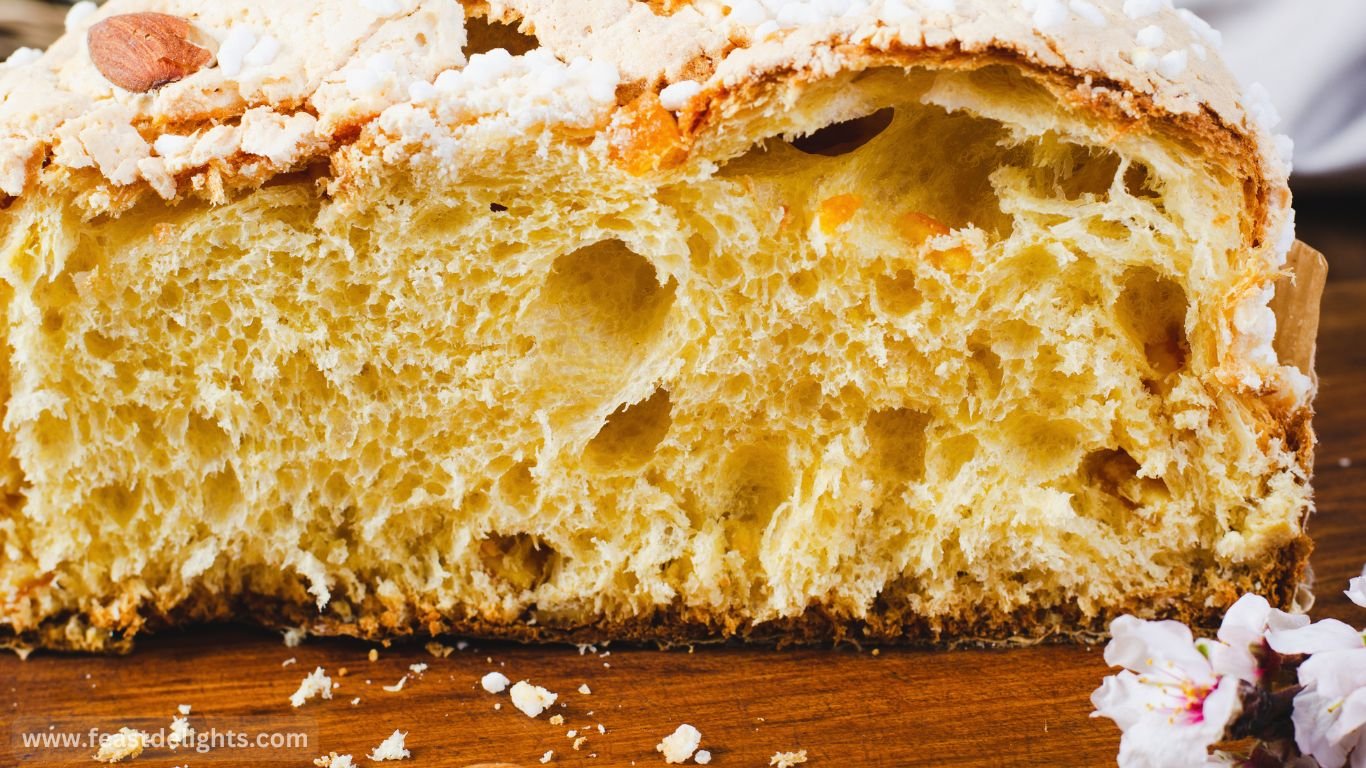
This tall Easter bread uses milk, butter, eggs and lemon zest for a rich, soft crumb.
This tall Easter bread uses milk, butter, eggs and lemon zest for a rich, soft crumb. A lively yeast starter helps the heavily enriched dough rise. Let each proof continue until the dough visibly expands in its tin rather than relying only on the clock. Cool the baked loaves before cutting so the crumb does not compress or tear. Stir yeast into warm milk with 1 tbsp each of measured sugar and flour; stand 15 to 20 minutes until lively. Beat eggs with remaining sugar; add starter, most of flour, butter, salt, vanilla and lemon zest. Knead 12 minutes, adding remaining flour as needed for soft dough. Fold in optional raisins; cover and rise 90 minutes or until roughly doubled.
Recipe card
Transcarpathian Easter Paska with Lemon Zest
Equipment: Large mixing bowl, two tall 18 cm tins, oven
Ingredients
Instructions
Starter
Stir yeast into warm milk with 1 tbsp each of measured sugar and flour; stand 15 to 20 minutes until lively.
Mix
Beat eggs with remaining sugar; add starter, most of flour, butter, salt, vanilla and lemon zest. Knead 12 minutes, adding remaining flour as needed for soft dough.
Rise
Fold in optional raisins; cover and rise 90 minutes or until roughly doubled.
Shape and proof
Divide between two tall greased 18 cm paska tins, filling each one-third full; rise 45 to 60 minutes until near the rim.
Bake
Bake at 175°C (350°F) for 45 to 55 minutes until deep golden and an inserted skewer comes out clean; tent dark tops with foil, then cool fully.
How to tell when it is ready
Loaves deep golden, risen and clean on skewer test.
Tips
- Let rich dough rise by volume, not only the clock.
- Mix the raisins in after kneading.
- Fill deep tins only one-third full before proofing.
- Shield a dark top with loose foil.
Troubleshooting
- If loaves brown before the middle sets, tent and keep baking.
- If dough barely rises, move to a gently warm place and give it more time.
Substitutions
- Use 20 g dry yeast instead of 50 g fresh yeast, as the source permits.
- Use a similar unsalted butter if your usual brand is unavailable.
Variations
- Omit raisins for a plain lemon loaf.
- Swap raisins for an equal weight of candied citrus peel.
Serving suggestions
- Slice with tea after cooling.
- Toast a leftover slice with butter.
- Serve with fruit preserves.
- Place on an Easter breakfast table.
Make ahead
Prepare the measured ingredients in advance. Keep wrapped at cool room temperature for 2 days or freeze sliced.
Storage
Keep wrapped at cool room temperature for 2 days or freeze sliced.
Food safety
Fully bake the egg-rich dough; cool loaves before wrapping.
Frequently asked questions
How full should the tins be?
About one-third before the final rise gives the dough space to climb.
How should I store transcarpathian easter paska?
Keep wrapped at cool room temperature for 2 days or freeze sliced.
Slice with tea after cooling. Keep wrapped at cool room temperature for 2 days or freeze sliced.
More recipes to try



Spotted a detail that needs correcting? Contact the FeastDelights editors.