Vanilla Pastry Cream with Egg Yolks and Cornstarch
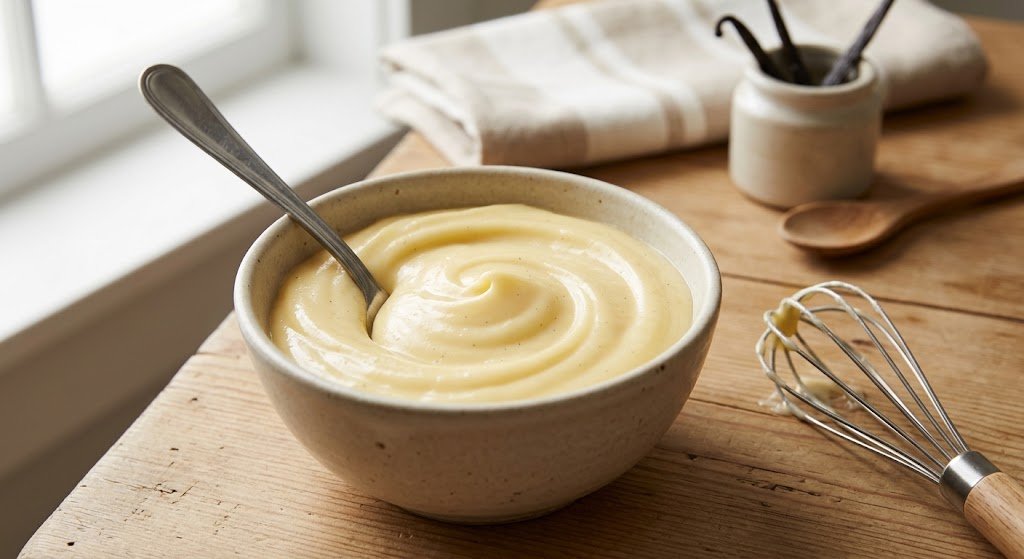
Vanilla pastry cream is a thick, spoonable custard made with milk, egg yolks, sugar, cornstarch and butter. It becomes smooth and pipeable after chilling, making it useful for filling éclairs, fruit tarts and layer cakes. This recipe uses 500 ml milk and four yolks, with a short stovetop cook followed by at least two hours of refrigeration. The key is to temper the yolks gradually and whisk the custard through its first bubbles. Cool it promptly and keep it refrigerated until use.
Pastry cream differs from a pourable custard because cornstarch gives it enough structure to hold inside a pastry shell. Heating the starch with milk and yolks creates a thickened mixture, while butter and vanilla finish the texture and flavour.
Vanilla pastry cream at a glance
Allow 15 minutes preparation, approximately 15 minutes cooking and at least two hours chilling. The starting ingredients weigh roughly 820 g with vanilla sugar; evaporation reduces the finished weight. A provisional yield of 700–780 g is more useful for filling pastries than guessing a volume, but the actual batch should be weighed. Use a heavy-bottomed saucepan around 1.5–2 litres and a whisk that reaches the corners.
Ingredients and measurements
Measure 500 ml whole milk (about 2 US cups plus 2 tablespoons), 150 g granulated sugar (¾ cup), four large egg yolks, 40 g cornstarch (cornflour in UK usage), 10 g vanilla sugar or one teaspoon vanilla extract, 50 g unsalted butter (1.8 oz) and a pinch of salt. Cornstarch is the fine white starch, not cornmeal or maize flour. Whole milk provides richness; low-fat milk may produce a less creamy texture. Weigh the starch for consistency.
Recipe card
Vanilla Pastry Cream with Egg Yolks and Cornstarch
15 minutes prep + about 15 minutes heating and thickening + at least 120 minutes chilling; shallow containers cool faster. Final yield and chilling time need kitchen confirmation.
Equipment: Scale, measuring jug, heavy saucepan, whisk, heatproof bowl, fine sieve, shallow container, ice bath, food thermometer and food-safe wrap.
Ingredients
Custard
Instructions
Mix starch
Whisk 40 g cornstarch with 100 ml cold milk until smooth. Whisk in yolks, sugar and salt promptly.
Heat milk
Warm remaining 400 ml milk over medium heat until steaming and bubbles form at the edge.
Temper yolks
Gradually whisk about half the hot milk into yolk mixture, whisking continuously.
Thicken cream
Return mixture to saucepan. Whisk over medium-low heat until thick and bubbling; continue whisking 1 minute. Verify at least 71°C (160°F).
Finish
Remove from heat and stir in vanilla and 50 g cubed butter until smooth. Sieve if needed.
Chill
Transfer to a shallow container over an ice bath, cool promptly, cover surface directly and refrigerate within 2 hours. Chill at least 2 hours or until cold throughout.
Mix and temper the yolks
Whisk cornstarch with 100 ml of the cold milk until completely smooth. Add yolks, sugar and salt and whisk promptly; do not let sugar sit directly on yolks. Heat the remaining 400 ml milk in the saucepan over medium heat until steaming and small bubbles appear at the edge. Avoid scorching. Gradually whisk about half the hot milk into the yolk mixture. This raises its temperature more evenly than pouring cold yolks straight into a hot pan.
Thicken and check doneness
Return the tempered mixture to the saucepan. Cook over medium-low heat, whisking continuously and scraping the corners. When the cream thickens and bubbles appear across the surface, continue whisking for one minute. Egg dishes should reach at least 71°C (160°F), as described in FDA safe food handling guidance; the bubbling starch custard should exceed that temperature. Do not rely on a fixed cooking time alone. Remove from heat, stir in vanilla and the cubed butter until smooth. If there are a few lumps, pass through a fine sieve while still warm. If the base has burned, do not scrape the scorched layer into the cream.
Cool promptly before filling pastries
Transfer the cream to a clean shallow heatproof container and set it over an ice bath, stirring to release heat. Keep bath water out of the custard. Cover the surface directly with food-safe wrap suitable for contact at that temperature and refrigerate promptly. Chill until cold throughout and thick enough to hold a spoon mark. Whisk briefly before piping to loosen the set texture. Do not fill warm pastry or leave the finished cream at room temperature for extended periods.
Troubleshooting
Lumps: disperse the starch in cold milk and whisk continuously. Thin cream: ensure it reached a bubbling stage and held there for the specified minute; also allow full chilling before judging consistency. Scorched flavour: use a heavy pan and moderate heat. Skin: press wrap directly against the surface. Greasy appearance: stir butter into the hot custard off the heat until incorporated.
Serving and variations
Use cold pastry cream in tart shells, éclairs or as a cake layer. Serve a little alongside vanilla sour cream loaf or with pitted cherry jam for a spoon dessert. If decorating instead of filling a cake, see Italian meringue buttercream, a distinct frosting. Citrus zest can infuse the milk before tempering; strain it out first. A chocolate version requires a separately adjusted formula.
Make ahead and allergens
Make the custard the day before filling if convenient. Contains egg and milk. Cornstarch is naturally gluten-free, but check packaging if cross-contact matters. Store filled pastries according to the most perishable component.
Cool promptly in a shallow container over an ice bath, then refrigerate at 4°C/40°F or colder within 2 hours (1 hour above 32°C/90°F). Keep covered and use within 3 days. Freezing is not recommended because the custard may separate.
Whisk the cold cream briefly until smooth, then spoon or pipe into fully cooled pastry shells.
Frequently asked questions
Is pastry cream the same as pouring custard?
No. Cornstarch makes pastry cream much thicker and suitable for filling pastries.
Can I use flour instead of cornstarch?
Flour thickens differently; a separate recipe is preferable to an equal-weight swap.
Why did my cream form lumps?
Starch may not have been fully dispersed or the mixture may have heated unevenly. Whisk and sieve while warm.
Can I use vanilla extract?
Yes, use the original alternative of one teaspoon in place of vanilla sugar.
Can I freeze pastry cream?
Freezing is not recommended because it may become watery or grainy after thawing.
Can I pipe warm pastry cream?
Chill it fully first so it holds its shape and does not soften pastry.
More recipes to try

Cream Cheese Chocolate Truffles Rolled in Cocoa

Cream Cheese Cheesecake Danish with Lemon and Vanilla

Fresh Fruit Salad with Orange Honey Dressing

Ptichye Moloko Bird’s Milk Mousse with Chocolate Glaze
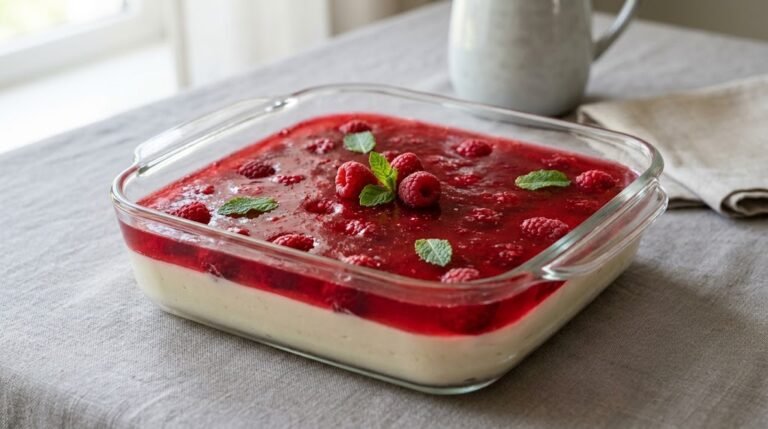
Bird’s Milk Jello with Creamy Mousse and Raspberry Jelly
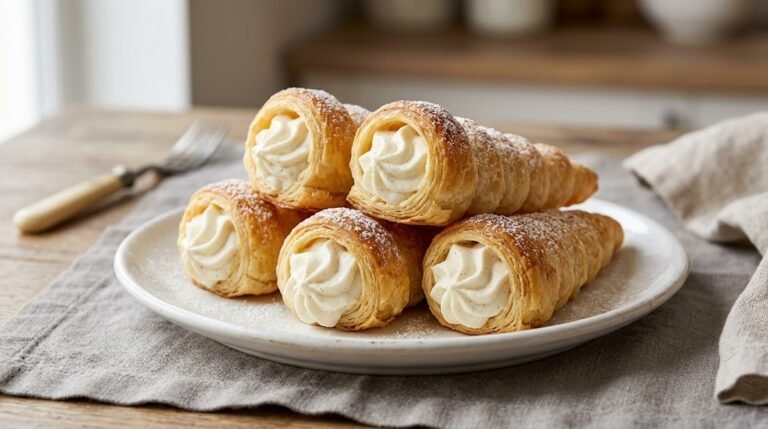
Cream Horn Trubochki with Vanilla Cream Filling
Spotted a detail that needs correcting? Contact the FeastDelights editors.