Genoise Sponge Cake with a Light Buttery Crumb
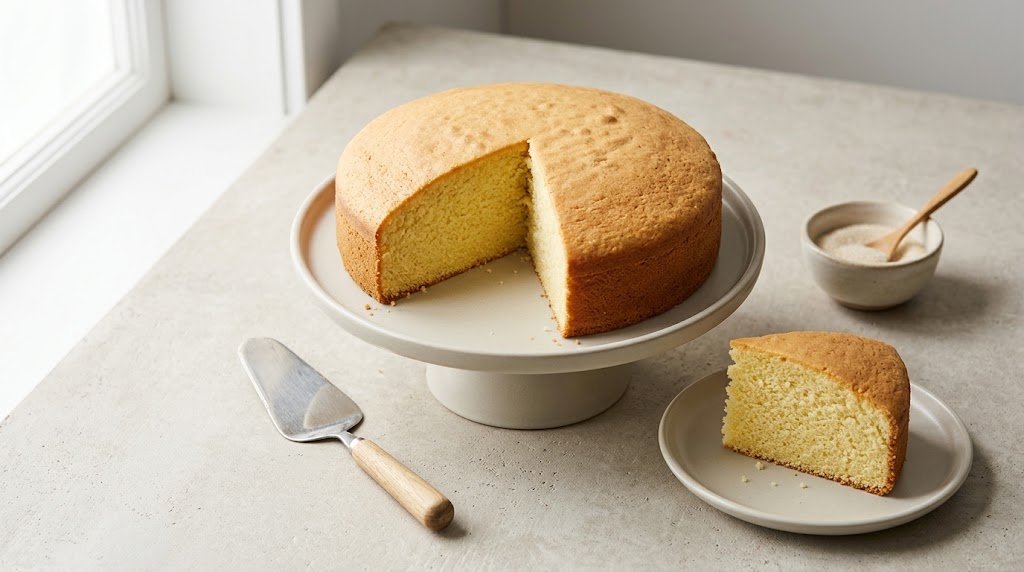
Genoise gets its lift from well-whipped whole eggs rather than baking powder.
Genoise gets its lift from well-whipped whole eggs rather than baking powder. A little melted butter gives this version a fuller crumb while keeping it light enough for fruit and cream. The crucial stage is folding: preserve the air while making sure no dry flour hides at the bottom. Mix a little batter into the butter before returning it to the bowl, which makes the heavier liquid easier to incorporate. Bake immediately after mixing.
Recipe at a glance
Yield: 10 slices; one 23 cm cake. Prep: 25 minutes. Cook: 30 minutes. Total: 115 minutes, including 60 minutes of additional resting, cooling, chilling or draining where stated. Times are estimates; follow the doneness checks.
Equipment
23 cm round cake tin, heatproof bowl, mixer, sieve, spatula, thermometer.
Ingredients and directions
Recipe card
Genoise Sponge Cake with a Light Buttery Crumb
Equipment: 23 cm round cake tin, heatproof bowl, mixer, sieve, spatula, thermometer.
Ingredients
Instructions
Warm and whip
Heat the oven to 180°C (350°F). Line the base of a 23 cm round tin with paper; leave sides ungreased. Set eggs and sugar in a bowl over gently simmering water without touching it. Whisk until lukewarm, about 40°C (104°F), then remove.
Build the foam
Beat 7–10 minutes until very thick and a ribbon stays visible for several seconds. Add vanilla.
Fold
Sift flour and salt over the eggs in three additions, folding gently. Stir a spoonful of batter into cooled melted butter, then fold that mixture back into the bowl.
Bake
Pour into the tin immediately. Bake 25–30 minutes until springy and a skewer has no wet batter. Avoid opening the oven early.
Cool
Cool 10 minutes, loosen sides with a thin knife and transfer to a rack. Allow 1 hour for complete cooling before slicing or adding fillings.
Doneness checks
Cake is springy and a skewer has no wet batter; the crumb stays light when cooled.
Helpful tips
- Warm eggs gently rather than cooking them over steam.
- Whip until the ribbon holds briefly on the surface.
- Sift flour to avoid stubborn lumps.
- Fold the butter in after lightening it with batter.
Troubleshooting
- The egg foam may not have been thick enough or too much air was lost during folding. Check ribbon stage before adding flour.
- Warm eggs gently rather than cooking them over steam.
Serving ideas
- Serve plain with fruit on the side.
- Split when cold and fill with whipped cream.
- Use as a base for a fruit layer cake.
- Offer a small slice with coffee.
Substitutions
Do not replace whole eggs with whites only in this formula. Caster sugar dissolves more readily than very coarse sugar.
Variation
Use 1 teaspoon lemon zest instead of vanilla for a citrus sponge.
Make ahead
Bake a day ahead, cool and wrap tightly. Add fillings on the serving day and keep perishable fillings chilled.
Storage and reheating
Keep the unfrosted cake covered at cool room temperature for up to 1 day, or refrigerate for up to 3 days. Cream or fruit fillings require refrigeration. Freeze wrapped plain sponge for up to 1 month.
Food safety
Use clean utensils and wash produce. Keep perishable ingredients refrigerated at 4°C (40°F) or below. Refrigerate perishable leftovers promptly, within 2 hours, or within 1 hour above 32°C (90°F).
Frequently asked questions
Why is the cake dense?
The egg foam may not have been thick enough or too much air was lost during folding. Check ribbon stage before adding flour.
Does it need baking powder?
Not this genoise formulation. The whipped egg foam supplies the lift.
How to tell when it is ready
Cake is springy and a skewer has no wet batter; the crumb stays light when cooled.
Tips
- Warm eggs gently rather than cooking them over steam.
- Whip until the ribbon holds briefly on the surface.
- Sift flour to avoid stubborn lumps.
- Fold the butter in after lightening it with batter.
Troubleshooting
- The egg foam may not have been thick enough or too much air was lost during folding. Check ribbon stage before adding flour.
- Warm eggs gently rather than cooking them over steam.
Substitutions
- Do not replace whole eggs with whites only in this formula. Caster sugar dissolves more readily than very coarse sugar.
Variations
- Use 1 teaspoon lemon zest instead of vanilla for a citrus sponge.
Serving suggestions
- Serve plain with fruit on the side.
- Split when cold and fill with whipped cream.
- Use as a base for a fruit layer cake.
- Offer a small slice with coffee.
Make ahead
Bake a day ahead, cool and wrap tightly. Add fillings on the serving day and keep perishable fillings chilled.
Storage
Keep the unfrosted cake covered at cool room temperature for up to 1 day, or refrigerate for up to 3 days. Cream or fruit fillings require refrigeration. Freeze wrapped plain sponge for up to 1 month.
Food safety
Use clean utensils and wash produce. Keep perishable ingredients refrigerated at 4°C (40°F) or below. Refrigerate perishable leftovers promptly, within 2 hours, or within 1 hour above 32°C (90°F).
Frequently asked questions
Why is the cake dense?
The egg foam may not have been thick enough or too much air was lost during folding. Check ribbon stage before adding flour.
Does it need baking powder?
Not this genoise formulation. The whipped egg foam supplies the lift.
More recipes to try





Spotted a detail that needs correcting? Contact the FeastDelights editors.