Light Sponge Cake Roll with Thick Fruit Jam
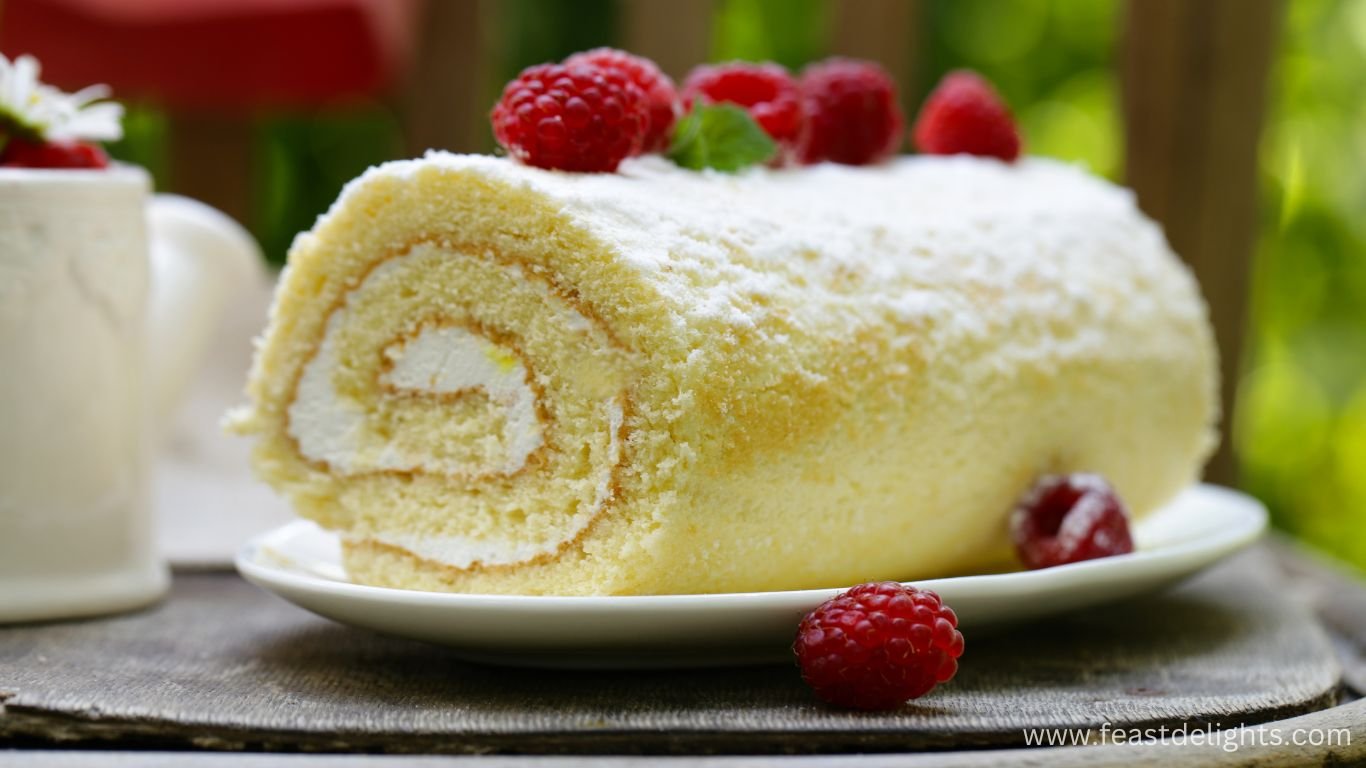
A light vanilla sponge surrounds a bright spiral of thick fruit jam in this simple cake roll. Whole eggs whipped with sugar give the sheet its airy texture, while a short bake keeps it flexible enough to shape. The warm cake is rolled in parchment first, then cooled and filled so the jam stays in an even layer. This recipe makes 10 slices from one 30 × 40 cm tray, with no buttercream or cream filling to prepare.
This jam-filled sponge cake roll wraps a light vanilla sponge around a thin layer of fruit preserve. The eggs provide the lift, so the main work is whipping a stable foam and folding in the flour without losing it. There is no butter or baking powder in the batter. A shallow 30 × 40 cm (about 12 × 16 inch) tray keeps the cake thin enough to bend. Roll it in parchment while warm, let it cool in that shape, then add the jam. The recipe makes 10 slices and takes about 70 minutes, including roughly 30 minutes for cooling; allow longer if the centre is still warm.
What matters in this sponge cake roll
The ingredients are simple, but the foam needs care. Use six large eggs and have the flour sifted before mixing. Beat the eggs and sugar until the mixture is much paler, thick and expanded. Lift the whisk: the batter should fall in a ribbon that remains on the surface briefly. A fixed seven minutes is only a guide; a hand mixer may take longer.
Keep the existing proportions: 6 eggs, 125 g sugar and 110 g flour. This is a six-egg adaptation for one shallow tray. Avoid doubling the batter in the same tray, which would make the cake too thick to roll easily.
Ingredient choices and equipment
Weigh the flour if possible. At approximately 120 g per US cup, 110 g is a scant cup; scooping a full packed cup could make the sponge heavy. The 125 g sugar is about ½ cup plus 2 tablespoons. Choose a thick, smooth jam that spreads easily at room temperature. Runny preserves soak into the crumb and can escape as you roll. Break up large fruit pieces before spreading.
Use an electric mixer, a large bowl, a sieve, a flexible spatula, a shallow rimmed tray and baking parchment. A smaller tray makes a thicker sponge with a different bake time, so avoid transferring this full batch to a small tin. Have the turning parchment ready before the cake comes out of the oven.
Recipe card
Light Sponge Cake Roll with Thick Fruit Jam
25 minutes preparation + up to 15 minutes baking + about 30 minutes cooling = about 70 minutes; cool longer if still warm.
Equipment: Electric mixer; large bowl; sieve; flexible spatula; shallow 30 × 40 cm (12 × 16 inch) rimmed tray; baking parchment; serrated knife.
Ingredients
Sponge
Filling and finishing
Instructions
Prepare the tray
Heat the oven to 180°C (350°F), conventional. Line a shallow 30 × 40 cm (about 12 × 16 inch) rimmed tray with baking parchment. Set out a second sheet for turning; reserve the icing sugar for dusting that paper and the finished roll.
Whip the egg foam
Beat 6 large eggs with the sugar, vanilla and salt until pale, thick and expanded, about 7 minutes with a powerful mixer, longer if needed. The whisk should leave a ribbon that holds briefly on the surface.
Fold in the flour
Sift the flour over the foam in two additions and fold gently with a flexible spatula, reaching the bottom of the bowl. Stop when no dry flour remains, then spread evenly in the lined tray.
Bake until springy
Bake for 12–15 minutes, checking from 12 minutes. The centre should be set and spring back lightly without a wet patch. Avoid a dark, dry crust.
Shape while warm and cool
Turn onto the fresh parchment dusted lightly with some icing sugar. Peel off the baking paper. Starting from a short edge, roll the warm cake gently with the new parchment inside. Cool seam-side down for about 30 minutes, until no longer warm.
Fill and finish
Unroll gently without forcing the curved centre flat. Spread the room-temperature jam evenly, leaving a 1–2 cm border. Roll again while removing the paper. Set seam-side down, dust with the remaining icing sugar and cut into 10 slices.
Folding, baking and shaping
Add the flour in two additions. Sweep the spatula down through the middle, across the bottom and up the side while turning the bowl. Stop when no dry pockets remain. Vigorous stirring deflates the foam; leaving flour at the bottom produces gummy streaks. Spread into the corners with a few light strokes so the centre and edges bake together.
Begin checking at 12 minutes. The surface should look set and spring back under a light fingertip, with no wet patch in the centre. Deep browning and hard edges suggest too much baking. Do not use the colour alone to judge it. Turn the cake out promptly onto parchment lightly dusted with some of the measured icing sugar, then peel off the baking paper carefully.
Start at a short edge and roll the sponge with the fresh paper inside it. Make the first turn gently; squeezing a tight tube can split the centre. Let it cool on its seam. Unroll only far enough to spread the jam, without pressing the curved inner edge flat. Leave a narrow border, then roll again while lifting away the paper.
Troubleshooting the texture
A flat, dense sheet: the egg foam may have been under-whipped or lost during folding. Check the ribbon before adding flour and keep the folding deliberate. Extra baking powder added after mixing will not repair a collapsed foam.
Cracks in the spiral: a dry sponge or a first roll made after cooling is harder to bend. Small surface cracks are cosmetic; place the seam underneath and dust lightly. A cake broken into several pieces is better served as layered sponge and jam rather than squeezed into a tight roll.
Jam pushing out: use a thin layer, keep the border clear and resist pressing the finished roll. Warm jam is looser than room-temperature jam. If you warmed it to soften it, let it cool again before filling.
Substitutions and serving
Apricot, raspberry, strawberry or plum preserve can all work if thick enough. Use seedless jam for a smoother spiral. Lemon zest can replace part of the vanilla aroma; fold in a small amount with the flour. Gluten-free flour and egg substitutes change the structure substantially and are not verified replacements for this egg-foam recipe.
Cut with a serrated knife using a light sawing motion and wipe it between slices. The roll is sweet enough to serve plain. Put fresh berries, a spoonful of yogurt or lightly whipped cream beside individual portions rather than adding a wet topping before storage.
For a different filling, see the cinnamon apple sponge roll. The blackberry lemon cake roll uses cream and needs its own chilling instructions. For an unrolled sponge with butter, try the genoise sponge cake; its batter is a separate formula.
Make ahead, storage and allergens
For the best texture, fill and serve the cake the day it is made. Wrap the cooled, jam-only roll and keep at cool room temperature for up to one day, or refrigerate for up to three days. These are conservative quality limits for this filling. Follow the preserve maker’s storage instructions if more restrictive. Bring a refrigerated slice towards room temperature before serving; reheating is unnecessary.
Freeze the wrapped jam-only roll for up to one month for best quality and thaw wrapped in the refrigerator. Condensation can dissolve the sugar dusting, so add it after thawing. Any cream, custard or fresh dairy filling changes the storage requirements: refrigerate at 4°C (40°F) or below and do not leave perishable portions out for more than two hours, or one hour above 32°C (90°F). Bake the egg-and-flour batter fully and do not taste it raw.
Contains eggs and wheat. Check jam labels and any optional sides for additional allergens.
Keep the sponge light, shape it while warm and spread the jam in a thin layer. Those three details make the spiral easier to form and slice.
Frequently asked questions
Does this sponge need baking powder?
No. This formula relies on air whipped into whole eggs. A stable ribbon and gentle folding are essential; baking powder has not been added to change the existing recipe.
Which edge should I roll from?
Start at a short edge of the 30 × 40 cm sheet. This makes a shorter, fuller spiral. Keep the same direction when you unroll and fill it.
Can I fill the cake while it is hot?
Cool it in the rolled shape first. Hot sponge is fragile and warm jam can run. The cake should no longer feel warm before filling.
Can I use a larger baking sheet?
Keep the batter within approximately 30 × 40 cm. Spreading it across a much larger sheet makes it thinner and more likely to overbake.
What if the parchment sticks?
Peel it back slowly at a low angle while supporting the sponge. A thin layer of surface crumb may come away; do not scrape deeply into the cake.
Can I add cream to this roll?
Use a separately verified cream-filled roll recipe or serve cream alongside. Adding cream changes the filling volume, total time and refrigeration requirements.
More recipes to try

Cream Cheese Chocolate Truffles Rolled in Cocoa

Cream Cheese Cheesecake Danish with Lemon and Vanilla

Fresh Fruit Salad with Orange Honey Dressing

Ptichye Moloko Bird’s Milk Mousse with Chocolate Glaze
Bird’s Milk Jello with Creamy Mousse and Raspberry Jelly
Cream Horn Trubochki with Vanilla Cream Filling
Spotted a detail that needs correcting? Contact the FeastDelights editors.