Creamy Shrimp Alfredo Fettuccine with Garlic and Parmesan
This shrimp Alfredo-style fettuccine combines tender shrimp with ribbons of pasta coated in a smooth garlic, cream and Parmesan sauce. Cook the shrimp briefly in butter, remove them while making the sauce and return them only when ready to toss with the noodles. A little reserved pasta water helps the cheese sauce coat the pasta without becoming too thick. The recipe makes four servings in about 35 minutes and is best served immediately with chopped parsley.
Shrimp Alfredo pasta is a rich, creamy dish of fettuccine or tagliatelle tossed with garlic shrimp and Parmesan. This version serves four in approximately 35 minutes. Cook the shrimp briefly and set them aside before making the sauce so they do not become tough during a prolonged simmer.
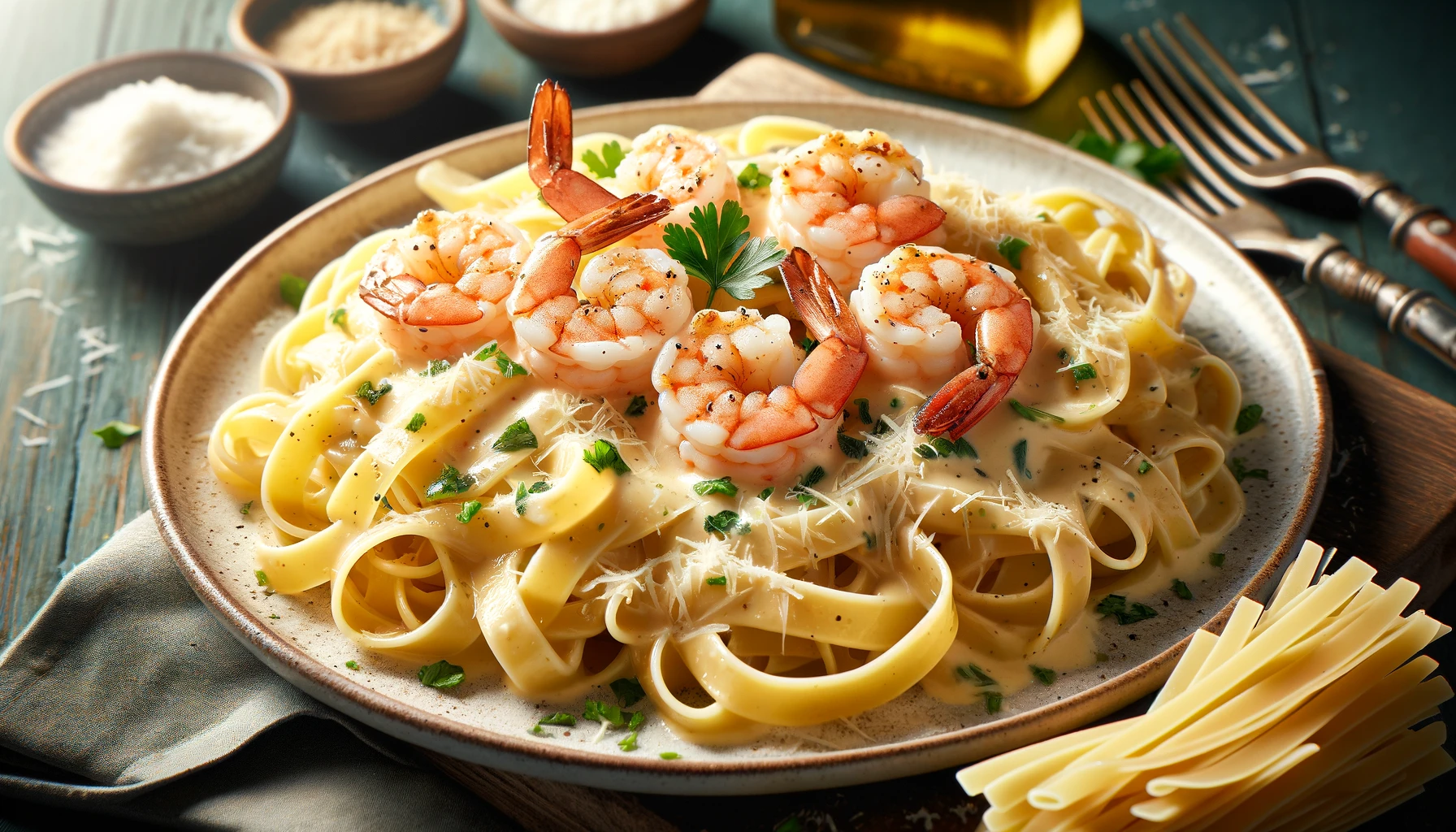
Recipe card
Creamy Shrimp Alfredo Fettuccine with Garlic and Parmesan
Cooking time assumes pasta boils while shrimp and sauce are prepared. Allow extra time for thawing frozen shrimp.
Equipment: Kitchen scale, large pasta pot, colander, wide skillet, knife, separate seafood cutting board, tongs, fine grater, measuring jug and food thermometer.
Ingredients
Pasta
Seafood
Sauce
Garnish
Instructions
Cook pasta and reserve water
Cook fettuccine or tagliatelle in boiling water until al dente, following package directions. Reserve 1 cup (about 240 ml) pasta water before draining.
Sauté garlic and shrimp
Melt butter over medium heat in a wide skillet. Stir in garlic briefly, then add shrimp in a single layer. Cook, turning, until pearly and opaque throughout (63°C/145°F if checking with a thermometer). Transfer to a clean plate.
Warm cream and melt Parmesan
Warm cream gently in the skillet. Reduce heat or remove briefly from direct heat before stirring in grated Parmesan gradually until smooth.
Toss pasta and shrimp
Add drained pasta and cooked shrimp. Toss until coated and warmed through, loosening with reserved pasta water a tablespoon at a time.
Season and garnish
Taste for salt and black pepper, finish with chopped parsley and serve immediately.
Choosing the pasta and seafood
Use 400 g (about 14 oz) dried fettuccine or tagliatelle. The broad noodles provide a good surface for the cream sauce. Follow the packet’s cooking time and taste a noodle shortly before the stated time. It should be tender with a slight bite. Use 300 g (about 10.6 oz) raw peeled shrimp, with the digestive vein removed if necessary. Frozen shrimp are convenient; thaw in the refrigerator according to package instructions, then drain and pat dry. Do not thaw them on the counter.
Choose unsweetened heavy cream with about 35% fat. One US cup is approximately 240 ml. Grate the Parmesan finely from a block if possible; a tightly packed half cup of grated cheese weighs more than a loosely filled one, so add gradually and adjust with pasta water. Butter and garlic provide the base. Taste the finished sauce before adding salt because Parmesan is already salty.
Cook the pasta and reserve its water
Bring a large pot of water to a boil. Add the noodles and cook until al dente. Before draining, scoop out a cup of the starchy water. It will help loosen the sauce while encouraging it to cling to the noodles. Do not rinse the hot pasta: rinsing removes useful starch and cools it. Time this step so the noodles finish close to the sauce.
Cook shrimp without making them rubbery
Melt the butter in a wide skillet over medium heat and stir in minced garlic briefly, until fragrant. Add the shrimp in a single layer. Cook for roughly one to three minutes per side, depending on size, turning when the underside turns opaque. The flesh should become pearly and opaque throughout; if using a thermometer, check the thickest shrimp reach 63°C (145°F). See official seafood safety guidance. Lift cooked shrimp onto a clean plate. Do not use the same unwashed plate that held raw shrimp.
Make a creamy, smooth sauce
Pour the heavy cream into the skillet and warm gently over low heat, scraping up the garlic and butter. Reduce the heat further, or take the pan briefly off the heat, before stirring in finely grated Parmesan a little at a time. Avoid a hard boil once cheese is added; strong heat can make it clump and release fat. Add the drained pasta and cooked shrimp, tossing just long enough to coat and warm them. Loosen with reserved pasta water a tablespoon at a time until the sauce coats each ribbon rather than pooling underneath. Season with salt and black pepper as needed.
Troubleshooting
Thick or sticky sauce: toss in a splash of warm pasta water. Cheese clumps: take the pan off heat and whisk gently with a little warm liquid; use finely grated cheese next time. Watery sauce: drain shrimp and pasta well, and reduce the cream briefly before adding cheese. Tough shrimp: avoid cooking them during the entire sauce preparation. Burnt garlic: lower the heat and add shrimp as soon as the garlic smells fragrant.
Serving ideas and substitutions
Finish with chopped parsley and optional lemon wedges to contrast the rich sauce. Serve with garlic green beans with lemon or a simple green salad. For a lighter seafood pasta without cream, try shrimp scampi linguine; for a different protein, see creamy chicken Alfredo pasta. Sautéed spinach can be added before tossing. A comparable aged Parmesan-style cheese may work, but its saltiness and melting behaviour can differ.
Make ahead, storage and allergens
Grate cheese, chop garlic and prepare shrimp ahead, keeping the seafood refrigerated. Make the finished sauce just before serving for the smoothest texture. Refrigerate leftovers promptly and reheat only the portion needed to 74°C (165°F); gentle stirring and extra liquid help prevent splitting. Contains crustacean shellfish, wheat and milk. Some pasta also contains egg, so check the label. Follow FoodSafety.gov temperature guidance.
Frequently asked questions
Can I use frozen shrimp?
Yes. Thaw raw peeled shrimp in the refrigerator according to the package directions, drain and pat dry before cooking.
Can I use cooked shrimp?
Yes. Skip the raw shrimp cooking stage and add fully cooked shrimp near the end, heating through to 74°C (165°F). Avoid prolonged simmering.
Why reserve pasta water?
The starch helps the sauce cling to the pasta and allows you to adjust thickness without adding more cream.
Why has my Parmesan clumped?
The sauce may have been too hot or the cheese added too quickly. Remove from direct heat and stir in finely grated cheese gradually.
Can I use another pasta shape?
Yes. Tagliatelle is the listed alternative; linguine can also hold the sauce well.
More recipes to try






Spotted a detail that needs correcting? Contact the FeastDelights editors.