Ukrainian Chopped Pork Sausage with Garlic
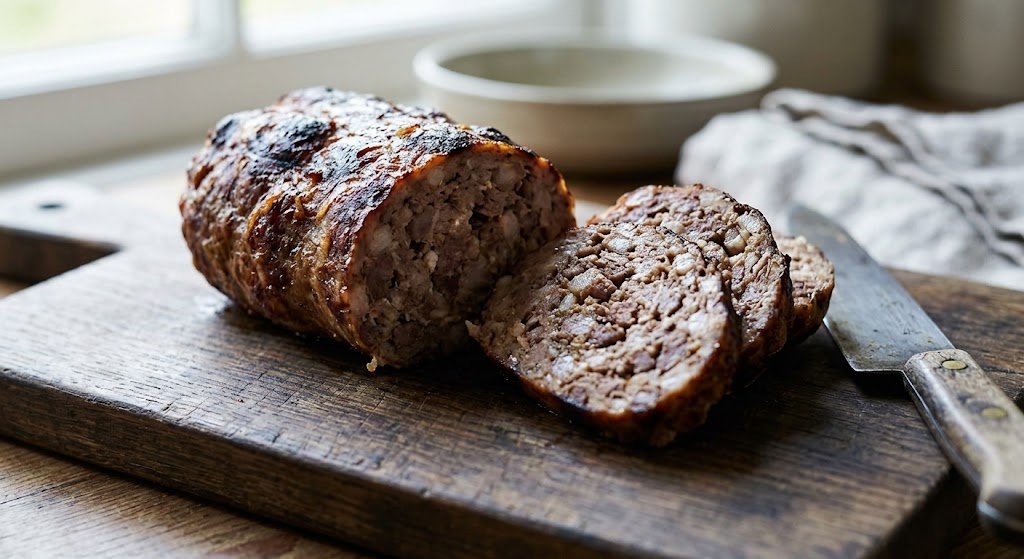
Ukrainian chopped pork sausage is a rustic homemade sausage with visible pieces of pork and fat, fragrant garlic, paprika, black pepper and nutmeg. Unlike finely ground sausages, the hand-chopped filling has a coarse, juicy texture. Fill food-grade casings with the chilled meat mixture and oven-bake the links until browned and safely cooked through. The recipe makes about ten links in approximately one hour and 55 minutes, including a brief rest. Serve warm with potatoes and mustard or chill promptly for sandwiches.
This Ukrainian-style fresh sausage uses chopped pork shoulder or neck rather than a finely ground paste. It is made for immediate oven cooking and refrigerated storage, not curing, drying or smoking. Keeping the meat cold and distributing the diced fat evenly are important for the characteristic texture.
Choosing meat, fat and casings
Use 1 kg (2.2 lb) pork shoulder or neck and 200 g (about 7 oz) pork fat. These quantities give the sausage its coarse texture; very lean pork may become dry. Cut the chilled meat into small even pieces, roughly 5–8 mm, and dice the fat somewhat finer so it distributes evenly. Keep the bowl over ice or return the meat to the refrigerator in batches as you work. Weigh the salt and spices: 20 g salt is a seasoning quantity for this fresh sausage, not a curing formulation. The 50 ml of cold water helps the pieces bind during mixing. Use food-grade sausage casing of appropriate diameter and prepare it exactly as the supplier directs.
Equipment and timing
Use a sharp knife, separate raw-meat board, chilled mixing bowl, scale, sausage stuffer, clean food-safe casing, rimmed baking tray and instant-read thermometer. Allow 55 minutes for chopping, mixing and stuffing, 50 minutes for baking and ten minutes for resting. Link count and cooking time depend on casing diameter and filling weight.
Recipe card
Ukrainian Chopped Pork Sausage with Garlic
Cooking time varies with casing diameter. Rest five to ten minutes after baking.
Equipment: Sharp knife, separate raw-meat board, chilled bowl, scale, sausage stuffer, rimmed baking tray and thermometer
Ingredients
Pork and fat
Seasoning and binding
Casings
Instructions
Chill and chop pork and fat
Chill meat, fat and bowl. Chop pork into roughly 5–8 mm pieces and dice fat slightly finer. Keep cold as you work.
Mix the cold filling
Mix pork, fat, minced garlic, weighed salt, black pepper, paprika, nutmeg and cold water until pieces bind and seasoning is evenly distributed. Refrigerate while preparing casings.
Stuff and shape the links
Prepare food-grade casings according to supplier instructions. Stuff steadily without overfilling, twist into approximately ten links and release visible trapped air with a clean sausage pricker if needed.
Bake and check the centre temperature
Arrange links apart on a rimmed tray and bake at 180°C (350°F) for about 40–50 minutes, turning once. Check the centre of the thickest links reaches at least 71°C (160°F).
Rest and serve
Rest five to ten minutes before slicing. Serve warm or cool leftovers promptly in shallow containers and refrigerate.
Mixing the chopped sausage filling
Combine the chilled pork and fat with minced garlic, weighed salt, pepper, paprika, nutmeg and cold water. Mix with clean hands or a sturdy spoon until the pieces begin to stick together and the seasoning is evenly distributed. Avoid prolonged mixing that warms or smears the fat. If you want to check the seasoning, cook a small separate patty to 71°C (160°F) before tasting; never taste the raw mixture. Keep the rest refrigerated.
Stuffing the casings without splitting
Slide prepared casing onto the stuffer nozzle and feed the cold filling through steadily. Avoid tight packing; leave enough slack to form links and allow expansion. Twist into roughly ten equal lengths, alternating twist directions if useful, and secure the ends. If a visible air pocket remains, use a clean sausage pricker to release it without perforating the casing unnecessarily. Arrange the links apart on a rimmed tray so they brown evenly. Wash hands, stuffer and utensils thoroughly after contact with raw pork.
Oven cooking and doneness
Preheat a conventional oven to 180°C (350°F). Bake the links for about 40–50 minutes, turning once with tongs. Begin checking earlier for small links. Insert an instant-read thermometer into the centre of the thickest links, avoiding contact with the tray. Chopped fresh sausage must reach 71°C (160°F), the recommended temperature for ground meat and sausage in the FoodSafety.gov temperature chart. Browning is not proof of safe cooking. If a link has browned too quickly, cover loosely with foil and continue until the temperature is reached. Rest five to ten minutes before serving.
Troubleshooting
Casings burst: reduce stuffing pressure and avoid very high oven heat. Dry texture: preserve the measured fat and avoid cooking long past the target temperature. Crumbly filling: mix until the chopped pieces bind, keeping everything cold. Uneven cooking: make links similar in thickness and check more than one with the thermometer. Fat collects on the tray: some rendering is normal; if excessive, keep the meat colder during preparation.
Variations and serving
Serve with boiled or mashed potatoes and homemade mustard, fresh cucumber salad or tomato-braised cabbage. Adjust the spices modestly in future batches according to taste. A little sweet smoked paprika changes the flavour but does not smoke or preserve the sausage. If you lack a stuffer, shape the mixture into patties and cook to 71°C; their cooking time will differ.
Make ahead and food safety
Keep raw pork chilled at 4°C or colder, separate from ready-to-eat ingredients. Clean the stuffer immediately after use. Do not use this recipe for cold smoking, fermentation, air drying or shelf storage. No curing salt or validated preservation process is specified. Refrigerate cooked links in shallow covered containers within two hours of cooking (one hour above 32°C/90°F). Keep at 4°C (40°F) or colder and use within three days. Freeze cooked portions for up to two months for best quality, thaw in the refrigerator and reheat to 74°C (165°F). Keep uncooked sausage refrigerated and cook within one to two days of purchase or preparation, whichever comes first. Check the casing supplier’s ingredients and spice blends for allergens; mustard served alongside is an allergen.
Rest the cooked sausage briefly before slicing. The interior should have distinct tender pieces of pork and fat, not a dry, crumbly texture.
Frequently asked questions
Can I use a meat grinder?
Yes, but a coarse grind produces a different texture from the hand-chopped version.
Do I need curing salt?
No. This is a fresh sausage for immediate cooking and refrigeration, not curing or preservation.
Can I make the sausage without casings?
Yes. Shape into patties and cook to 71°C (160°F); the timing differs.
Why chill the pork fat?
Cold fat stays in distinct pieces instead of smearing into the filling during mixing.
Can I smoke these links?
Use a separate validated hot-smoking process. This recipe is for oven baking only.
Can I fry the links instead?
You can cook fresh links in a skillet, turning regularly until their centres reach 71°C (160°F). Exact timing depends on thickness.
Can I judge doneness by colour?
No. Use a thermometer because a browned casing does not establish that the centre is safely cooked.
More recipes to try






Spotted a detail that needs correcting? Contact the FeastDelights editors.