Homemade Mustard Recipe from Mustard Powder
Make sharp homemade mustard from dry mustard powder, room-temperature water, sunflower oil, sugar, salt and food-grade 9% vinegar. The result is a thick, smooth condiment with a lively bite for roast potatoes, sausages and sandwiches. Mixing takes about 10 minutes, followed by 24 hours of refrigerated resting. The original six-ingredient proportions make approximately 230 g before bowl losses. This is a small-batch refrigerated condiment, not a shelf-stable preserve.
Mustard powder develops its characteristic heat when hydrated. This recipe adds room-temperature water first, then vinegar, sugar, salt and oil. The strength depends on the seeds used in the powder, so start with a small amount when serving.
Homemade mustard at a glance
Allow 10 minutes of active preparation and 24 hours of refrigerated resting. The starting ingredients weigh approximately 230 g; the actual jar yield and texture require kitchen confirmation. No cooking is needed.
Ingredients and equipment
Use 100 g (3.5 oz) plain dry mustard powder, not prepared mustard. Yellow mustard powder generally produces a gentler flavour than brown mustard powder. Measure 90 ml (6 US tablespoons) water at 20–25°C (68–77°F), 20 ml (4 teaspoons) refined sunflower oil, 15 ml (1 tablespoon) food-grade vinegar labelled 9% acidity, and 5 g each of salt and sugar. Weigh the salt because different crystal sizes pack differently.
Use only edible vinegar, never cleaning vinegar or concentrated vinegar essence. Ordinary 5% vinegar is not an equal-acidity substitute. You need a scale, measuring spoons, sieve, small glass or stainless-steel bowl, whisk and clean lidded 250–300 ml jar.
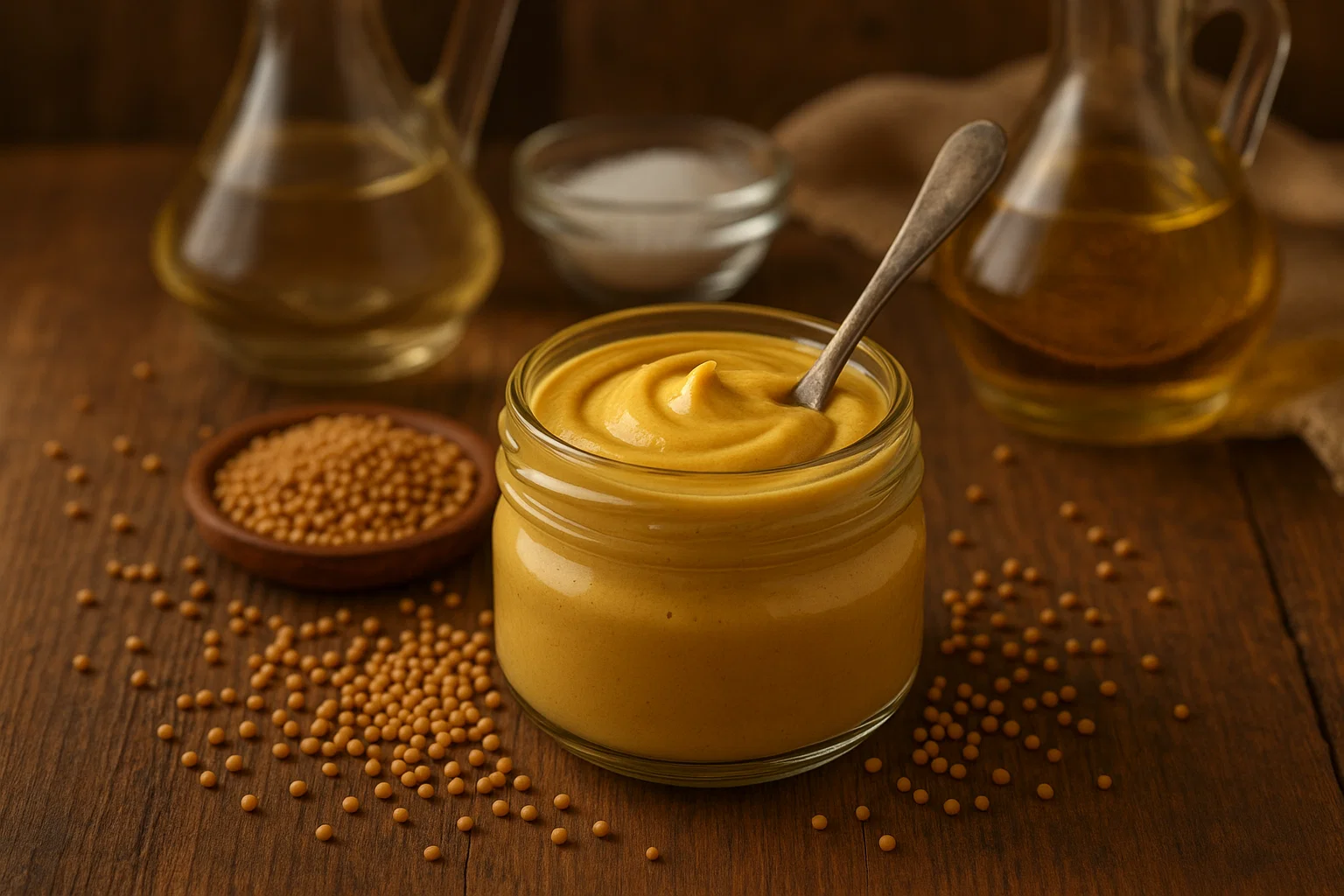
Recipe card
Homemade Mustard Recipe from Mustard Powder
10 minutes mixing plus 24 hours refrigerated resting. Yield and storage life need kitchen confirmation.
Equipment: Scale, measuring spoons, sieve, bowl, whisk and clean lidded 250–300 ml jar.
Ingredients
Mustard
Instructions
Mix the mustard
Sift 100 g mustard powder. Gradually stir in 90 ml water at 20–25°C (68–77°F), pressing lumps until smooth.
Season
Stir in 5 g each sugar and salt, followed by 15 ml food-grade 9% vinegar and 20 ml sunflower oil. Mix until uniform.
Refrigerate
Transfer to a clean covered jar and refrigerate immediately at 4°C (40°F) or colder for 24 hours. Stir before serving and use within four days of mixing.
How to control the heat and texture
Sift the powder, add the measured water gradually and press lumps against the side of the bowl. The paste should hold a soft ridge. Add sugar and salt, followed by vinegar and oil. Scrape the sides to avoid leaving dry pockets. Cooler water generally favours a sharper mustard; hot water can reduce the bite. Vinegar affects the reaction too, which is why this method hydrates the powder first. See the Chicago Botanic Garden mustard guide for background.
Troubleshooting
If the mustard is lumpy, press it against the bowl before transferring. If oil separates during resting, stir it back with a clean spoon. If the flavour is too sharp, use less in each serving or mix a spoonful into dressing. If too thick, loosen only the portion you will immediately serve with a few drops of water rather than changing the entire jar’s acidity.
Serving and variations
Spread thinly on a sandwich, serve with roasted potatoes or cooked sausages, or whisk into a vinaigrette. For a sweeter dip, stir a little honey into an individual serving. Fresh herbs or garlic should not be added to the stored jar without a separately validated recipe. The former GOST label is not retained as a certification claim because no specific standard has been established; the original ingredient proportions remain unchanged.
Storage and allergens
Transfer immediately to a clean covered jar, date it and refrigerate at 4°C (40°F) or colder. Rest for 24 hours and use within four days of mixing as a conservative editorial limit, not a tested shelf life. This formula has no validated shelf-stable processing method. Do not store at room temperature or water-bath can it. Use a clean spoon every time. Mustard is an allergen; check packaged ingredients and prevent cross-contact when cooking for someone with an allergy.
Serve a small spoonful with your meal, or whisk it into a dressing just before eating.
Frequently asked questions
Can I use whole mustard seeds?
Not directly. Whole seeds require grinding or soaking and give a different texture.
Can I use 5% vinegar?
It is not an equal-acidity replacement. Use the specified food-grade vinegar; reformulation needs separate review.
Can I taste it straight away?
Yes, a tiny amount, but the recipe calls for 24 hours of refrigerated resting.
Can I can this mustard?
No. There is no validated shelf-stable method for these proportions.
Why is my mustard particularly strong?
Different seed varieties and powder freshness affect pungency. Use less in each serving.
More recipes to try



Spotted a detail that needs correcting? Contact the FeastDelights editors.