Fermented Tomatoes Recipe with Garlic and Dill
Whole tomatoes fermented in a measured salt brine with garlic, dill and spices for a tangy refrigerator pickle.
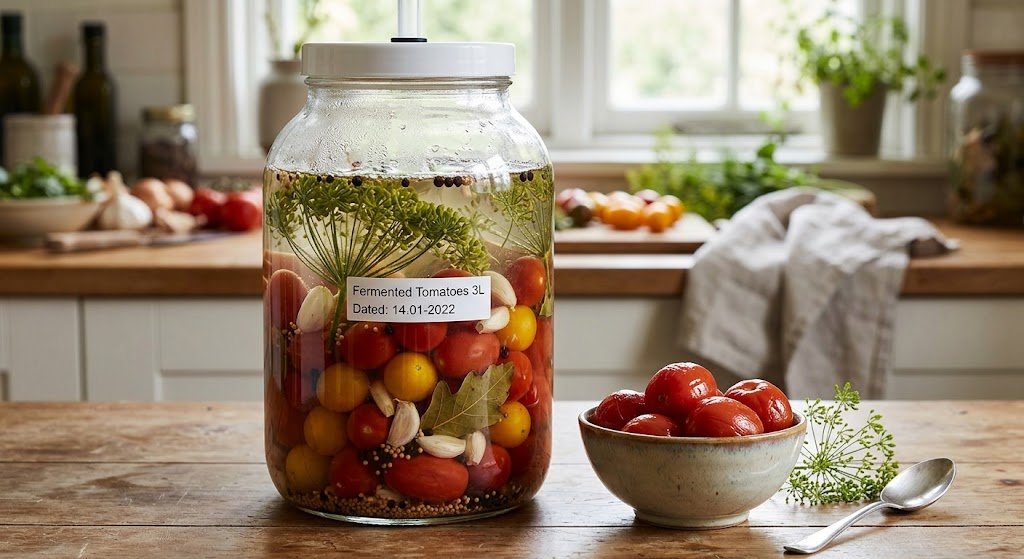
These fermented tomatoes use a simple salt brine, firm ripe tomatoes, garlic, dill and warming spices. Choose unblemished tomatoes that are similar in size so they ferment at a similar rate. The jar must be clean, and the tomatoes must stay below the brine while active fermentation is happening. A cool room temperature start develops the sour flavor; once the taste is right, move the jar to the refrigerator to slow fermentation. This is a refrigerator ferment, not a tested shelf-stable canning method. Discard the batch if it develops a putrid smell, fuzzy mold or unusual sliminess. Use the stated measurements, keep the texture cues in view, and let the finished dish cool or rest as directed before serving. This keeps the method practical for a home kitchen and makes the result easier to repeat.
Helpful tips
- Measure ingredients before starting.
- Keep the heat moderate and adjust it when the food browns too quickly.
- Use the texture and doneness cue rather than the clock alone.
- Cool leftovers promptly and store them covered.
Serving ideas
- Serve warm when the recipe calls for a crisp or tender texture.
- Add a fresh herb, pickle or salad for contrast.
- Offer a simple yogurt, cream or fruit accompaniment where suitable.
- Portion leftovers into clean containers for the next meal.
Food safety
Use clean equipment and keep tomatoes submerged. Refrigerate after the desired acidity develops; discard moldy, putrid or slimy batches.
Storage
Keep continuously refrigerated and use within 1–2 weeks; do not store as a pantry preserve.
Ingredients and directions
Recipe card
Fermented Tomatoes Recipe with Garlic and Dill
Equipment: 3-litre food-grade jar, weight, saucepan, clean lid
Ingredients
Main ingredients
Instructions
Prepare jar
Wash the jar, lid, tomatoes and dill. Remove damaged tomatoes.
Make brine
Heat water with salt until dissolved, then cool completely.
Pack
Add dill, garlic, bay leaves and peppercorns. Pack tomatoes closely and pour in cooled brine.
Submerge
Use a clean weight to keep tomatoes below the liquid. Cover loosely so gas can escape.
Ferment and chill
Leave at cool room temperature for 3–5 days, tasting daily. When pleasantly sour, close and refrigerate.
Frequently asked questions
Can I seal the jar tightly during fermentation?
No. Fermentation releases gas, so use a loose lid or airlock until the active stage ends.
How should I store fermented tomatoes for a 3-litre jar?
Keep continuously refrigerated and use within 1–2 weeks; do not store as a pantry preserve.
How to tell when it is ready
Tomatoes taste pleasantly sour and remain submerged in brine.
Tips
- Measure ingredients before starting.
- Keep the heat moderate and adjust it when the food browns too quickly.
- Use the texture and doneness cue rather than the clock alone.
- Cool leftovers promptly and store them covered.
Troubleshooting
- Measure ingredients before starting.
- Keep the heat moderate and adjust it when the food browns too quickly.
Serving suggestions
- Serve warm when the recipe calls for a crisp or tender texture.
- Add a fresh herb, pickle or salad for contrast.
- Offer a simple yogurt, cream or fruit accompaniment where suitable.
- Portion leftovers into clean containers for the next meal.
Make ahead
Prepare ingredients ahead and observe the stated chilling, resting or rising time.
Storage
Keep continuously refrigerated and use within 1–2 weeks; do not store as a pantry preserve.
Food safety
Use clean equipment and keep tomatoes submerged. Refrigerate after the desired acidity develops; discard moldy, putrid or slimy batches.
Frequently asked questions
Can I seal the jar tightly during fermentation?
No. Fermentation releases gas, so use a loose lid or airlock until the active stage ends.
How should I store fermented tomatoes for a 3-litre jar?
Keep continuously refrigerated and use within 1–2 weeks; do not store as a pantry preserve.
Serve fermented tomatoes for a 3-litre jar according to the doneness and storage notes.
More recipes to try





Spotted a detail that needs correcting? Contact the FeastDelights editors.