Classic Basil Pesto Sauce Recipe
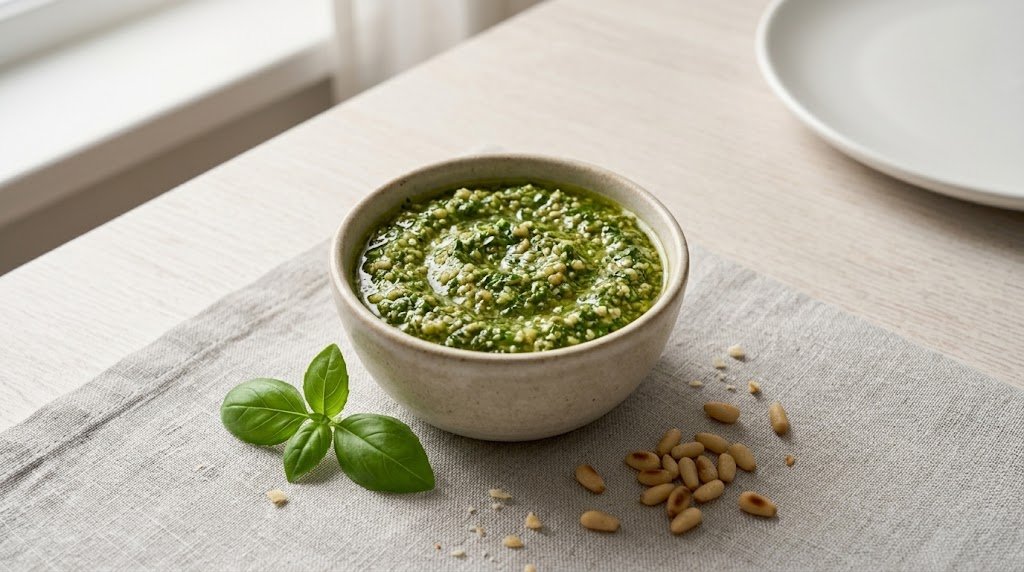
A fresh basil sauce with pine nuts, garlic, hard cheeses and olive oil, made by short food-processor pulses. This classic pesto sauce recipe combines basil, pine nuts, garlic, hard cheese and olive oil into a fresh green sauce. Its ingredient pattern follows pesto alla genovese, though a food processor replaces the traditional mortar for a quick home method. It takes about fifteen minutes and makes enough sauce for four portions of pasta. Keep the basil dry after washing and pulse briefly so the mixture does not heat up or turn into an oily puree. The finished sauce should have fine texture rather than perfect smoothness. Add it to cooked pasta off the heat, loosening with a little pasta water, so the basil remains fragrant and the cheese blends into a light coating.
Keep the basil cool and the sauce off direct heat
Tender basil leaves give a sweeter, less fibrous sauce than thick stems. Wash only as needed and dry thoroughly. A cool processor bowl and short pulses reduce friction heat, while stirring the cheese in afterward helps preserve some texture.
Traditional pesto uses pine nuts, garlic, basil, olive oil, salt and a combination of hard cheeses. This measured home formula is an adaptation, not a certification of origin. Cheese saltiness varies, so taste before adding the final salt.
Recipe at a glance
Yield: About 220 g pesto; enough for 4 pasta servings. Active preparation: about 15 minutes. Cooking: about 0 minutes. Total elapsed time: about 15 minutes.
How to make classic basil pesto sauce
Recipe card
Classic Basil Pesto Sauce Recipe
Equipment: Small food processor; salad spinner or towels; spatula; bowl; clean storage container.
Ingredients
Main
Instructions
Prepare the leaves
Dry basil thoroughly. If the kitchen is warm, chill the processor bowl briefly and wipe it dry before use.
Pulse nuts and garlic
Pulse pine nuts and garlic a few times until finely chopped, scraping down the bowl so no large garlic piece remains.
Add basil and oil
Add basil and half the oil. Pulse briefly, scrape, then add the rest of the oil and pulse only until finely textured. Do not run continuously until hot.
Stir in cheese
Transfer to a bowl. Stir in both cheeses, taste and add the measured salt only if needed. Use immediately, or cover and refrigerate.
Use on pasta
For four servings, cook about 320 g dried pasta separately. Take the pan off the heat and toss with pesto, adding reserved pasta water a tablespoon at a time until it coats the pasta. Pasta ingredients and time are not included in the sauce yield.
How to tell when it is ready
The sauce is finely textured and bright green when freshly made, with no large garlic pieces; it coats pasta after a little water is added.
Tips
- Dry basil so rinse water does not dilute the sauce.
- Pulse rather than running the machine continuously.
- Use mild olive oil if a very peppery oil overwhelms the basil.
- Reserve pasta water before draining.
Troubleshooting
- Brown color: oxidation and heat darken basil; work quickly and cover promptly.
- Overly salty: cheese may supply enough salt; omit added salt next time.
- Oily sauce: loosen a pasta portion with starchy water and toss thoroughly.
Substitutions
- Walnuts can replace pine nuts but change the flavor and color.
- Choose vegetarian-rennet hard cheeses if required; traditional cheeses may use animal rennet.
Variations
- Dairy-free basil sauce: omit cheeses and adjust salt; flavor and thickness will differ.
- For a mortar method, crush garlic and salt, then pine nuts and basil, and work in cheese and oil gradually.
Serving suggestions
- Toss with warm pasta off the heat.
- Spoon over roasted vegetables after cooking.
- Spread a thin layer in a tomato sandwich.
- Stir into a bowl of vegetable soup just before eating.
Make ahead
Prepare a few hours ahead, cover the surface and refrigerate. For longer preparation, freeze portions rather than keeping the garlic-and-oil sauce at room temperature.
Storage
Refrigerate in a sealed container at 4°C/40°F or below and use within 3–4 days. Freeze small portions promptly for up to 2 months for quality. A surface oil layer may slow browning but does not make the sauce shelf-stable.
Food safety
Contains nuts and dairy. Fresh garlic and herbs in oil must not be stored at room temperature. Use a clean spoon and keep refrigerated or frozen.
Frequently asked questions
Should I cook pesto in a frying pan?
No. Warm pasta supplies enough heat. Direct frying dulls basil flavor and may make the cheese clump.
Can I add lemon?
You can add a small squeeze for a different flavor, but lemon is not one of the seven ingredients in the classic Genovese pattern.
More recipes to try



Spotted a detail that needs correcting? Contact the FeastDelights editors.