Christmas Roast Duck with Apples and Apricots
Christmas roast duck pairs golden, rendered skin and rich poultry meat with a separately baked side of apples, dried apricots, onion and walnuts. Lemon, garlic and rosemary add aroma to the bird, while red wine brings depth to the fruit mixture. This recipe serves four to six from a whole duck of about 2 kg. Roast the bird unstuffed on a rack, allowing the fat to drain, and cook the fruit in its own dish so each component can finish at the right time.
Duck has a substantial layer of fat under its skin. Drying the surface, pricking only the skin and roasting on a rack help that fat render. Keep the fruit side separate rather than packing it into the cavity. This recipe makes four to six servings from a 2 kg (4.4 lb) duck. Allow roughly 3 hours and 10 minutes including preparation, roasting and resting, plus refrigerator thawing if required.
Choosing and preparing the duck
Buy a whole duck sized to fit your roasting pan and refrigerator. If frozen, thaw it in the refrigerator in a tray to contain drips, following the package guidance. Remove the giblets, pat the skin dry and discard the paper towels. Do not wash raw poultry because splashing can spread contamination. Use a separate board for raw meat and clean equipment before preparing the fruit.
Duck skin covers a thick fat layer. Use a skewer to prick only that fatty skin, especially around the legs and breast, rather than piercing the meat. Salt and pepper season the bird, while washed lemon, rosemary and garlic sit loosely near the cavity opening. Do not pack the cavity with the fruit mixture.
Choosing the fruit side ingredients
Firm apples retain more shape when baked. Tart varieties balance the dried apricots, which soften and become sweeter as they absorb the cooking liquid. Chop the walnuts so they distribute through the side rather than forming large pieces. Red wine gives a savoury-tart note; use stock instead if alcohol must be avoided. The long cook does not establish that all alcohol has evaporated.
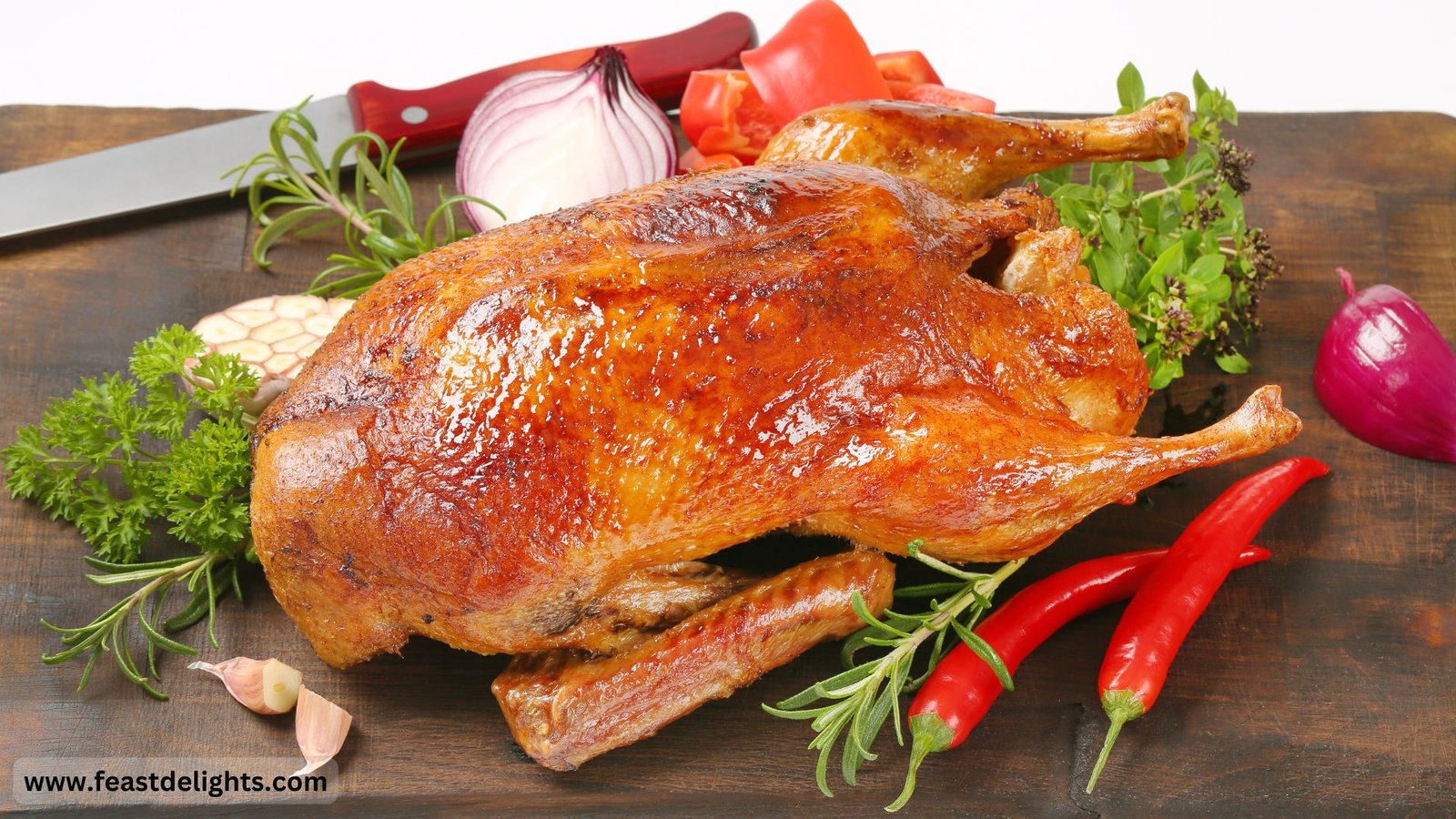
Recipe card
Christmas Roast Duck with Apples and Apricots
25 minutes preparation, about 2–2½ hours roasting and 15 minutes resting. Cook the separate fruit side during roasting. Refrigerator thawing is additional.
Equipment: Roasting pan with sturdy rack, skewer, paper towels, food thermometer, oven gloves, heatproof ladle and fat container, skillet, separate baking dish, carving board and knife
Ingredients
Roast duck
Apple and apricot side
Instructions
Dry and season the duck
Preheat conventional oven to 180°C (350°F). Remove giblets and neck if present. Do not rinse raw duck. Pat dry with paper towels and discard them. Prick the fatty skin shallowly with a skewer without piercing the flesh. Season with salt and pepper. Place lemon, garlic and rosemary loosely near the cavity opening, without packing it full; reserve any extra for the roasting pan. Wash hands and raw poultry tools.
Roast on a rack and remove excess fat
Set duck breast-side up on a rack in a deep roasting pan. Roast for 45 minutes. If fat accumulates, carefully remove it with a heatproof ladle into a stable heatproof container while the pan rests on a secure surface. Never pour hot fat while holding a heavy pan over the sink. Return duck to oven and continue roasting; avoid repeatedly wetting the skin with pan juices.
Cook the apple and apricot side
While duck roasts, cook onion in neutral oil over medium heat for 5 minutes. Add chopped apples, apricots, walnuts and wine; simmer 5 minutes. Transfer to a separate baking dish and roast beside duck for approximately the last 30 minutes until fruit is tender. Keep raw duck juices away from the fruit dish. If duck needs longer, remove the cooked side and keep hot or chill promptly.
Check poultry temperature in several places
Begin checking around 2 hours. Roast until the thickest breast and inner thigh and wing areas reach at least 74°C (165°F), without the probe touching bone. A 2 kg duck may take 2–2½ hours or longer depending on oven and bird shape. Colour and clear juices alone do not establish safety. If skin darkens before meat is cooked, shield loosely with foil.
Rest, carve and serve
Transfer cooked duck to a clean board and rest 15 minutes, loosely tented if needed. Remove and discard cavity aromatics. Carve and serve with separately cooked apple, apricot and walnut mixture.
How to render the fat safely
Place the duck on a stable rack in a deep roasting pan. The rack holds the bird above the accumulating fat. Check after around 45 minutes and remove excess fat with a heatproof ladle if necessary. Hot rendered fat can cause serious burns, so set the pan on a stable heatproof surface and avoid lifting or tilting a heavy pan of hot liquid. Avoid pouring fat into the sink. Do not let the pan fill dangerously, and keep the oven area clear of spills.
Roast breast-side up at the stated temperature. Avoid repeatedly basting the skin with watery pan juices because the surface needs to dry to brown. Oven performance and duck size vary, so begin checking early rather than relying on a fixed endpoint.
Coordinating the apple and apricot side
Soften the diced onion in oil, then add the chopped fruit, walnuts and wine. The brief stovetop simmer helps soften the dried apricots. Finish in a separate baking dish in the oven. Do not put that dish beneath the duck where raw drips could land in it. The fruit is done when tender and the liquid has reduced to a light coating. If the bird needs longer, remove the side when ready rather than allowing it to dry out. Keep it hot for immediate serving or cool promptly and reheat later.
Checking doneness and resting
The FoodSafety.gov minimum-temperature chart recommends 74°C (165°F) for all poultry. Check the thickest breast and inner thigh and wing areas with a clean food thermometer, without touching bone. Duck may retain a darker colour even when cooked. A golden exterior is not a substitute for checking its interior temperature.
Rest on a clean carving board for 15 minutes. A loose foil tent retains warmth without trapping as much steam as a tightly wrapped cover. Remove the cavity aromatics and carve with a sharp knife. Divide the fruit side among the plates rather than pouring the full mixture over the crispy skin.
Troubleshooting
Pale skin: pat the raw skin dry and use a rack next time. Dark skin but undercooked meat: shield loosely and continue until the required temperature is reached. Dry fruit: add a little stock and remove the side when tender. Greasy serving plate: drain the bird on the rack and carve on a separate board. If you have a larger duck, allow more cooking time rather than increasing the temperature without checking the meat.
Serving and variations
Serve with roasted potatoes with garlic and rosemary and honey-roasted Brussels sprouts. For a different roast duck flavour, try whole roast duck with orange and honey glaze. The separately cooked apricot and walnut side distinguishes this festive version from an apple-stuffed bird.
Make ahead, storage and allergens
Prepare the fruit side the day before if convenient; chill promptly and reheat before serving. Carve leftovers and refrigerate duck and fruit separately in shallow covered containers at 4°C (40°F) or below within 2 hours (1 hour above 32°C/90°F), for up to 3 days. Freeze carved duck for up to 2 months for best quality; thaw in the refrigerator. Reheat leftovers to 74°C (165°F). Contains walnuts (tree nuts); wine may contain sulphites. Check other packaged ingredients for allergens. Follow safe chilling and handling guidance and keep raw poultry separate from ready-to-eat foods.
Serve the carved duck warm with the fruit side alongside.
Frequently asked questions
Should I stuff the duck with fruit?
No. This version cooks the fruit in a separate dish so it does not slow the poultry cooking or absorb raw juices.
How do I know the duck is safely cooked?
Check at least 74°C (165°F) in the thickest breast and inner thigh and wing areas, avoiding bone. Do not judge solely by colour.
Why is my duck skin rubbery?
Moisture and unrendered fat can prevent crispness. Pat the skin dry, prick shallowly, roast on a rack and avoid frequent basting.
Can I make the fruit side without wine?
Yes. Use unsweetened stock in the same volume; taste and adjust with a little lemon if needed. Cooking wine does not guarantee complete alcohol removal.
Can I roast a frozen duck?
For this method thaw it fully in the refrigerator, allowing sufficient time according to the package. Do not thaw at room temperature.
Can I make the fruit side ahead?
Yes. Cool it promptly and refrigerate separately, then reheat to 74°C (165°F) before serving.
How should I handle rendered duck fat?
Ladle it carefully into a heatproof container, let it cool safely and refrigerate promptly if keeping it. Do not pour it down the drain.
More recipes to try






Spotted a detail that needs correcting? Contact the FeastDelights editors.