Smooth Zucchini Caviar Recipe with Tomato and Garlic
Smooth zucchini caviar is a savoury Ukrainian-style vegetable spread made with tender courgettes, sweet carrot, onion, concentrated tomato paste and fresh garlic. Slow reduction removes excess vegetable moisture, and blending gives the spread an even, softly spoonable texture. This smaller batch uses one kilogram of zucchini and yields about five servings. Allow approximately 75 minutes, including a brief rest before blending. Enjoy it warm or chilled on rye bread, with potatoes or as a vegetable accompaniment. This is a fresh refrigerated spread, not a shelf-stable preserve.
Zucchini caviar, often called kabachkova ikra, is a cooked vegetable spread rather than fish roe. This version uses peeled zucchini and a smooth blended finish. Its concentrated tomato and gentle garlic flavours are especially good on toast.
Choosing zucchini for a smooth spread
Weigh one kilogram (2.2 lb) of zucchini after trimming and peeling. Young zucchini have small tender seeds; large mature squash can have a tough rind and spongy centre. Remove large seeds before weighing. Cut the flesh into small even cubes so it softens at the same rate. Grate the carrot finely to help it break down before blending. Diced onion gives sweetness without needing added sugar. Use tomato paste rather than watery tomato sauce: its concentrated flavour and colour are important to this particular version. Sunflower oil has a neutral flavour; a similar neutral cooking oil is suitable. Add minced garlic late so it remains noticeable without tasting raw.
Equipment
Use a deep wide skillet or sauté pan, knife, board, grater, spatula and immersion blender. A wide base helps moisture escape, while high sides reduce splashes. If using a jug blender, allow the cooked vegetables to cool sufficiently and follow the manufacturer’s instructions for warm foods; never seal steaming-hot purée in an unsuitable blender.
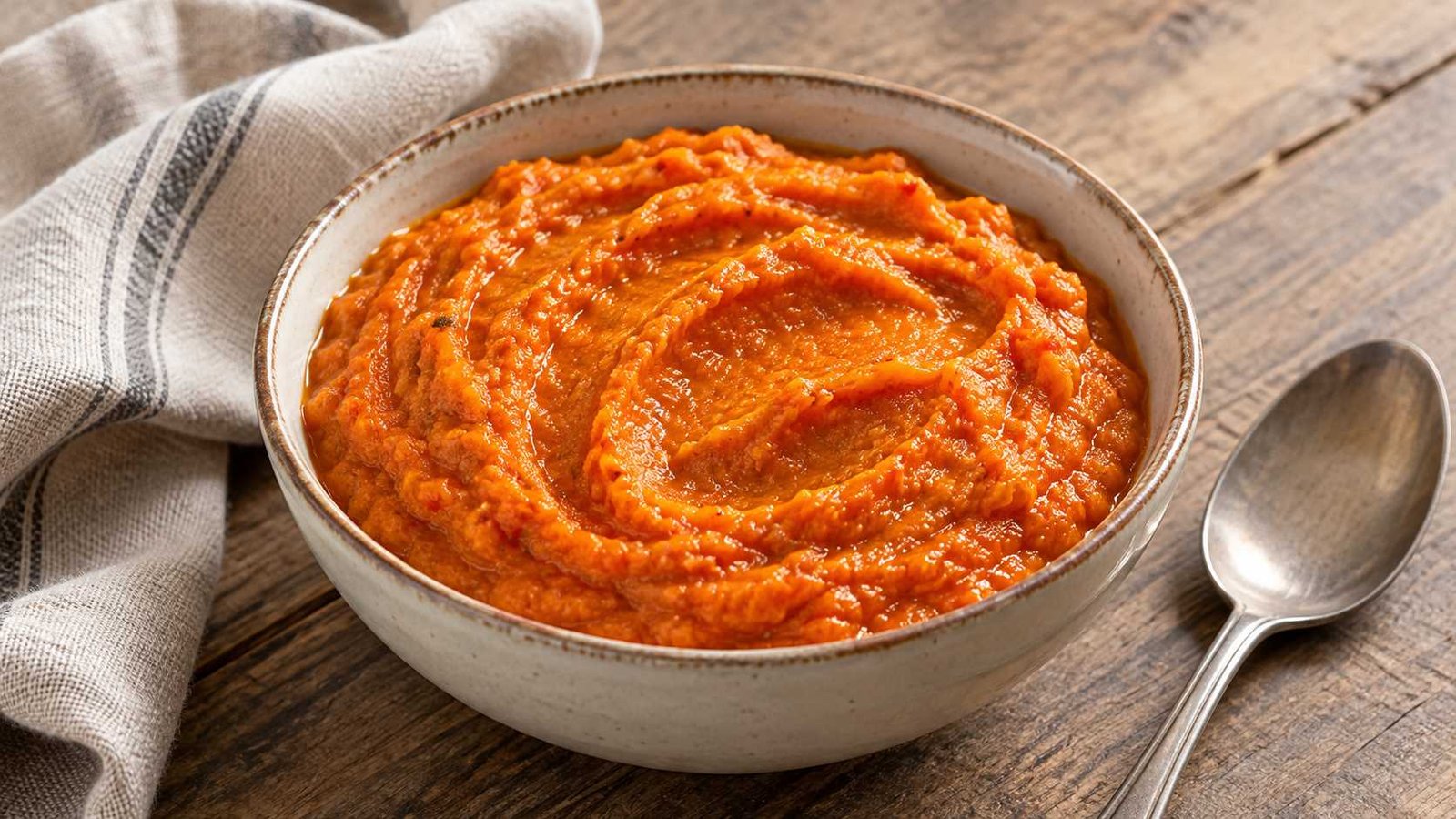
Recipe card
Smooth Zucchini Caviar Recipe with Tomato and Garlic
Reduction depends on zucchini moisture and pan width; allow extra cooking if watery. Chilling for cold serving is additional.
Equipment: Deep wide skillet, knife, board, grater, spatula, immersion blender and shallow storage containers
Ingredients
Vegetables
Cooking and flavour
Seasoning
Instructions
Prepare the vegetables
Wash zucchini, peel and remove large mature seeds. Weigh 1 kg of prepared flesh and dice evenly. Dice the onion and grate the carrot.
Soften onion and carrot
Heat sunflower oil in a deep skillet over medium heat. Cook onion about 4–5 minutes until translucent, add carrot and cook another 4–5 minutes until softened.
Reduce the zucchini
Add zucchini and cook uncovered, stirring frequently, for about 15–20 minutes or longer until fully tender and most visible liquid has evaporated.
Cook tomato paste and garlic
Stir in tomato paste, salt and pepper. Simmer gently 10–15 minutes, stirring to prevent scorching. Add minced garlic and optional herbs during the last few minutes.
Rest, blend and store
Remove from heat and rest about 10 minutes. Blend smooth using an immersion blender, keeping the blade submerged to avoid splashes. Serve warm or cool promptly in shallow containers and refrigerate. Do not can or hot-fill for shelf storage.
How to reduce zucchini without burning the spread
Heat the oil over medium heat and soften the onion until translucent, then add the grated carrot. Stir regularly so the vegetables soften without browning heavily. Add zucchini and cook uncovered; it will release a considerable amount of water. Reduce the heat if the vegetables start to stick before they soften. Stir more frequently as moisture evaporates, especially near the end. A spatula drawn across the base should leave a brief clear trail before the vegetables fall back.
Stir in tomato paste after the zucchini is tender and excess liquid has evaporated. Simmer gently until the sharp raw paste flavour mellows. Do not leave the thick mixture unattended because tomato solids can scorch. Add garlic and optional dill or parsley during the final few minutes. Rest briefly off the heat, then blend until smooth. If the purée is still watery, return it to the pan and reduce gently, stirring carefully to avoid hot splashes.
Troubleshooting
Watery caviar: reduce uncovered before blending, or cook the blended mixture a little longer over low heat. Burnt tomato flavour: use a lower heat and stir the bottom frequently; do not scrape burnt residue into the finished spread. Coarse texture: make sure the carrot and zucchini are fully tender before blending. Too thick: stir in a small amount of hot water for immediate serving. Too acidic: taste after cooking the paste thoroughly and adjust seasoning gradually.
Variations and serving ideas
Use parsley instead of dill, or add a pinch of sweet paprika for a warmer flavour. A small amount of lemon juice can brighten the spread at serving time, but does not make it suitable for canning. Spread on homemade rye bread or serve alongside Ukrainian potato pancakes. If you prefer pieces of vegetables rather than purée, try the chunky zucchini caviar. A separate smooth lemon-flavoured zucchini caviar offers a different seasoning profile.
Storage and safe preservation
Transfer the spread to shallow clean containers and refrigerate within two hours of cooking (one hour above 32°C/90°F). Keep at 4°C (40°F) or colder and use within four days. Freeze small portions for up to three months for best quality, thaw in the refrigerator and stir if separated. Never store this recipe at room temperature or use it for home canning. The National Center for Home Food Preservation does not recommend conventional home canning of summer squash because validated processing times are lacking. Neither tomato paste nor a sealed hot jar establishes the safety of this vegetable purée. Do not use water-bath canning, pressure canning or hot filling for this recipe. The basic ingredients do not require dairy, eggs or wheat; check packaged ingredients and bread accompaniments for allergens.
Stop reducing when the vegetables are tender and no watery pool remains. Blend to the smoothness you prefer and serve with warm bread.
Frequently asked questions
Can I use yellow summer squash?
Yes, its texture is similar when young and tender. The colour may differ.
Do I have to peel zucchini?
For this smooth orange version, peeling gives an even colour and texture. Young tender skin may be left on if you accept green flecks.
Can I use tomato purée instead of paste?
Passata is much thinner and less concentrated. It would require longer reduction; tomato paste is preferred.
Can I leave the caviar chunky?
Yes. Mash with a fork rather than blending, or follow the separate chunky recipe for a different vegetable ratio.
Can I double the recipe?
Yes, but use two wide pans or cook in batches; crowding slows evaporation. Cool in shallow containers.
Can I preserve this in jars for winter?
Not at room temperature. This recipe has no validated canning process. Freeze portions for longer storage instead.
More recipes to try


Spotted a detail that needs correcting? Contact the FeastDelights editors.