Classic Choux Pastry Profiteroles
Small hollow choux pastry buns made with water, butter, flour and eggs, then filled after baking.
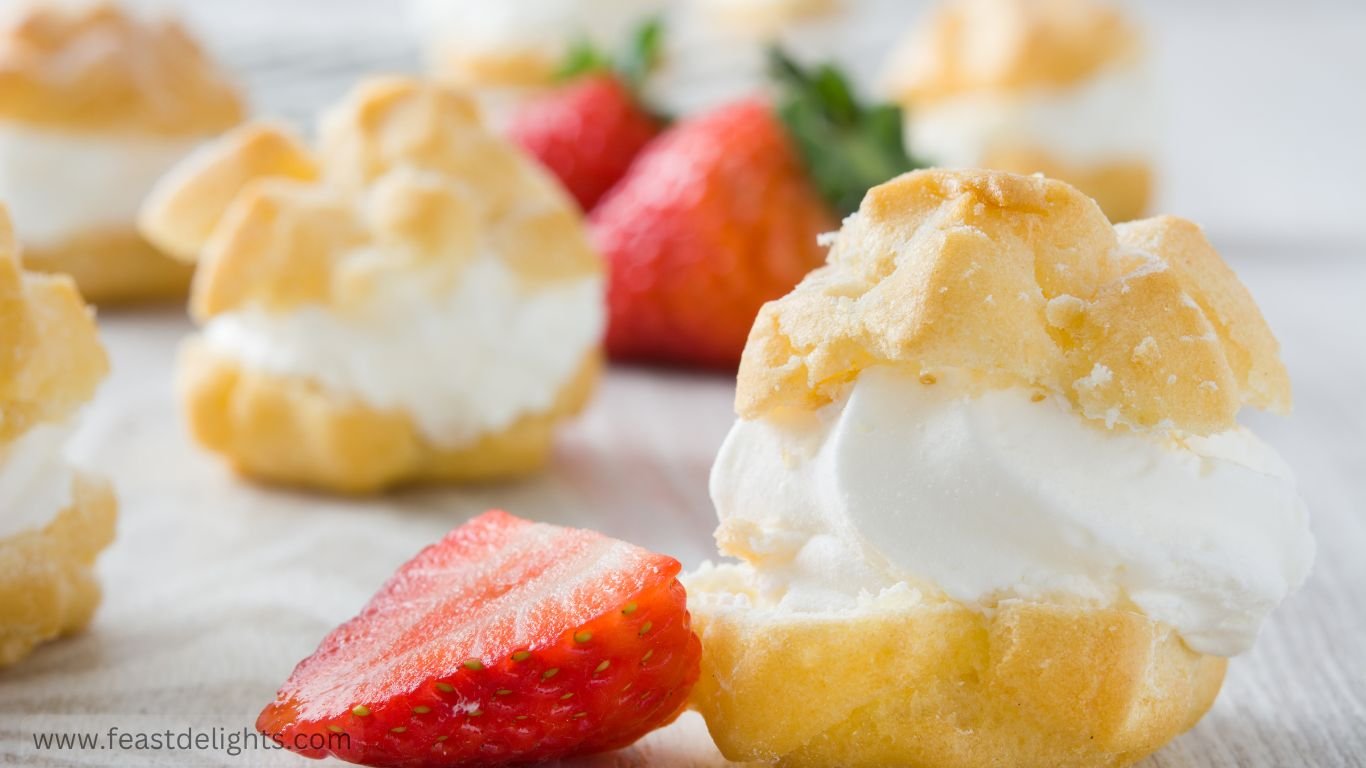
Classic choux pastry profiteroles are small hollow buns made from water, butter, flour and eggs. The dough begins on the stove: water, butter and salt are brought to a boil, then flour is stirred in quickly until the mixture pulls away from the pan. After a short cooling period, add the eggs one at a time, mixing well after each addition until the dough becomes smooth and glossy. Pipe small mounds onto a lined tray, leaving room for them to expand in the oven. Bake at 200 C for 20 to 25 minutes until golden, then cool fully before filling. Cream or jam can be added once the shells are cool. Measure ingredients before starting so the dough can be mixed promptly while it is still warm.
Classic Choux Pastry Profiteroles
Small hollow choux pastry buns made with water, butter, flour and eggs, then filled after baking.
Helpful tips
- Measure and sift the flour before heating the water, butter and salt.
- Stir the flour in quickly until the dough forms a smooth ball and pulls from the pan.
- Cool the dough briefly, then add eggs one at a time and mix each in fully.
- Leave space between piped mounds and cool the baked shells completely before filling.
Serving ideas
- Fill with cream just before serving.
- Use jam as a simple alternative filling.
- Dust the filled profiteroles with icing sugar.
- Arrange with fresh berries for a dessert plate.
Storage
Keep cream-filled profiteroles covered in the refrigerator. Store unfilled cooled shells separately and fill near serving time.
Ingredients and directions
Recipe card
Classic Choux Pastry Profiteroles
Equipment: Saucepan, sturdy spoon, piping bag and lined baking tray.
Ingredients
Instructions
Prepare the ingredients
Measure everything and sift the flour to remove lumps.
Cook the dough
Bring water, butter and salt to a boil. Add flour and stir quickly until a smooth dough pulls away from the pan. Remove from heat and cool for a few minutes.
Add the eggs
Add eggs one at a time, mixing well after each until the dough is smooth and glossy.
Pipe the profiteroles
Pipe small mounds onto a parchment-lined tray, leaving room for expansion.
Bake and cool
Bake at 200°C for 20–25 minutes until golden. Cool fully before filling.
25 min
How to tell when it is ready
The dough should pull away from the pan after the flour is added, then become smooth and glossy as the eggs are mixed in. Bake until the shells are well risen and golden.
Tips
- Measure and sift the flour before heating the water, butter and salt.
- Stir the flour in quickly until the dough forms a smooth ball and pulls from the pan.
- Cool the dough briefly, then add eggs one at a time and mix each in fully.
- Leave space between piped mounds and cool the baked shells completely before filling.
Troubleshooting
- If the dough looks runny after adding eggs, check that the panade was cooked and cooled as directed; add eggs gradually in a future batch.
- If the shells collapse, they may be underbaked; leave them until well coloured before removing from the oven.
Substitutions
- Fill with the listed cream or jam only after the shells have cooled. Cream-filled pastries need refrigeration.
Serving suggestions
- Fill with cream just before serving.
- Use jam as a simple alternative filling.
- Dust the filled profiteroles with icing sugar.
- Arrange with fresh berries for a dessert plate.
Make ahead
Bake and cool the shells before filling. Fill close to serving so the pastry remains lighter and less damp.
Storage
Keep cream-filled profiteroles covered in the refrigerator. Store unfilled cooled shells separately and fill near serving time.
Let the shells cool completely before adding a filling.
More recipes to try
Spotted a detail that needs correcting? Contact the FeastDelights editors.