Namelaka Recipe with White Chocolate
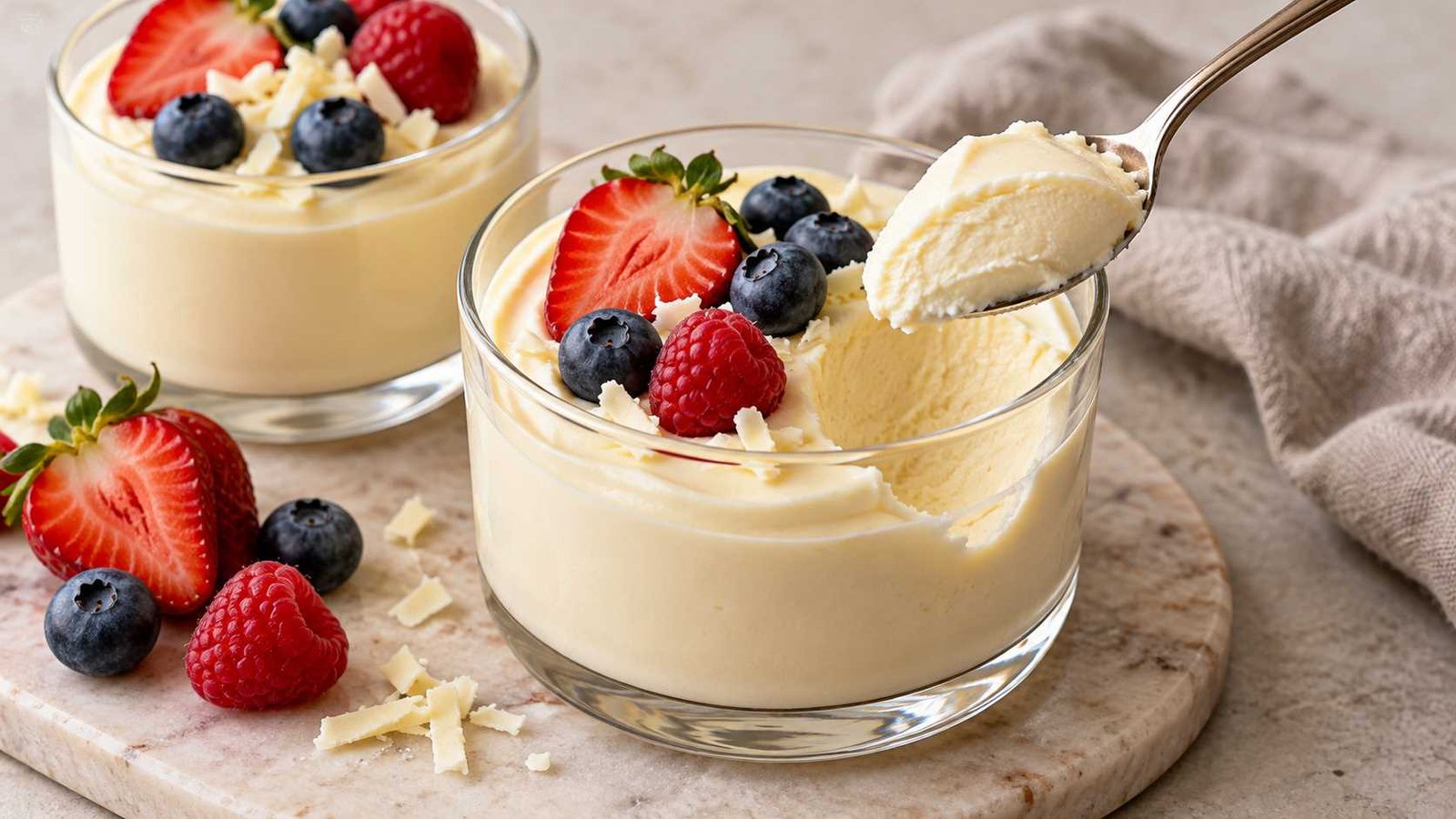
This namelaka recipe makes a smooth white-chocolate cream with milk, cream and a small amount of gelatin.
This namelaka recipe makes a smooth white-chocolate cream with milk, cream and a small amount of gelatin. It rests overnight to set into a silky texture that can be spooned or piped. It is not the same as whipped cream or a stiff buttercream. Use real white chocolate containing cocoa butter, because compound coating behaves differently. The short preparation needs a long refrigerator rest, making this a useful component to prepare the day before assembling a dessert.
What matters for namelaka
The key is an emulsion: warm milk is added to melted chocolate in stages, then cold cream joins the smooth base. Gelatin strength affects firmness, so this formula specifies approximately 200 Bloom powder. Avoid replacing it with an arbitrary number of leaves without checking their weight and strength. Keep the immersion-blender head submerged to avoid bubbles.
Recipe at a glance
Yield: about 500 g cream; 6 dessert portions. Preparation: about 15 minutes. Cooking: about 5 minutes. Total elapsed time: about 500 minutes. Includes about 480 minutes for the resting, rising, cooling or chilling described below.
How to make namelaka
Recipe card
Namelaka Recipe with White Chocolate
Equipment: Scale accurate to 0.1 g for gelatin; saucepan; heatproof bowl; immersion blender; shallow container.
Ingredients
Main
Instructions
Bloom gelatin
Sprinkle gelatin evenly over cold water in a small bowl. Leave 5–10 minutes until hydrated.
Melt chocolate
Melt white chocolate gently over barely simmering water or in short microwave bursts, stirring. Keep water out of the chocolate.
Emulsify warm milk
Heat milk and optional glucose until steaming, then remove from heat and dissolve bloomed gelatin fully. Add milk to chocolate in three additions, stirring from the center until glossy each time.
Add cream
Pour in cold cream. Blend with an immersion blender, keeping the head below the surface, until smooth. Transfer to a shallow covered container and refrigerate at least 8 hours.
Use chilled cream
Spoon or pipe the set namelaka without whipping for a dense silky finish. If a lighter texture is wanted, whisk briefly on low after chilling, stopping as soon as it holds; overwhipping can make it grainy.
How to tell when it is ready
Fully chilled cream is smooth and softly set, with no oily separation.
Tips
- Use real white chocolate.
- Bloom gelatin evenly.
- Add milk in stages.
- Chill overnight before piping.
Troubleshooting
- Lumps: dissolve gelatin fully and blend the warm emulsion.
- Bubbles: keep blender submerged.
- Too soft: verify gelatin weight, cream fat and chilling time.
Substitutions
- Glucose can be omitted in this small batch.
- Different chocolate types need adjusted ratios rather than a direct swap.
Variations
- Infuse milk with vanilla, strain and restore to 100 ml before combining.
Serving suggestions
- Pipe onto a tart.
- Layer into dessert glasses.
- Serve with berries.
- Use as a cake filling where a soft cream is suitable.
Make ahead
Prepare a day before dessert assembly and leave covered in the refrigerator.
Storage
Refrigerate covered up to 3 days. Keep finished cream desserts chilled. Freeze plain cream up to 1 month for quality; thaw refrigerated and stir gently if needed.
Food safety
Keep perishable ingredients at 4°C/40°F or below. Refrigerate perishable leftovers within 2 hours, or within 1 hour above 32°C/90°F. Use clean equipment and separate raw animal ingredients from ready-to-eat food.
Frequently asked questions
Is namelaka mousse?
No. It is an emulsified chocolate cream set with a little gelatin; it is not aerated like a traditional mousse.
Can I use chocolate coating?
Choose real white chocolate with cocoa butter. Compound coating can produce a different texture.
More recipes to try
Spotted a detail that needs correcting? Contact the FeastDelights editors.