Crispy Pork Schnitzel with Golden Breadcrumbs
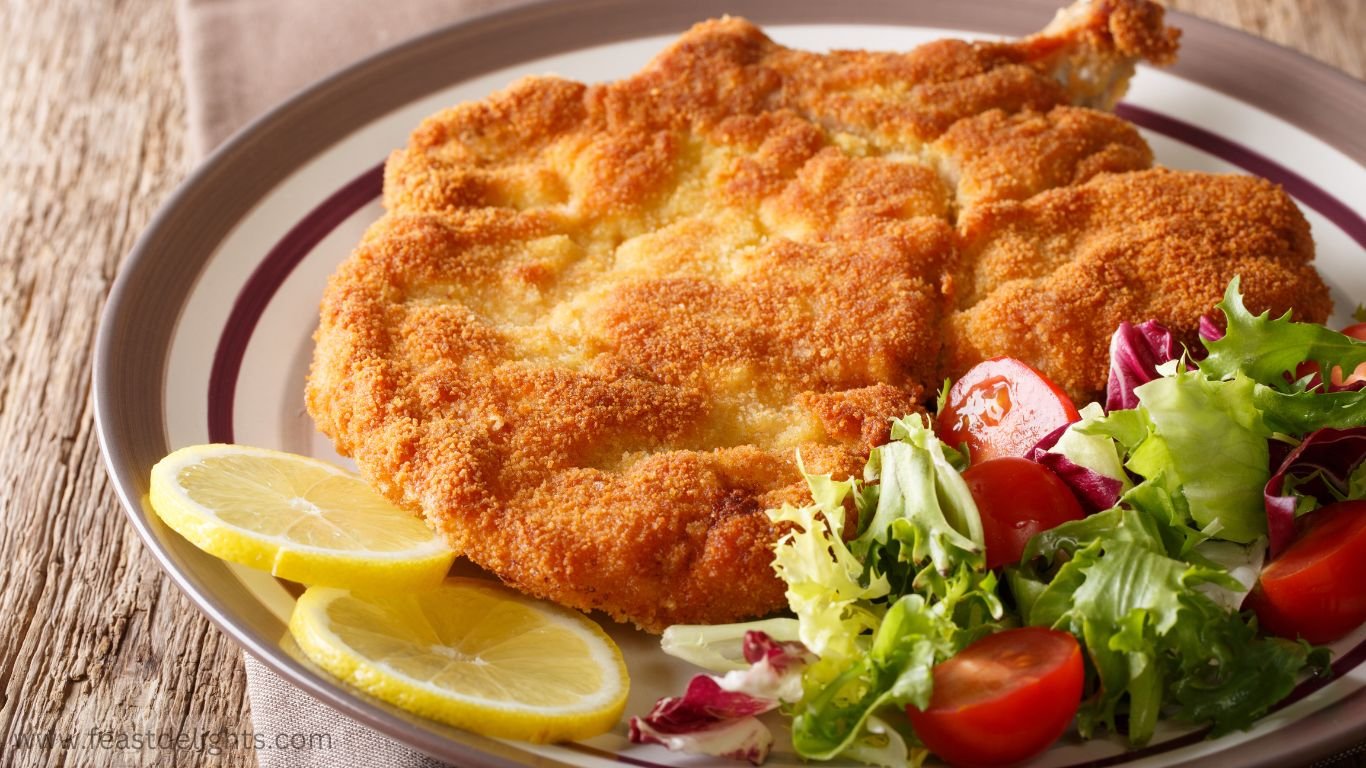
Crispy pork schnitzel is a thin pork loin cutlet coated in flour, beaten egg and fine breadcrumbs, then shallow-fried until golden. Pounding the meat evenly helps it cook quickly while the coating becomes crisp and delicate. This recipe makes four cutlets using simple ingredients and a large frying pan. Fry in batches so the oil stays hot, check the centre with a thermometer and rest the pork briefly before serving. A squeeze of lemon cuts through the rich crust, especially alongside potatoes or a fresh salad.
Crispy pork schnitzel is a thin breaded pork cutlet with a golden crust and tender centre. This Central European-inspired version serves four in approximately 38 minutes, including the required three-minute rest. It uses boneless pork loin, flour, egg and breadcrumbs rather than a thick batter.
Choosing and preparing the cutlets
Choose boneless loin pieces of similar weight. Pound them between parchment to about 6 mm (¼ inch) thick, working from the centre outward to avoid tearing the edges. Thick patches take longer to cook and can leave the coating too dark before the meat is ready. Pat the surface dry before seasoning. Fine dry breadcrumbs provide an even, delicate coating; coarse panko gives a different texture. Use neutral frying oil with a suitable high smoke point.
Recipe card
Crispy Pork Schnitzel with Golden Breadcrumbs
Fry in two batches, 2–3 minutes per side, allowing time for oil recovery. Rest each cutlet at least 3 minutes; timing depends on pan and thickness.
Equipment: Meat mallet, parchment, three shallow dishes, large heavy skillet, tongs, wire rack, rimmed tray, instant-read thermometer
Ingredients
Pork
Breading
Frying
Serving
Instructions
Pound the pork evenly
Place each cutlet between parchment sheets on a stable board. Pound gently from the centre out to about 6 mm (¼ inch) thick. Pat dry and season both sides with measured salt and pepper.
Prepare three breading dishes
Place flour, beaten eggs and fine breadcrumbs in three separate shallow dishes. Have a clean tray ready for the breaded cutlets.
Coat each cutlet
Coat pork lightly in flour and shake off excess. Dip in egg, allow excess to drip, then cover evenly with breadcrumbs. Pat very lightly; do not compress the crumbs into a dense layer. Discard breading that has contacted raw pork.
Shallow-fry until golden and cooked through
Heat about 5 mm of neutral oil in a heavy skillet over medium to medium-high heat, aiming for about 170–175°C (340–350°F). Fry in batches for 2–3 minutes per side, turning carefully, until golden. Check the centre sideways with a thin thermometer probe; whole pork cutlets must reach 63°C (145°F). Adjust heat and cook longer if necessary.
15 minDrain and rest before serving
Transfer to a clean wire rack over a tray. Rest each cutlet at least 3 minutes before eating. Serve with lemon wedges. Do not cover the hot crust tightly.
3 min
How to bread pork schnitzel
Keep flour, egg and crumbs in separate dishes. Flour helps egg adhere to the dry meat, while the egg holds the crumbs. Shake off excess flour and allow surplus egg to drip back into its dish. Coat the cutlet evenly with crumbs without pressing hard. Use one hand for dry ingredients and the other for egg to reduce clumping. Keep raw pork and its utensils separate from clean plates and discard contaminated breading.
Frying and safe doneness
Heat roughly 5 mm of oil in a heavy skillet. At about 170–175°C (340–350°F), the crumbs should sizzle steadily without burning. Lower each cutlet away from yourself to avoid splashes. Leave space between cutlets and restore the oil temperature before the next batch. Use a thin-probe thermometer inserted sideways into the centre. According to FoodSafety.gov, whole pork cuts need 63°C (145°F) followed by at least three minutes of rest. Colour alone is not enough. Drain on a rack so steam can escape.
Troubleshooting
If crumbs detach, check that the meat was dry and the flour coating was thin. If the crust darkens too early, reduce heat and finish cooking safely. If the schnitzel is greasy, avoid crowding and check oil temperature. Never pour water into hot oil. Let used oil cool before disposing of it appropriately.
Serving and variations
Squeeze lemon over the schnitzel just before eating. Serve alongside rosemary roasted potatoes or beet and potato salad. For poultry, try the separate chicken schnitzel recipe; chicken requires a higher safe internal temperature. This pork version is not traditionally veal-based Wiener schnitzel.
Storage and allergens
Refrigerate leftovers within two hours, or one hour above 32°C (90°F), and use within three days. Reheat on a rack in a hot oven until the centre reaches 74°C (165°F). Freeze cooked cutlets for up to two months for quality. Contains wheat (gluten) and egg; check breadcrumb labels for milk and other allergens.
Frequently asked questions
What is the best pork cut for schnitzel?
Boneless loin cutlets are lean and easy to pound evenly. Trim tough edges before pounding.
Why does my breading fall off?
Dry the meat, shake away extra flour and let excess egg drip before coating with crumbs. Avoid moving the cutlet repeatedly in the pan.
Why is my schnitzel greasy?
Oil that is too cool or a crowded pan can make the coating oily. Fry in batches and adjust the heat between them.
Can I use panko breadcrumbs?
Yes. Panko makes a coarser, crunchier crust; watch the colour carefully as it fries.
Is pork schnitzel Wiener schnitzel?
Not strictly. Wiener schnitzel traditionally uses veal; this is a pork version of breaded schnitzel.
Can I prepare the cutlets in advance?
Pound and season them, cover and refrigerate, then bread shortly before frying for the best texture.
More recipes to try






Spotted a detail that needs correcting? Contact the FeastDelights editors.