Crisp Breaded Chicken Schnitzel with Lemon
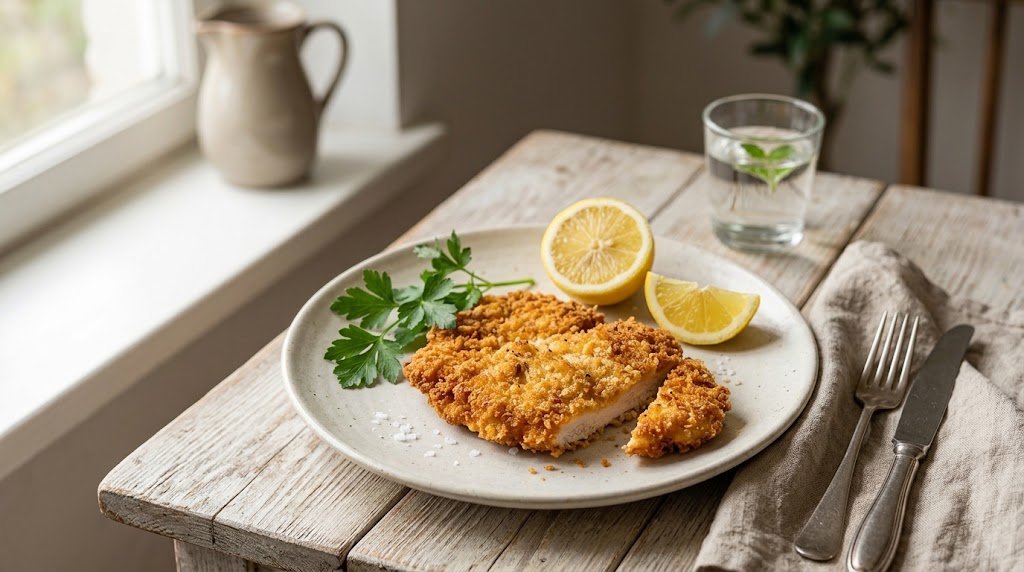
Chicken schnitzel is a thin, golden chicken cutlet with a crunchy breadcrumb coating. Four chicken breast fillets are pounded evenly, dusted with flour, dipped in egg and coated with breadcrumbs before shallow-frying. The light, crisp crust contrasts with the tender meat, and a squeeze of lemon keeps the finished dish fresh. Allow about 45 minutes for preparation and frying in batches. Serve immediately with potatoes, a crisp salad or seasonal vegetables, and check the chicken with a food thermometer rather than relying on colour alone.
Chicken schnitzel is a thin chicken cutlet coated in flour, beaten egg and breadcrumbs, then shallow-fried until crisp and golden. This European-inspired chicken version makes four servings in about 45 minutes. The key is an evenly thin cutlet that cooks through before its coating becomes too dark. Serve hot with lemon, potatoes or a fresh salad.
Choosing chicken and breadcrumbs
Use boneless skinless chicken breast fillets. A thick fillet can be opened horizontally before pounding, keeping four evenly sized portions. Plain flour absorbs surface moisture, egg helps the crumbs adhere, and dry breadcrumbs provide the outer crust. Fine crumbs give a more uniform finish; panko makes a rougher crunch. Neutral vegetable oil with a suitable frying temperature is preferable to an oil that smokes easily. Season the chicken lightly before coating, and offer lemon after frying rather than wetting the raw breading.
Equipment and preparation
Use a meat mallet, three shallow dishes, a wide heavy skillet and a thermometer. Set a wire rack over a tray for draining. Prepare garnishes and side dishes first so the schnitzel can be served immediately. Do not rinse raw chicken; wash hands, surfaces and utensils after handling it.
Recipe card
Crisp Breaded Chicken Schnitzel with Lemon
Allows two frying batches and time for heating the oil; thicker cutlets or more batches may take longer.
Equipment: Meat mallet, baking paper, three shallow dishes, heavy 28–30 cm skillet, tongs, wire rack, tray and instant-read thermometer.
Ingredients
Chicken
Coating
Frying
Chicken
To serve
Instructions
Pound and season
Place each fillet between sheets of baking paper and pound gently to about 6–8 mm (¼ inch) thick. Pat dry and season with salt and pepper. Keep raw poultry away from ready-to-eat foods.
Set up the coating
Place flour, beaten eggs and breadcrumbs in three separate shallow dishes in that order. Use dry hands or separate utensils to reduce clumping.
Bread each cutlet
Dust each cutlet with flour and shake away excess. Dip in egg, allow excess to drip off and coat both sides evenly with breadcrumbs, pressing gently. Discard unused coating ingredients exposed to raw chicken.
Heat the frying oil
Add a shallow layer of neutral oil, roughly 5 mm deep, to a wide heavy skillet. Heat over medium to medium-high heat, aiming for about 175°C (350°F). Do not allow the oil to smoke.
Fry in batches
Carefully lower cutlets into the oil without crowding. Fry approximately 3–4 minutes per side, turning gently when the first side is golden. Adjust heat between batches and remove loose burnt crumbs carefully.
Check and serve
Insert a thermometer horizontally into the thickest part of each cutlet; cook to 74°C (165°F). Drain on a wire rack over a tray or briefly on paper towels. Serve with lemon wedges and optional parsley or dill.
How to get an even crisp coating
Pound from the thickest area outwards with gentle blows, taking care not to tear the meat. Keep the flour coating light. Excess flour can form a gummy layer under the egg. Allow egg to drip back into its dish, then gently press crumbs onto both sides. Avoid squeezing the coating tightly. Heat a shallow layer of oil until shimmering, around 175°C (350°F) if measured. Add cutlets carefully and give them room. The crust should sizzle steadily rather than burn. Turn once it has set and check the thickest part reaches 74°C (165°F), as recommended by FoodSafety.gov.
Troubleshooting
The crust is dark but the chicken is not ready
Lower the heat and continue cooking until the centre reaches a safe temperature. Next time pound the cutlets thinner and more evenly.
The coating is greasy
Cold oil or overcrowding can prevent a crisp crust. Allow the oil to recover between batches and drain on a rack rather than stacking the cooked cutlets.
The crumbs separate from the meat
Dry the fillets and shake off excess flour. Turn gently with tongs or a spatula after the first side has set.
Serving and variations
Serve with lemon, mashed or boiled potatoes and fresh cucumber salad. A cabbage and cucumber salad is another crisp accompaniment. For a different protein, see our pork schnitzel. Fresh parsley or dill is optional; add only at serving. Chicken schnitzel is a poultry variation of the general schnitzel technique, not traditional veal Wiener schnitzel.
Make ahead, storage and allergens
Prepare the chicken and coating dishes separately ahead of cooking, keeping the meat chilled. Refrigerate cooked schnitzel in shallow covered containers at 4°C (40°F) or below within 2 hours (1 hour above 32°C/90°F). Use within 3 days. Reheat on a rack in a 190°C (375°F) oven until the centre reaches 74°C (165°F). Freeze for up to 2 months for best quality; thaw in the refrigerator. Contains wheat and eggs. Check breadcrumbs and frying oil for additional allergens or cross-contact. Never reuse coating ingredients that have touched raw poultry.
Frequently asked questions
Is chicken schnitzel the same as Wiener schnitzel?
No. Wiener schnitzel traditionally uses veal; this chicken version uses the same general breading and frying technique.
Can I use panko breadcrumbs?
Yes. Panko makes a coarser, crunchier crust than fine dry breadcrumbs.
Can I use chicken thighs?
Yes, use boneless skinless thighs and pound to even thickness. Cook to 74°C (165°F).
Why does the breadcrumb coating fall off?
Moisture on the meat or excess flour can interfere with adhesion. Pat dry, shake off flour and allow the egg to drip off.
Can I bake schnitzel instead?
A lightly oiled coating can be baked on a rack, but the result is different from shallow-frying. Check that the chicken reaches 74°C (165°F).
Can I bread schnitzel in advance?
For best results, bread just before frying. If preparing ahead, keep covered and refrigerated, separate from cooked food, and cook the same day.
More recipes to try






Spotted a detail that needs correcting? Contact the FeastDelights editors.