Polish Pączki Doughnuts with Caramel Filling
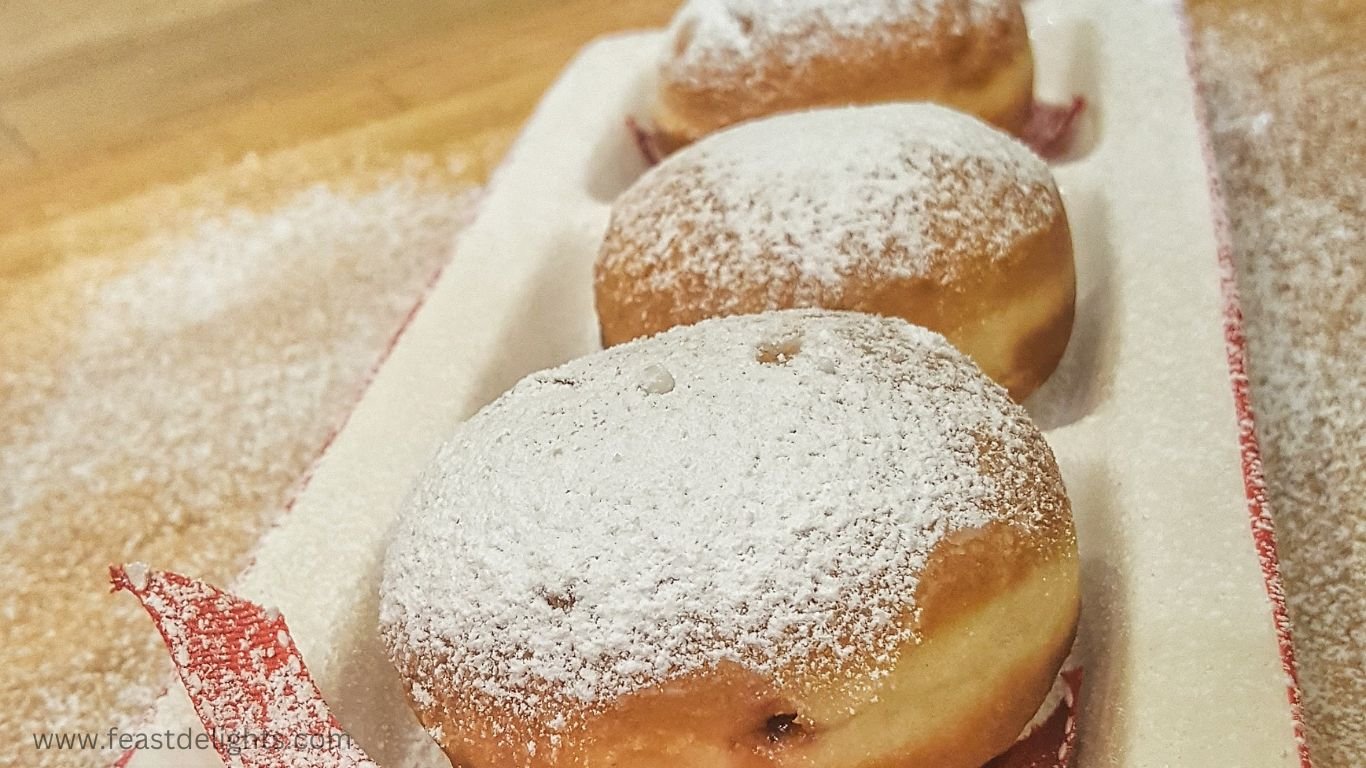
These Polish pączki are round, golden yeast doughnuts with a soft, fluffy interior and a thick caramelised condensed milk filling. Milk, eggs and butter enrich the dough, while two rises give it time to become light before frying. This home version makes about twelve filled doughnuts, finished with icing sugar instead of a heavy glaze. Use a thermometer to keep the frying oil close to 175°C (350°F), and cool the doughnuts before piping in the caramel. They are especially good served fresh with coffee or tea.
Polish pączki are filled yeast doughnuts made from enriched dough and fried until golden. This version uses milk, eggs, butter and vanilla, then fills the cooled doughnuts with thick caramelised condensed milk. The result should be a tender, airy centre and a lightly crisp crust with a sweet caramel pocket. Expect about twelve doughnuts and allow just over four hours, including both rises and cooling. The original dough and filling proportions are retained; the elapsed time now accounts for the full proofing and cooling process.
Fruit-filled pączki are familiar in Polish baking, including celebrations around Fat Thursday. This caramel filling is a variation rather than the only traditional version. Unlike a ring doughnut, each round is left solid so it can be filled after frying. Our yeast doughnuts with optional jam filling are a more general alternative, while Hanukkah sufganiyot are a separate filled-doughnut tradition.
Ingredients and equipment
All-purpose flour gives the dough structure without making the crumb too chewy. Weigh 500 g instead of packing flour into a measuring cup. Instant yeast, sugar and salt are mixed with the flour; sugar lightly sweetens the dough and contributes to browning. Whole milk and eggs provide moisture and richness. Warm the milk until comfortably lukewarm, not hot, and let the eggs sit out only briefly before mixing.
Softened butter should be pliable, not melted. Add it after the dough begins to develop gluten so the dough can stretch around the butter rather than becoming oily. Vanilla adds aroma. The measured 250 g of thick ready-made dulce de leche provides about 20 g per doughnut if making twelve. Choose a filling that holds its shape and can pass through a piping nozzle. Do not heat a sealed can of condensed milk to make the filling; use a commercially prepared product.
Use a scale, large mixing bowl or stand mixer with dough hook, rolling pin, 8 cm round cutter, parchment, deep heavy pot, deep-fry thermometer, dry slotted spoon or spider, wire rack and piping bag with a filling tip. A solid round cutter is essential; a ring cutter would remove the centre needed for the filling.
Recipe card
Polish Pączki Doughnuts with Caramel Filling
Estimate includes 90 minutes first rise, 50 minutes final proof and 45 minutes cooling. Allow extra time for slow fermentation or longer frying batches.
Equipment: Scale, stand mixer or large bowl, rolling pin, 8 cm solid round cutter, parchment, deep heavy pot, deep-fry thermometer, dry slotted spoon, wire rack, piping bag and tip.
Ingredients
Enriched dough
Frying
Filling and finish
Instructions
Mix the enriched dough
Combine flour, instant yeast, sugar and salt in a mixing bowl. Add the lukewarm milk, two eggs and vanilla. Stir or mix with a dough hook until no dry flour remains. The dough should be soft, not runny.
Knead and incorporate butter
Knead for about 5 minutes until the dough begins to feel elastic. Add softened butter in small pieces, allowing each addition to blend in before the next. Continue for 8–10 minutes or until smooth, cohesive and stretchy. Avoid adding excess flour; if the dough gets greasy or very warm, chill briefly.
Allow the first rise
Place in a covered bowl and let rise in a comfortably warm spot for about 60–90 minutes, until roughly doubled. Allow longer in a cool kitchen. Do not place the dough in intense heat.
Cut solid rounds and proof
Gently roll the dough to about 1.5 cm (⅝ inch) thick on a lightly floured surface. Cut solid 8 cm (3¼ inch) circles with a round cutter, not a ring cutter. Re-roll scraps gently once. Set rounds on lightly floured parchment squares, cover loosely and proof about 35–50 minutes or until very puffy and light. A gentle indentation should recover slowly.
Fry in small batches
Use a deep, stable, heavy pot and add enough neutral oil to float the doughnuts, keeping the pot at most half full. Heat to about 175°C (350°F) using a deep-fry thermometer. Carefully lower two or three rounds at a time using a dry slotted spoon or spider; remove parchment before frying if it remains attached. Fry about 2 minutes per side, adjusting for size and temperature. Check the first doughnut by cutting it open after cooling briefly: it must be fully set, with no raw dough in the centre. Adjust heat and frying time as needed. Drain on a rack and let the oil recover between batches.
Cool, fill and dust
Cool completely before filling. Transfer thick ready-made dulce de leche or caramelised condensed milk to a piping bag with a filling tip. Make a small opening in the side of each doughnut and pipe in an even share, stopping before the crust splits. Dust with icing sugar and serve. Refrigerate filled leftovers promptly.
Developing the dough and proofing
Mix the dry ingredients with milk, eggs and vanilla until cohesive. Knead until the dough begins to stretch, then work in the softened butter in small additions. Give each addition time to disappear into the dough. The mixture may seem slippery temporarily; keep kneading rather than immediately adding flour. A smooth dough that stretches into a thin membrane is a useful sign of gluten development.
Cover for the first rise. A draft-free room is preferable to a hot oven or radiator, where butter can melt out of the dough. Look for roughly doubled volume. If the dough has not expanded after the estimated time, allow it longer and check that the yeast was fresh. Rich dough often rises more slowly than lean bread dough.
Roll gently to an even thickness of about 1.5 cm. Cut solid circles, keeping the cutter vertical. Arrange on parchment with room for expansion and cover loosely. The second rise is particularly important: the rounds should feel much lighter and look puffy. A light fingertip indentation should spring back gradually. If it rebounds immediately, continue proofing. Avoid deflating the rounds when transferring them to the oil.
Frying pączki safely and evenly
Use a stable, deep, heavy pot on a secure burner. Add sufficient oil for the doughnuts to float without filling the pot more than halfway; the amount depends on its diameter. Neutral refined oil such as sunflower or canola works well. Use a deep-fry thermometer to monitor the oil and keep the heat around 175°C (350°F). This is consistent with the frying range in King Arthur Baking’s pączki method.
Keep utensils dry and lower doughnuts gently away from you to avoid splashes. Fry only two or three at once. Too many rounds lower the oil temperature, leading to uneven browning and greasiness. Turn once the underside is golden, then fry the other side. The estimated two minutes per side is a starting point, not proof of doneness. Cut the first doughnut open after a brief cool and look for a fully set centre without sticky raw dough. Adjust temperature and time for the remaining batches.
Never leave heating oil unattended. Keep children and pets away from the cooking area and keep a fitting metal lid nearby. If oil smokes, stop heating it; never put water on hot oil or a grease fire, and never move a burning pan. If a fire cannot be safely contained, leave the area and contact emergency services. Let the oil cool completely before handling or disposal.
Cooling and filling without splitting the doughnuts
Drain the fried rounds on a wire rack over a tray. Allow them to cool completely before filling so the caramel stays thick and the crumb does not become damp. Make a small hole in the side, insert a piping tip and fill gently. Divide the filling among the doughnuts rather than trying to force an oversized amount into each. If the nozzle meets resistance, change its position slightly.
Dust with icing sugar immediately before serving. Sugar can dissolve on a warm or refrigerated doughnut, so wait until they are cool and add a fresh dusting if needed.
Common problems and variations
Dense doughnuts: Give the dough enough kneading and proofing time. Avoid adding excessive flour when handling a sticky dough. If the final rounds feel heavy, let them rise longer.
Dark exterior and uncooked centre: Lower the oil temperature slightly, check that the thermometer is reading accurately and fry for longer until the centre is fully cooked. Check the thickness of the rounds.
Greasy doughnuts: Allow the oil to recover between batches and avoid crowding. Transfer the cooked rounds to a rack rather than stacking them in a bowl.
Filling leaks: Use thick caramel and allow the doughnuts to cool before piping. Reduce the amount if the crust begins to split. Thick fruit jam is a useful substitute, and our filled yeast doughnuts with jam or chocolate offer another filling approach. For more caramel-filled sweets, see our walnut-shaped cookies with dulce de leche.
Make ahead and storage
For a longer schedule, refrigerate the covered dough after kneading overnight, then allow enough time for the final proof the next day. Fry and fill on the day of serving for the best texture. Refrigerate filled doughnuts at 4°C (40°F) or colder within two hours, or one hour above 32°C (90°F), and use within two days or sooner if the filling label requires. Bring a portion briefly to room temperature before serving. Do not leave filled doughnuts out for extended periods.
Freeze unfilled doughnuts after cooling, well wrapped, for about one month for best quality. Thaw, warm gently if desired, cool again and fill. The recipe contains wheat, eggs and milk; check the filling and other ingredients for allergens and cross-contact. Do not taste raw dough.
Editorial note: the total time includes both rises and a 45-minute cooling allowance. Doughnut size, final proofing time, oil quantity and exact yield require confirmation in a kitchen.
Frequently asked questions
What are pączki?
Pączki are Polish fried yeast doughnuts typically made with enriched dough and a filling. Fruit preserves are common; caramelised condensed milk is the filling in this adaptation.
Why are my doughnuts dense?
The dough may be underproofed or over-floured. Knead until elastic, keep the dough soft and let the cut rounds become light and visibly puffy before frying.
Why are the outsides dark but the centres raw?
Oil may be too hot or the rounds too thick. Use a thermometer, fry at about 175°C (350°F) and check the first doughnut before continuing.
Why do doughnuts absorb too much oil?
Oil that is too cool, overcrowding or overly long frying can leave a greasy crust. Fry small batches and let the oil return to temperature before adding more.
Can I use jam instead of caramel?
Yes. Use a thick smooth fruit preserve or plum butter that can pass through a piping tip. The flavour and storage requirements will differ.
Can I make the dough the night before?
A covered refrigerated overnight first rise is an option. Roll the cold dough after it is pliable, then allow the rounds enough time to become puffy before frying. This longer schedule is not included in the recipe time.
Can I bake these instead of frying?
The same dough may be baked as sweet rolls, but the result will not have the same fried crust or texture. This recipe's cooking time is for frying.
Can I freeze pączki?
Freeze them unfilled after cooling for the best texture. Thaw, warm gently if desired and cool before adding the caramel. Filled doughnuts may become soggy after thawing.
More recipes to try






Spotted a detail that needs correcting? Contact the FeastDelights editors.