Filled Yeast Doughnuts with Jam or Chocolate
Make twelve generous yeast doughnuts with a soft milk-and-butter dough and a small centre of thick jam or chocolate spread. The filling is enclosed before the second rise, so neat seams and careful frying are especially useful. These are sweet, substantial doughnuts rather than hollow pastry shells. Allow about three hours and fifteen minutes, with extra time in a cool kitchen. Serve slightly warm, once the filling is comfortable to eat. The retained dough formula and generous portion size still need a kitchen trial.
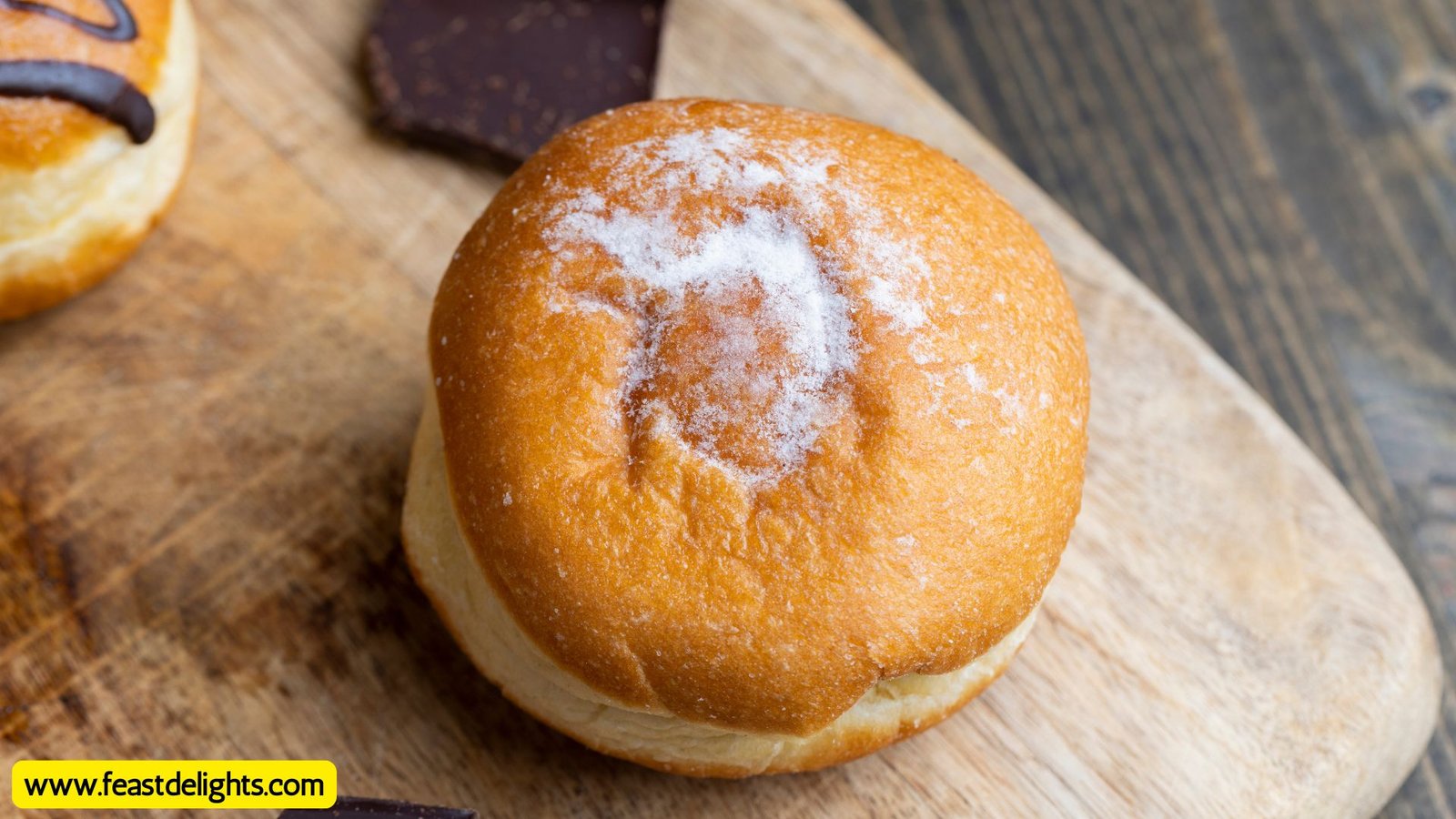
These filled yeast doughnuts are made from a sweet milk dough enriched with eggs and butter, then sealed around a small spoonful of thick jam or chocolate spread before frying. The filling stays inside the dough as it rises and cooks, giving a soft centre beneath a golden crust. This is a pre-filled version, unlike doughnuts that are injected with jam after frying. The original dough proportions are retained here. Allow around three hours and fifteen minutes, including an estimated two hours for both rises; a cool room can make the wait longer. The batch makes twelve generous doughnuts. Weighing the flour and using a frying thermometer matter more than following the clock exactly.
Ingredients that affect the dough
All-purpose flour keeps the crumb tender; stronger bread flour can make it chewier. The butter must be melted but no longer hot when mixed with the eggs and yeast. Vanilla sugar supplies a gentle vanilla flavour. This is an enriched dough with a substantial sugar and butter content, so a slow first rise is not a reason to add more yeast mid-recipe.
Choosing a filling that stays inside
Use about one level teaspoon per doughnut to begin with. Thick jam holds its shape on a spoon, while loose fruit syrup can wet the seam. Chocolate spread should be soft enough to spoon but not melted. The original ingredient list said only ‘to fill’; the teaspoon guidance is an editorial starting point, and the ideal loading still needs a kitchen trial.
Recipe card
Filled Yeast Doughnuts with Jam or Chocolate
Planning estimate: 45 minutes active preparation, about 90 minutes first rise plus 30 minutes second rise, and 30 minutes batch frying. First rise may take 60–120 minutes; follow expansion rather than the clock.
Equipment: Kitchen scales, large bowl, measuring jug, dough scraper, tray, cover, deep heavy pot, clip-on frying thermometer, slotted spoon and cooling rack over a tray.
Ingredients
Enriched dough
Filling and frying
Instructions
Wake up the yeast
Warm the milk to about 35–38°C (95–100°F), not hot. Stir in the chosen yeast and 1 tbsp taken from the measured 100 g sugar. Leave 10–15 minutes. Active dry or fresh yeast should show activity; if it stays completely inactive, check the yeast before committing the other ingredients.
Mix and knead
Mix flour, remaining sugar, salt and vanilla sugar in a large bowl. Add yeast milk and eggs, then cooled melted butter. Knead by hand for roughly 10–15 minutes or with a dough hook on low speed until smooth, elastic and soft. Scrape and rest a sticky dough for 5 minutes before deciding whether it needs a light dusting of flour; avoid adding handfuls.
Let the dough double
Cover and leave in a comfortably warm place until approximately doubled, usually 60–120 minutes. Use a bowl with room for expansion. The dough should look aerated and feel lighter; butter-rich dough may rise slowly.
Divide, fill and seal
Gently deflate the dough and divide into 12 equal portions. Flatten each portion into a disc with a thinner edge and place 1 level tsp of thick filling in the centre. Keep filling away from the edges, draw them together and pinch firmly closed. Set seam-side down and gently flatten to about 1.5–2 cm thick without tearing the dough.
Proof the filled doughnuts
Place on a lightly floured tray, spaced apart, and cover loosely. Leave about 30 minutes, or until puffy and a gentle fingertip indentation returns slowly. They need not double again. Begin heating the oil near the end of this rise.
Fry a test doughnut
In a deep heavy pot heat oil to 170–175°C (340–350°F), leaving plenty of headroom. Lower one doughnut carefully into the oil. Fry about 2–3 minutes per side, adjusting the heat to hold that range. Lift onto a rack. Once safe to handle, split it: the crumb around the filling must be cooked, not sticky or doughy. Adjust time or shape before the next batch.
Finish the batch and cool
Fry only 2–3 at a time, with space for turning. Allow the oil to recover between batches and remove any leaked filling or burnt crumbs with a skimmer. Drain on the rack and let the centres cool before eating. Total frying time depends on pot size and doughnut thickness.
Troubleshooting the fry
If the outside colours too quickly, check the thermometer before changing the cooking time. A crowded pan lowers the oil temperature and can make the doughnuts greasy. Dough that is under-risen can also absorb oil, so wait for a puffy second proof. Lift delicate doughnuts with a lightly floured scraper instead of squeezing out the trapped gas.
Make-ahead planning
Measure the dry ingredients and prepare a thick filling ahead. For an overnight option, refrigerating the covered dough after mixing can slow the first rise, but its exact overnight schedule has not been validated for this formula. Let cold dough become workable and complete both expansion cues before frying. For the most predictable first attempt, use the same-day method.
Frying safety and allergens
Use a stable, dry pot and keep water away from hot oil. Do not fill it more than one-third full before food is added. If oil smokes, turn off the heat and let it cool. Never pour water onto an oil fire. The dough contains wheat, milk and eggs; spreads may add nuts or soy. Do not taste raw dough.
Other doughnuts to compare
For a different method, try yeast doughnuts with optional filling after frying. For a quicker dough, see no-yeast kefir doughnuts, or compare coconut-milk mandazi.
Success tips
- Weigh the dough portions so all twelve cook at a similar rate.
- Take the yeast-activation sugar from the measured total.
- Keep the filling off the edge you need to seal.
- Use a thermometer instead of judging oil temperature by bubbles alone.
- Keep the pan handle turned inward and never leave hot oil unattended.
- Let the test doughnut cool before splitting; hot filling can burn.
Serving suggestions
- Serve slightly warm after checking the filling is comfortable to eat.
- Offer coffee or tea with one generous doughnut per person.
- Add fresh berries on the side for a tart contrast.
- If desired, dust cooled doughnuts lightly with icing sugar; this is an optional finishing ingredient.
Variations and substitutions
- Choose a thick smooth jam for a fruit centre.
- Use chocolate spread, checking nut, milk and soy labels.
- Choose thick dulce de leche for a caramel-style centre.
Storage and reheating
Best on the day of frying. Cool before covering. For jam-filled doughnuts, follow the jam’s storage instructions; refrigerate if uncertain. Refrigerate doughnuts with dairy-based filling promptly at 4°C (40°F) or colder and use within 2 days. Do not leave perishable fillings out more than 2 hours, or 1 hour above 32°C (90°F). For better make-ahead texture, freeze cooled unfilled doughnuts airtight for up to 1 month, thaw and warm gently before filling. Reheating a filled doughnut can make the centre dangerously hot.
Let the first doughnut cool enough to split and inspect before frying the rest. A cooked crumb, a closed seam and a comfortable filling temperature are better guides to serving than colour alone.
Frequently asked questions
Can I use both fresh and dry yeast?
Choose one: the original formula offers 25 g fresh yeast or 7 g dry yeast. Dry yeast products vary, so follow the packet's mixing and liquid-temperature instructions. Do not add both.
Why is the dough sticky?
Milk, two eggs and melted butter make a soft dough. Kneading and a brief rest help it become more manageable. Weigh flour rather than packing it into a cup, and use only a light dusting for handling. The retained formula has not been kitchen-tested in this update.
Why did the jam leak?
A wet seam, too much filling or a torn surface can open during frying. Start with a level teaspoon of thick filling, keep the edges clean and pinch them together firmly. Stop to skim leaks before they burn.
Why is there a raw ring around the filling?
The doughnut may be too thick or the oil too hot, browning the outside before the dough inside cooks. Test one first, use a thermometer and keep portions evenly flattened. Return an undercooked test doughnut to cooking rather than serving it.
Can I skip the second rise?
It is not recommended. Filling and shaping compress the dough, so it needs time to become puffy again. Skipping that rest can produce a dense doughnut that takes longer to cook through.
Is ordinary condensed milk a good filling?
Runny sweetened condensed milk is difficult to enclose. Use thick cooked condensed milk, often called dulce de leche, or choose thick jam or chocolate spread. Check for milk, soy and nut allergens.
Can I pipe in the filling after frying?
That is a different assembly method and works better for looser fillings. This recipe intentionally keeps its pre-filled method. Fry unfilled doughnuts fully before cooling and piping if you choose that variation.
Can I bake this dough instead?
Baking would give a bun-like result rather than a fried crust. No baking time has been validated for this retained formula, so it should not be presented as an equivalent method.
More recipes to try






Spotted a detail that needs correcting? Contact the FeastDelights editors.