Refrigerator Pickled Zucchini with Garlic and Dill
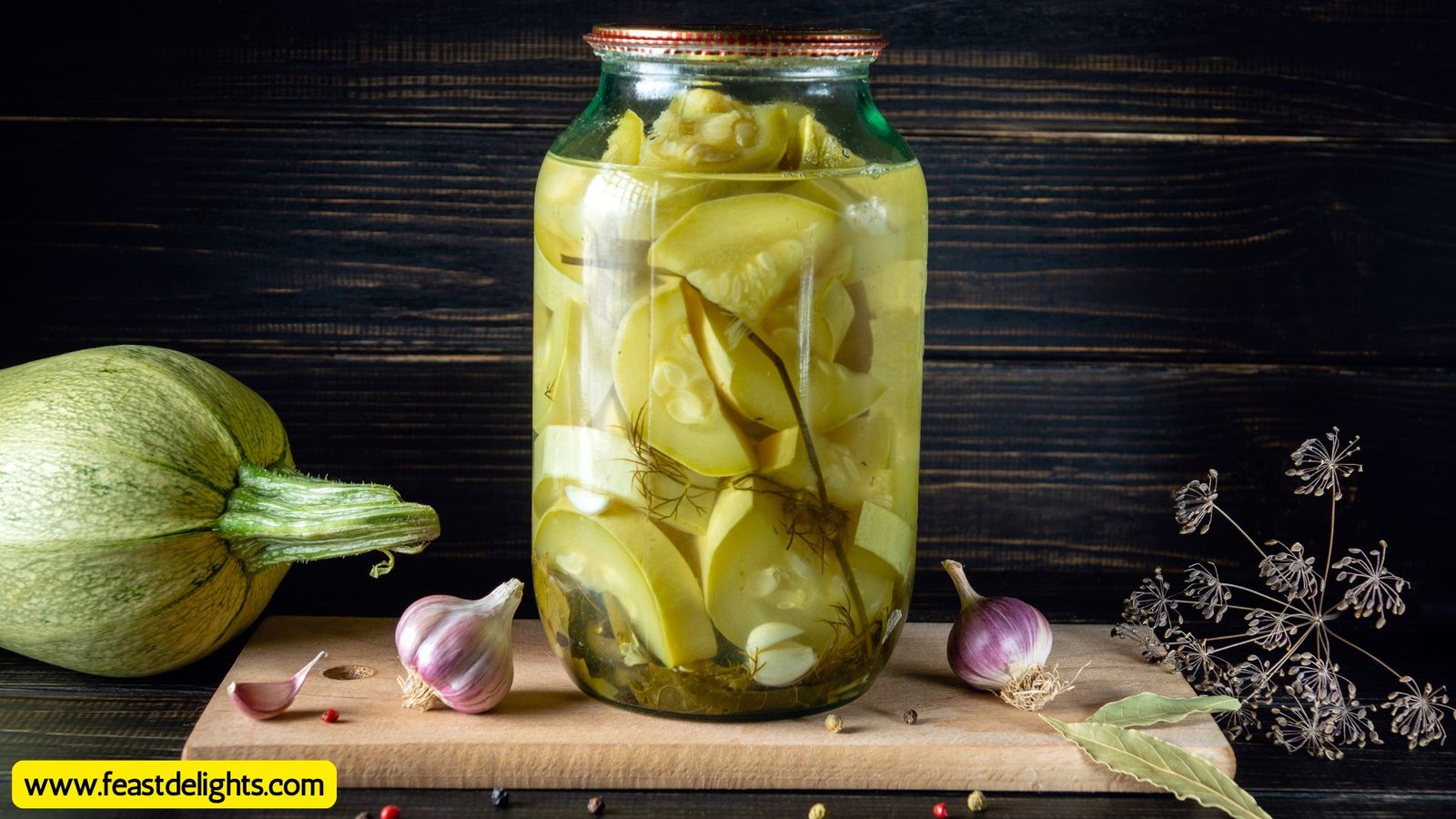
Firm zucchini slices take on a bright vinegar tang with garlic, fresh dill and black pepper. These are refrigerator pickles, ready after at least 24 hours of chilling, with about 30 minutes of preparation and brine cooking. Use small zucchini for a tender skin and firmer centre, and keep every piece beneath the brine. Pack the batch into two heatproof jars rather than forcing it into one litre. Serve cold alongside sandwiches, grilled food or a simple potato supper.
Refrigerator pickled zucchini is a quick way to turn mild summer squash into a sharp, garlicky side dish. Thin rounds absorb the brine more evenly than thick spears, while dill and peppercorns give the pickles their savoury flavour. There is no fermentation or pantry-canning step: the filled jars go straight into the refrigerator and stay there. This batch uses 600 g zucchini and 750 ml brine, so have two 750 ml jars available; the amount of brine each jar takes depends on how tightly the slices fit. Allow 20 minutes to prepare the vegetables, 10 minutes for the brine and filling, then at least 24 hours to chill.
Ingredients that make a difference
Small zucchini have less spongy flesh and fewer large seeds. Slice them evenly and leave their tender skin on. Fresh dill gives a softer herbal flavour than dill seed, and lightly crushing the garlic releases its aroma without leaving tiny pieces throughout the jar. White vinegar keeps the brine clear; cider vinegar labelled 5% acidity is another option.
Editorial safety correction: the older brine contained 500 ml water and 250 ml vinegar. This version uses 375 ml of each, preserving the total liquid while bringing the vinegar-to-water ratio to 1:1. It follows the approach in Oregon State University refrigerator-pickle guidance, with a conservative two-week refrigerated storage period. It is not a tested canning recipe.
Make refrigerator pickled zucchini
The recipe card below contains the measured ingredients and full method. Prepare both jars before heating the brine. Hot vinegar should touch only heatproof containers; avoid chipped glass. The finished slices should be tangy through the middle but still hold their shape. Twenty-four hours is flavour-development time in the refrigerator, not permission to leave the jars at room temperature.
Recipe card
Refrigerator Pickled Zucchini with Garlic and Dill
30 minutes preparation and brine cooking, followed by at least 24 hours in the refrigerator. Timing is an estimate.
Equipment: Kitchen scales; measuring jug and spoons; sharp knife and chopping board; stainless-steel saucepan; two clean heatproof 750 ml jars with lids; clean tongs.
Ingredients
Vegetable
Brine
Seasonings
Instructions
Prepare the jars and zucchini
Wash hands, jars and lids, and rinse zucchini and herbs under running water. Trim the zucchini and cut into 5 mm (¼ inch) rounds. Divide zucchini, lightly crushed garlic, peppercorns, dill and optional chilli between two clean heatproof 750 ml jars, leaving about 1.5 cm (½ inch) space above the food.
Heat the measured brine
Combine 375 ml water, 375 ml vinegar labelled 5% acidity, salt and sugar in a stainless-steel saucepan. Bring to a boil, stirring until dissolved, then remove from the heat. Do not add extra water to weaken the brine.
Cover the vegetables
Pour the hot brine carefully into the heatproof jars, covering the zucchini. Release trapped air gently with a clean utensil and add more of the same brine if needed. If the batch does not fit, use another clean small jar; do not cram vegetables above the liquid.
Refrigerate and wait
Close with clean lids and refrigerate promptly, leaving space around the jars for cooling. Do not leave on the counter to cool completely. Chill at least 24 hours before serving; thicker pieces may need another day to develop flavour.
Serve cold and store safely
Remove portions with clean tongs and keep the remaining zucchini beneath the brine. Return jars promptly to a refrigerator at 4°C/40°F or colder and use within 2 weeks. These pickles are not suitable for shelf-stable canning.
Troubleshooting and substitutions
If the brine tastes sharper than you prefer, drain a serving before eating or adjust sugar in a future batch. Do not dilute the stored brine with water. If you run short of liquid, use an extra batch made in the same proportions, rather than topping up with plain water. Jar capacity and finished volume are approximate because slice size changes how tightly the zucchini packs.
Make ahead, serving and allergens
Make the pickles a day ahead so the flavour has time to develop. There is no need to freeze or reheat them: they are intended as a cold condiment. The base recipe has no milk, egg, wheat or nuts, but check vinegar and spice labels for your own allergy needs. Optional mustard seeds introduce mustard.
More ways to use zucchini
For a cooked vegetable dish, try zucchini casserole with rice and dill. For a warm snack, see zucchini and cheese fritters. A bowl of zucchini and potato soup makes a mild main dish alongside these sharp pickles.
Frequently asked questions
Are these zucchini pickles shelf stable?
No. Refrigerate from preparation onward. A lid that seals as the jar cools does not make this a safe pantry preserve.
Why has the brine changed from the older version?
The earlier recipe used twice as much water as vinegar. This revision keeps the 750 ml brine volume but uses equal volumes of water and vinegar labelled 5% acidity, following university-extension refrigerator-pickle guidance. It remains a refrigerator-only adaptation.
Can I use courgettes?
Yes. Courgette and zucchini are names for the same summer squash. Choose small, firm specimens without soft spots.
Do I peel the zucchini?
Leave tender skin on. Large zucchini with coarse skin and a spongy, seedy centre are a poor choice for crisp quick pickles.
Can I use apple cider vinegar?
Yes, if the label states 5% acidity. It gives a slightly fruitier flavour and may darken the brine. Do not use homemade vinegar or dilute the mixture further.
Why are my pickles soft?
Large or overripe zucchini, very thin slices and prolonged warmth can soften them. Use fresh small squash, slice evenly and refrigerate promptly. Softness with slime, mould or unusual bubbling calls for disposal.
Can I reuse the leftover brine for another batch?
Make fresh brine for each batch. Vegetables release water into used brine, changing its concentration.
Can I freeze them?
Freezing is likely to leave thawed zucchini limp and watery. Make a smaller refrigerated batch if you cannot use it within two weeks.
More recipes to try






Spotted a detail that needs correcting? Contact the FeastDelights editors.