Crispy Zucchini and Cheese Fritters with Dill
These zucchini and cheese fritters have golden, crisp edges and tender centres flecked with dill. Grated zucchini (courgette) is salted, rested and squeezed before mixing with eggs, flour and feta or grated hard cheese. Removing excess water is the key to a batter that holds together without needing more flour. Fry small, flattened portions in a skillet over medium heat and serve hot, with yogurt or a fresh salad if desired. The recipe makes approximately 12 fritters, with cooking time depending on pan size.
Crispy zucchini fritters are small pan-fried vegetable patties with a savoury cheese and dill filling. This version uses 600 g grated zucchini, two eggs and 75 g flour, with either feta or a grated hard cheese. Salt and squeeze the zucchini before mixing; otherwise its moisture will turn the batter into a thin puddle. Allow roughly 55 minutes for preparation, draining and batch cooking.
Choosing zucchini and cheese
Small or medium zucchini have tender skins and relatively small seeds. Wash and grate them with the coarse holes of a box grater. The 600 g is the starting weight, not the weight after squeezing. Older, larger zucchini may be especially watery; remove the large seeds and tough skin first, then weigh the usable flesh.
Feta gives pockets of salty, tangy cheese. A firm grated cheese melts and binds differently, so the texture will vary. Use the stated 75 g and adjust the second portion of salt if the cheese is particularly salty. Fresh dill provides the herbal flavour without adding much moisture. Eggs bind the mixture as they cook, while flour absorbs the remaining liquid and helps set the surface.
Equipment and timing
Prepare a box grater, colander, clean tea towel, mixing bowl, kitchen scale, tablespoon, wide skillet, thin spatula and cooling rack. Budget 20 minutes for hands-on preparation, ten minutes for salting and draining, and about 25 minutes for frying in batches. A smaller pan may take longer. The 3–4 minutes per side is a starting point for thin fritters, not a universal timer.
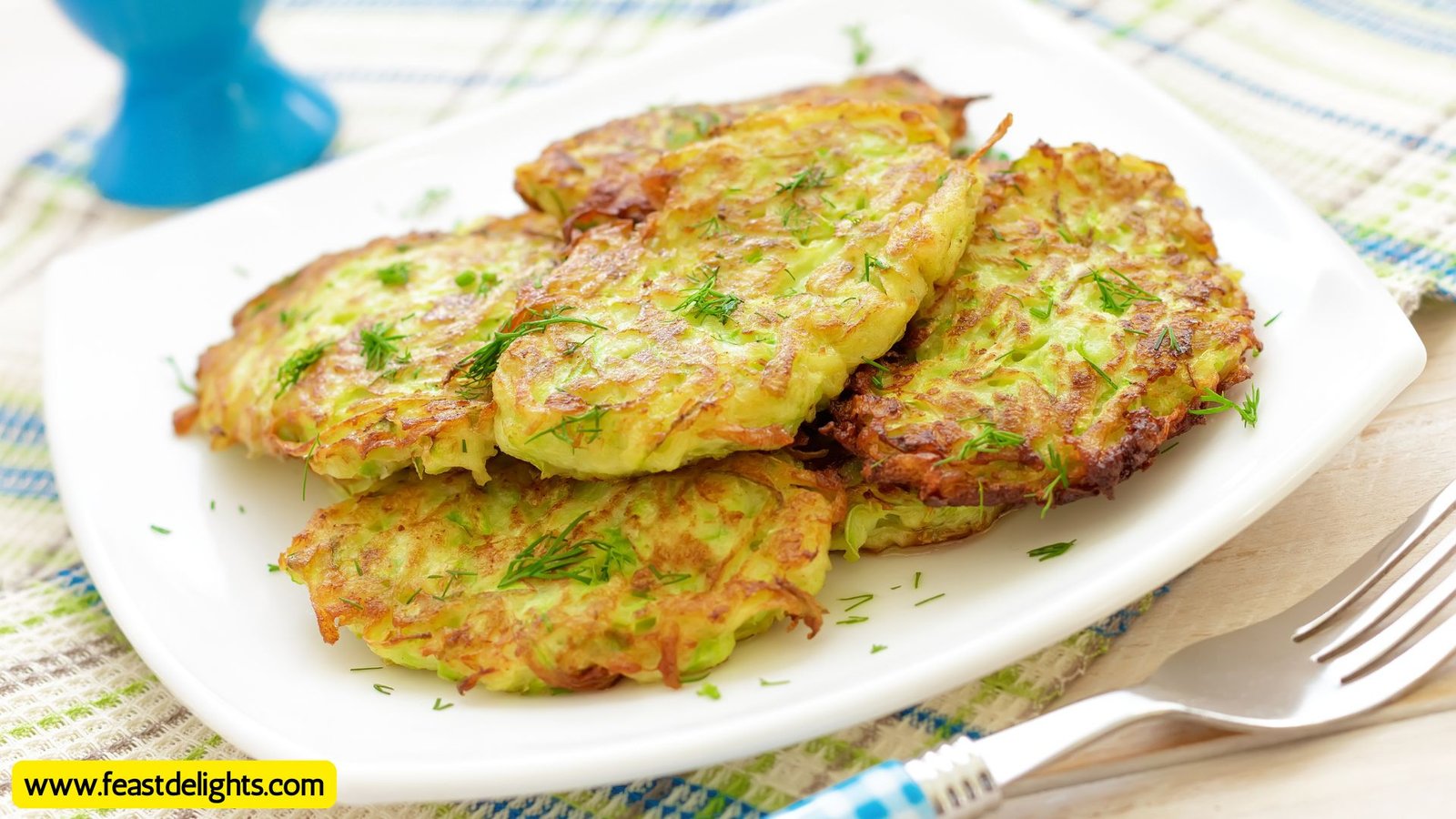
Recipe card
Crispy Zucchini and Cheese Fritters with Dill
Ten minutes of resting, about 20 minutes active preparation and 25 minutes batch frying. Pan size and patty thickness affect time.
Equipment: Box grater; colander; clean towel; scale; mixing bowl; skillet; thin spatula; wire rack; food thermometer
Ingredients
Fritter batter
For frying
Instructions
Grate, salt and squeeze
Wash zucchini, trim the ends and grate coarsely. Toss with half the salt and leave in a colander for 10 minutes. Wrap in a clean towel and squeeze firmly until little liquid comes out.
Mix the fritter batter
Beat eggs in a bowl. Stir in drained zucchini, flour, crumbled feta or grated hard cheese, dill, black pepper and the remaining salt, using less if the cheese is very salty. Mix just until evenly distributed. Do not taste raw batter.
Heat the skillet
Heat a thin layer of the measured oil in a wide skillet over medium heat until shimmering, not smoking. Reserve some oil for later batches.
Fry in small batches
Spoon about two tablespoons of mixture per fritter as a starting portion, dividing the batter into approximately 12 patties; adjust the spoonful size if needed. Flatten to about 1 cm thick. Cook 3–4 minutes on each side until golden, the edges set and the centres firm. Check that the egg mixture reaches 71°C (160°F). Reduce heat if the outside darkens too quickly; allow extra time as needed.
Drain and serve
Transfer to a clean rack or paper towel, and repeat with remaining batter. Keep cooked fritters in a single layer to preserve the crisp edges. Serve warm.
How to keep zucchini fritters crisp
Salt helps draw water from the grated vegetable. Let the salted zucchini stand for the full ten minutes before squeezing it. Gather the shreds in a clean towel and twist over the sink until very little liquid comes out. Separate the compressed shreds with a fork before combining them with the eggs. If water is pooling around the batter, check the drainage before adding more flour.
Heat the pan before spooning in the batter. The oil should shimmer and the mixture should sizzle gently as it touches the surface. Flatten each portion slightly, leaving small gaps so steam can escape. A thick mound can brown outside while remaining wet in the middle. If the oil smokes, remove the pan from the heat briefly and reduce the setting. Let the first side form a crust before flipping.
Lift a fritter with a thin spatula and check the underside. It should be golden and release easily. Turn once and cook until the other side browns and the centre is set. Because the batter contains eggs, check the centre of a representative thick fritter with a thin-tip thermometer: FoodSafety.gov specifies 71°C (160°F) for egg dishes. Add time if necessary.
Troubleshooting
Batter spreads: the zucchini may be insufficiently squeezed. Mix just before frying and test one small portion. If it still spreads, the next batch needs better drainage rather than a large addition of flour.
Fritters are oily: a cool or overcrowded pan can prevent the edges from setting quickly. Bring the pan back to medium heat between batches and use only a thin film of oil.
Outside darkens before the centre cooks: lower the heat and make thinner patties. The cheese may brown quickly; colour alone does not confirm the egg has set.
Serving suggestions and variations
Serve with plain yogurt or sour cream, lemon wedges, or a salad such as fresh cucumber salad with garlic and dill. For a more substantial meal, pair with rice or warm bread. These vegetable fritters are different from our chicken zucchini fritters with ricotta, which contain poultry and have different cooking requirements.
Parsley can replace dill for a milder herbal taste. A different firm cheese changes saltiness and browning. The listed recipe contains wheat, eggs and milk. Check the cheese label if a vegetarian rennet is important, and check all ingredients and shared equipment for cross-contact.
Make ahead, storage and reheating
Grate the cheese and chop the herbs ahead, refrigerating them separately. Grate, salt and squeeze the zucchini shortly before frying, as it continues shedding water once mixed. Avoid leaving raw egg batter at room temperature while cooking multiple batches. Refrigerate cooked fritters in a shallow covered container within two hours (one hour above 32°C/90°F) at 4°C (40°F) or colder. Use within three days. Freeze separated by parchment for up to two months for best quality; thaw in the refrigerator. Reheat to 74°C (165°F), preferably on a rack in a hot oven or in a skillet rather than steaming them in a covered container.
Serve the fritters while the edges are crisp. Squeeze the zucchini well, keep the patties thin and turn only when the underside is set.
Frequently asked questions
Do I need to peel zucchini?
No, tender zucchini skin grates easily. Remove tough skin and large mature seeds if using an oversized vegetable.
Why are my fritters soggy?
Water left in the grated zucchini and overcrowding the pan can make them steam. Squeeze thoroughly and leave space between portions.
Can I use feta instead of hard cheese?
Yes. Feta adds tang and salt; a grated firm cheese melts differently. Drain feta well and adjust seasoning.
How can I keep the fritters crisp between batches?
Place them in one layer on a rack rather than stacking them. Serve soon after cooking.
Can I prepare the batter in advance?
It is better to mix just before frying. Grated zucchini continues releasing moisture, making a stored batter thinner.
Can I make these gluten-free?
The original recipe uses wheat flour. A gluten-free binder would require a separate texture check; also verify all packaged ingredients.
Why do fritters break when flipped?
The first side may not have set. Use a thin spatula, wait for browned edges and keep portions small.
More recipes to try






Spotted a detail that needs correcting? Contact the FeastDelights editors.