Pastéis de Nata with Ready-Rolled Puff Pastry
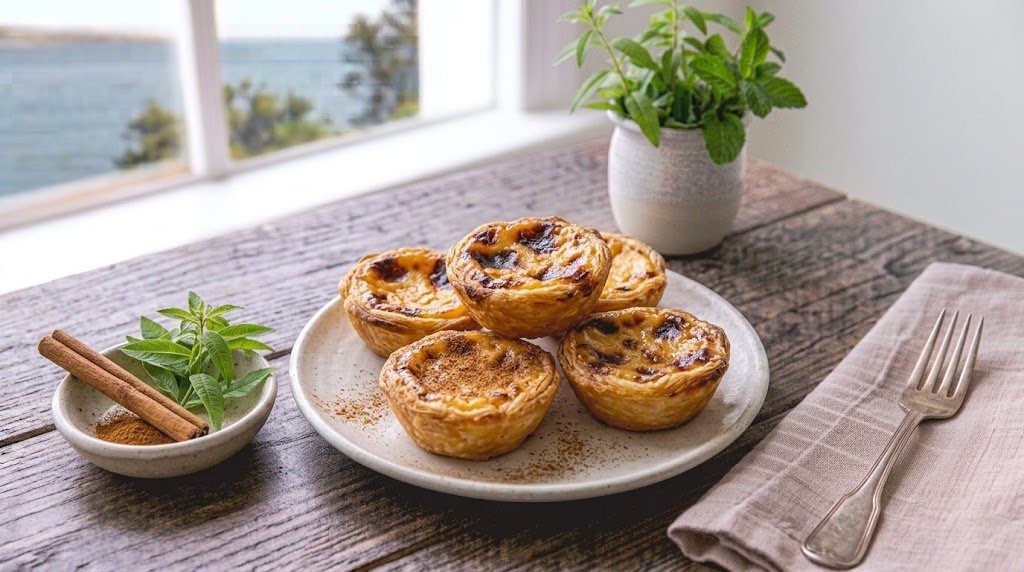
Pastéis de nata are Portuguese custard tarts with crisp, layered pastry and a creamy egg-yolk filling scented with lemon and vanilla. This home-oven version uses ready-rolled puff pastry instead of making laminated dough from scratch. Roll the pastry into a log to create the characteristic spiral, press it into a metal muffin tin and fill with gently thickened milk custard. A hot oven browns the tops while the pastry turns golden. The recipe makes 12 small tarts, ideal with coffee and a dusting of cinnamon.
Pastéis de nata are small Portuguese custard tarts distinguished by flaky pastry and a lightly browned egg custard. This shortcut version makes 12 tarts with ready-rolled puff pastry, whole milk, four egg yolks, sugar and cornstarch. Lemon peel and vanilla lend fragrance without overpowering the custard. Allow about an hour, including cooling in the tin.
Why this method works in a home kitchen
Portuguese bakery tarts use laminated dough and very hot ovens. This is a practical adaptation, not a claim to reproduce a commercial bakery formula. Rolling purchased puff pastry into a log and cutting across it creates a visible spiral. Pressing the rounds into a metal muffin tin produces individual shells with thin bases and raised edges. Metal transfers heat efficiently, which helps the pastry brown. Check the tin’s temperature rating before heating your oven.
Choosing the ingredients
Use a pastry sheet weighing about 320 g. Thaw frozen pastry in the refrigerator, where the fat stays firm. All-butter pastry gives a richer taste; check that the product is suitable for the specified oven temperature. Whole milk makes the filling creamy, while yolks add richness and cornstarch gives it structure. Weigh the starch rather than packing it into a measuring cup. Sugar helps flavour, texture and browning, so avoid cutting it drastically. A strip of lemon peel infuses the milk without adding acidic juice. Remove the peel before filling the shells and add vanilla after cooking.
If you enjoy custard desserts, compare our vanilla pastry cream or try a larger blind-baked vanilla custard tart.
Equipment and preparation
Use a standard 12-hole metal muffin tin rated for 240°C (465°F), a saucepan, whisk, knife, thermometer, mixing bowl and wire rack. Deep jumbo muffin cups change the shell thickness and cooking time. Preheat the oven fully and measure the ingredients before starting the custard.
Recipe card
Pastéis de Nata with Ready-Rolled Puff Pastry
Prep includes stovetop custard preparation and brief cooling before filling. Bake 12–16 minutes and cool 10 minutes in the tin; allow extra time if necessary.
Equipment: 12-hole high-temperature-rated metal muffin tin, saucepan, whisk, mixing bowl, knife, heatproof bowl, wire rack, small spatula and instant-read thermometer.
Ingredients
Pastry
Custard
To serve
Instructions
Shape the pastry
Preheat a conventional oven to 240°C (465°F). Use a metal 12-hole muffin tin rated for this temperature. Roll the cold, pliable pastry tightly from a short edge and slice into 12 equal rounds. Place each cut-side up in a cup. Press outwards with lightly damp thumbs to form thin, even bases and sides without holes. Refrigerate while preparing the filling.
Prepare the milk and yolks
Whisk yolks, sugar, cornstarch, salt and 100 ml cold milk until smooth. Heat the remaining 400 ml milk with the lemon peel over medium heat until steaming.
Thicken and cool the custard
Gradually whisk the hot milk into the yolks. Return to the saucepan and whisk over medium-low heat until thickened and gently bubbling; the custard must reach at least 71°C (160°F). Remove the peel and stir in vanilla. Transfer to a shallow heatproof bowl and cool until no longer hot, stirring occasionally.
Fill the shells
Divide custard among the chilled shells, leaving about 5 mm of headroom. If the cups are small, bake excess custard separately in an ovenproof dish until set and at least 71°C (160°F).
Bake the tarts
Bake for 12–16 minutes, checking from minute 12. Look for crisp golden pastry and brown spots on the custard, with a centre that trembles slightly but is not liquid. Extend baking briefly if necessary.
Cool and serve
Cool in the tin for 10 minutes, then loosen the edges gently and transfer to a rack. Dust with cinnamon if desired.
How to get crisp shells and creamy centres
Keep the pastry cold and press each round from the centre towards the sides with lightly damp thumbs. A thick lump of pastry at the base is likely to remain soft even when the rim is golden. If the dough starts sticking or smearing, refrigerate it again. The shells do not need blind baking for this method.
Dissolve the starch in cold milk first. Adding it straight to hot liquid produces lumps. Temper the yolks gradually with the warm milk while whisking, then heat the combined custard until it thickens. Cool it until no longer hot before filling; hot custard can melt the pastry fat too early.
Troubleshooting Portuguese custard tarts
The pastry is soggy
Check that the bases were pressed thinly and the oven fully heated. Excess custard or warm pastry can cause soft bottoms. Transfer the baked tarts to a rack after the initial cooling period so steam can escape.
The custard overflowed
Leave about 5 mm below the pastry rim. Muffin cup capacities differ; do not force all the custard into the shells. Let the tarts settle in the tin before touching the hot filling.
The custard is lumpy or rubbery
Too much heat or prolonged cooking can tighten egg proteins. Add hot milk slowly and whisk throughout stovetop cooking. Strain small lumps before filling. Remove the tarts when the pastry is golden and the middle moves slightly as one mass rather than sloshing. Brown spots are desirable, but a scorched surface is not.
Serving and flavour variations
Serve the tarts slightly warm with cinnamon and coffee. Avoid wet toppings ahead of time, which soften the crust. For a different aroma, replace lemon peel with orange peel or infuse a cinnamon stick in the milk. If you have an extra sheet of pastry, try our French palmiers.
Make ahead, storage and allergens
Shape pastry ahead and keep the covered tin refrigerated. Fill immediately before baking for the best texture. Refrigerate at 4°C (40°F) or below within 2 hours (1 hour above 32°C/90°F). Use within 3 days. Serve chilled or reheat leftovers to 74°C (165°F). Freezing is not recommended for best texture. A conventional oven helps restore some crispness. This recipe contains egg, milk and wheat; check pastry packaging for additional allergens. Cook the egg custard to at least 71°C (160°F), following FDA egg safety guidance.
Frequently asked questions
Is pastel de nata the same as pastéis de nata?
Yes. Pastel de nata is singular; pastéis de nata is the Portuguese plural.
Can I use shortcrust pastry?
It will hold custard, but will not produce the characteristic flaky layers. Use puff pastry for this version.
Can I prepare the shells ahead?
Cover and refrigerate shaped shells for up to a day; fill just before baking.
Can I omit the lemon?
Yes. Keep the vanilla; the custard will have a milder aroma.
Do I need traditional Portuguese tart moulds?
No. A standard metal muffin tin rated for the specified temperature works for this adaptation.
How do I use the leftover egg whites?
Refrigerate the whites promptly in a clean covered container and use in another cooked recipe, such as an omelette or meringues.
More recipes to try






Spotted a detail that needs correcting? Contact the FeastDelights editors.