Vanilla Custard Tart with Buttery Shortcrust Pastry
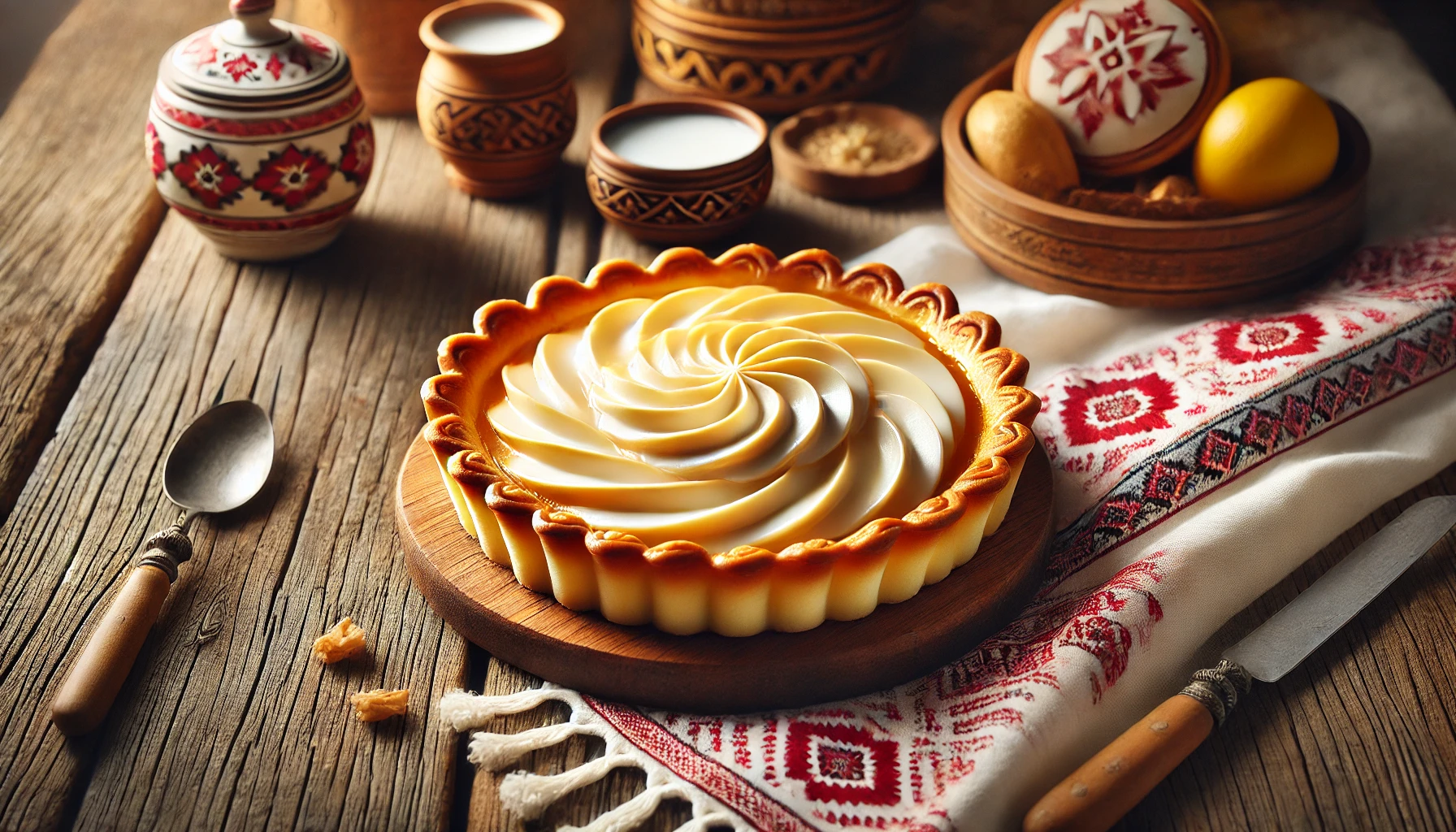
This vanilla custard tart has a crisp, buttery shortcrust shell filled with a smooth stovetop custard made from whole milk, eggs, sugar and cornstarch. The shell is baked completely before filling, so the pastry stays as crisp as possible beneath the creamy centre. Gradually whisk warm milk into the eggs, cook the mixture until thick and bubbling, then refrigerate the filled tart until cold. It serves eight and can be finished with fresh berries or sliced seasonal fruit.
Vanilla custard tart combines a fully baked sweet shortcrust shell and a smooth, chilled vanilla filling. Unlike an oven-baked egg custard tart, this recipe cooks the milk, eggs and cornstarch on the stove before pouring the filling into the shell. It makes eight slices in a 23 cm tart tin. Plan for about 5 hours 25 minutes, including the pastry rests and at least three hours of chilling.
Making a crisp shortcrust shell
Keep the butter cold and rub it into the flour and pastry sugar until coarse crumbs form. The single yolk belongs in the pastry; the four whole eggs belong in the custard. Add only enough of the measured ice water to hold the dough together. Avoid kneading it like bread dough, which can make it tough. Chill the disk before rolling and avoid stretching it to fit the tin.
Blind baking means baking a pastry shell before adding filling. Here it is essential because the filled tart will not return to the oven. Line the pastry with parchment and weights so that its base does not puff and its sides stay supported. Remove the weights when the sides are set and bake until the base is visibly dry and golden. See King Arthur Baking’s sweet pastry guide for the distinction between partially and fully baked shells.
How to cook the vanilla custard
Whole milk gives this filling a creamy texture. Whisk the separate custard sugar, whole eggs and cornstarch until there are no dry lumps. Slowly pour in some steaming milk while whisking; this gradually warms the eggs instead of exposing them to a sudden burst of heat. Return the mixture to the pan and keep the whisk moving along the bottom as it thickens.
Once bubbles appear across the surface, maintain a gentle boil while whisking for about one minute. This allows the starch to cook and helps the custard hold its shape. Do not stop at the first signs of thickening. Add vanilla off the heat. The King Arthur Baking pastry cream method describes the same basic milk, egg and starch technique, although its proportions differ from this whole-egg formula.
Recipe card
Vanilla Custard Tart with Buttery Shortcrust Pastry
Chill dough 30 minutes and shaped shell 15 minutes. Allow up to 30 minutes for blind baking, about 10 minutes for custard cooking, 20 minutes for shell cooling and at least 3 hours for the filled tart to chill. Allow longer if needed for a firm slice.
Equipment: Kitchen scale, bowl, rolling pin, 23 cm removable-base tart tin, parchment, baking weights, baking tray, saucepan, whisk, fine sieve, heatproof spatula, thermometer and cooling rack.
Ingredients
Shortcrust pastry
Vanilla custard
Instructions
Make and chill the pastry
Combine flour and 50 g pastry sugar. Rub in cold butter until coarse crumbs form. Mix in the yolk, then add ice water gradually, stopping when the dough holds together when pressed. Flatten into a disk, wrap and chill 30 minutes.
Blind-bake the shell completely
Preheat a conventional oven to 190°C (375°F). Roll the dough to about 3 mm thick and line a 23 cm tart tin without stretching it. Prick the base and chill 15 minutes. Line with parchment and fill with weights up the sides. Bake 15–20 minutes, carefully remove parchment and weights, then bake another 5–10 minutes until the base is dry, firm and golden. Cool on a rack about 20 minutes.
Temper and cook the custard
Heat the milk in a saucepan until steaming. In a bowl whisk the 100 g custard sugar, four whole eggs, cornstarch and salt until smooth. Gradually whisk about one-third of the hot milk into the egg mixture, then whisk it back into the saucepan. Cook over medium heat, whisking continuously along the base and corners, until thick and bubbling across the surface. Continue whisking at a gentle boil for about 1 minute; the mixture must reach at least 71°C (160°F). Remove from heat.
Fill the baked pastry
Stir in vanilla off the heat. Strain the hot custard through a fine sieve if needed and pour into the cooled, fully baked shell. Smooth gently. Cover the surface with food-safe heat-resistant film or parchment to reduce skin formation. Transfer promptly to the refrigerator; do not leave the filled tart out to cool for hours.
Chill until set and serve
Refrigerate at 4°C (40°F) or below for at least 3 hours, longer if the centre is still soft. Remove the cover, lift the tart from its tin when stable and slice with a sharp clean knife. Add fresh fruit immediately before serving if desired.
How to get clean slices
Pour the cooked custard into the fully baked, cooled shell and refrigerate promptly. The filling becomes firmer as it chills. The original amount of cornstarch is retained, but this is a relatively soft custard, not a gelatin-set filling. Allow longer refrigeration if needed and use a thin sharp knife. If it remains too soft to cut after complete chilling, serve in portions with a spoon; the exact firmness needs kitchen testing.
Troubleshooting
Lumpy custard: Whisk continuously and temper the eggs slowly. Strain small lumps out while the custard is still warm.
Scorched milk: Use medium heat and scrape the corners of the saucepan. If the base burns, avoid stirring the burnt layer into the filling.
Soggy crust: Fully bake the shell and cool it before filling. The longer the filled tart sits, the more moisture migrates into the crust.
Serving and related recipes
Add berries or ripe peach slices just before serving. For a different custard pastry, try pastéis de nata, which are baked in individual shells. Our vanilla crème brûlée has a caramelised sugar top, while pear frangipane tart uses baked almond cream instead of stovetop custard.
Storage and allergens
The custard contains milk and eggs and must be kept refrigerated after cooking. Chill promptly rather than leaving the filled tart at room temperature for the full setting period. The pastry contains wheat, milk and egg. Refer to FoodSafety.gov egg temperature guidance and check toppings for cross-contact.
Frequently asked questions
Why blind-bake the shell?
The custard is cooked on the stove and the filled tart is not baked again, so the shell must be completely baked first.
Why did the pastry shrink?
Stretching the dough, warm butter or too few weights may cause shrinkage. Chill the lined shell and support its sides during baking.
How do I stop custard scrambling?
Add hot milk gradually to the egg mixture and whisk continuously over moderate heat, especially around the pan corners.
Why is the custard still loose?
It needs a full bubbling stage and thorough chilling. The listed 16 g cornstarch gives a relatively soft custard; a firmer slice may require separate kitchen testing.
Can I use a prepared shell?
Yes, use a fully baked 23 cm shell, or bake it according to the package before filling.
Can I make it the day before?
Yes. Keep the filled tart refrigerated and covered. The shell gradually softens, so add fruit only before serving.
Can I freeze it?
Freezing is not recommended; thawed custard may separate and the pastry can become soggy.
More recipes to try

Cream Cheese Chocolate Truffles Rolled in Cocoa

Cream Cheese Cheesecake Danish with Lemon and Vanilla

Fresh Fruit Salad with Orange Honey Dressing

Ptichye Moloko Bird’s Milk Mousse with Chocolate Glaze
Bird’s Milk Jello with Creamy Mousse and Raspberry Jelly
Cream Horn Trubochki with Vanilla Cream Filling
Spotted a detail that needs correcting? Contact the FeastDelights editors.