Osso Buco with Red Wine and Lemon Gremolata
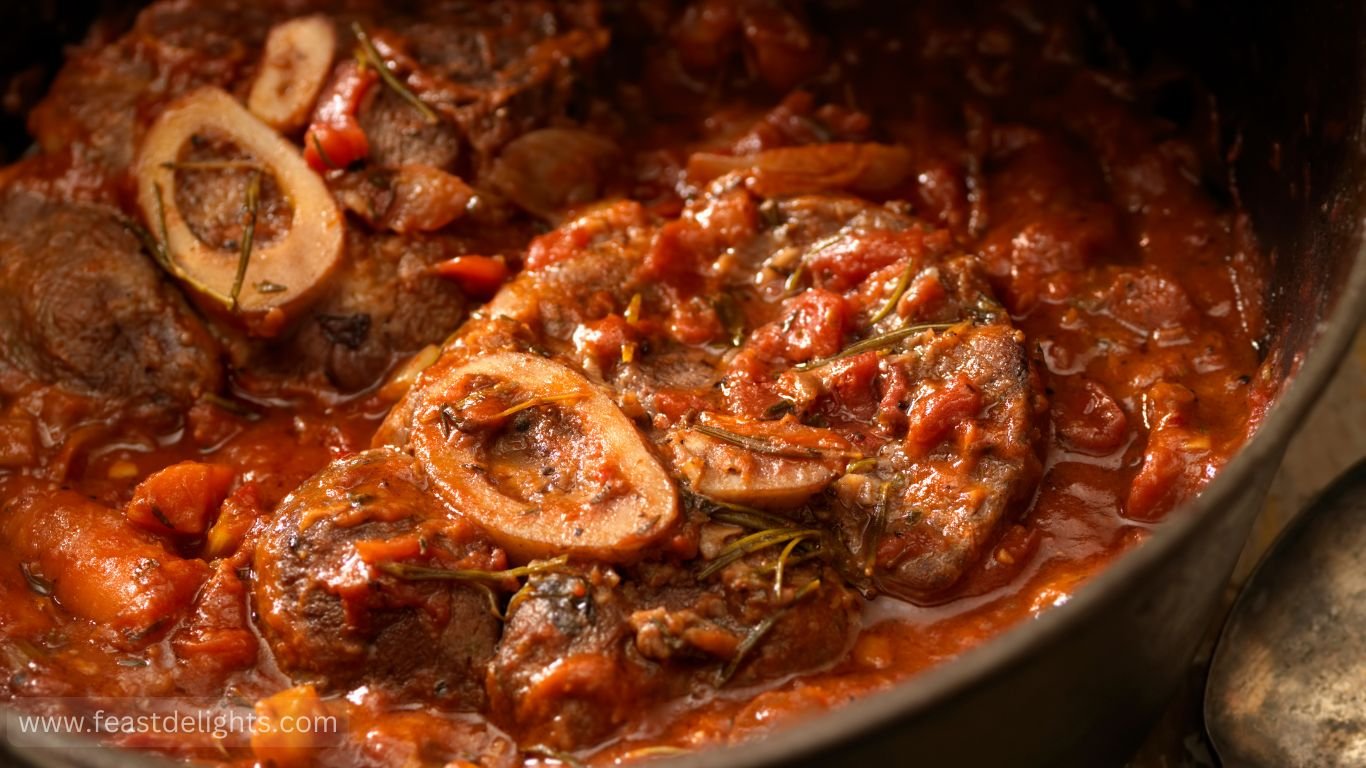
This red wine osso buco combines cross-cut veal shanks with a rich sauce of onion, carrot, celery, tomato paste and stock. Slow, covered cooking softens the connective tissue until the meat yields to a fork, while the marrow enriches the braising juices. A fresh lemon and parsley topping balances the deep savoury flavour. The recipe serves four and takes about three hours and twenty minutes, mostly unattended in the oven. Serve with saffron risotto, creamy polenta or mashed potatoes.
Choosing the shanks and braising liquid
Buy cross-cut bone-in veal shanks of similar thickness so they cook evenly. The central bone holds marrow, and the surrounding meat contains connective tissue that softens during a long, moist cook. A quick sear alone will not make this cut tender. Tying the outside with kitchen twine helps hold the meat together as it shrinks. Pat the surface dry before seasoning and dredging; a thin flour layer assists browning and gives the sauce a little body.
Use a dry red wine you would be comfortable drinking, rather than a sweet or heavily salted cooking wine. The stock should have enough flavour to support the vegetables without making the finished sauce too salty. The onion, carrot and celery form the aromatic base; dice them fairly small so they soften into the sauce. Tomato paste provides concentration without adding excessive liquid. Lemon zest and fresh parsley are reserved for the end because their fresh aroma contrasts with the slow-cooked meat.
How to build flavour before braising
Choose an ovenproof pot wide enough to fit the shanks in one layer. Crowding makes the meat release moisture before it browns, so sear in batches. Let each flat surface develop a brown crust before lifting with tongs. The dark golden deposits on the bottom are useful, but black scorched flour is bitter. Reduce the heat if the pot gets too hot. When the meat is out, soften the vegetables in the same pot and scrape up the browned deposits as the wine simmers.
The liquid should come roughly halfway up the shanks, not drown them. A snug lid keeps moisture in the pot during braising. Bring the contents to a gentle simmer before transferring to the oven; that way the cooking time does not include warming a cold pot from scratch. Use the card below for the measured ingredients and sequence.
Recipe card
Osso Buco with Red Wine and Lemon Gremolata
Includes about 25 minutes for browning, vegetables and deglazing, and up to 150 minutes of oven braising. Larger shanks may need longer.
Equipment: Large heavy ovenproof Dutch oven with lid (about 5–6 litres), kitchen twine, tongs, plate, knife, chopping board, grater and instant-read thermometer.
Ingredients
Veal
Braising sauce
Lemon-parsley topping
Instructions
Prepare the veal shanks
Preheat oven to 160°C (325°F). Pat shanks dry, season and tie each around the circumference with kitchen twine. Dust lightly with flour, shaking off excess. Discard flour that contacted raw meat.
Brown in batches
Heat oil over medium-high heat in a Dutch oven. Brown shanks in batches, about 3–4 minutes per flat side, reducing heat if flour scorches. Transfer to a clean plate.
Soften the aromatic vegetables
Reduce heat to medium. Cook onion, carrot and celery about 6 minutes, stirring until softened. Add garlic and tomato paste and stir for 1 minute.
Deglaze and assemble the braise
Pour in red wine and simmer 3 minutes, scraping up browned bits. Add stock and bay leaves. Return shanks and collected juices in one layer; liquid should reach about halfway up the meat. Bring to a gentle simmer.
Braise until fork-tender
Cover and transfer to oven for 2–2½ hours, turning carefully once. Check at 2 hours: a fork should slide into the meat easily and it should begin to pull from the bone. Whole veal must reach at least 63°C (145°F) with a 3-minute rest, but shanks need longer to tenderise. Continue in 15–20 minute increments if tough.
Finish with lemon and parsley
Lift shanks carefully onto warm plates, remove twine and bay leaves. Reduce sauce uncovered if thin. Mix lemon zest and chopped parsley just before serving and scatter over the meat.
How to know the meat is tender
At the two-hour mark, insert a fork into the thickest part of a shank away from the bone. It should enter without much resistance. The meat may begin separating from the bone, but it does not have to fall apart completely. If it feels springy or rubbery, continue the covered braise and check again after 15–20 minutes. Time varies with thickness and the age of the meat. The minimum safe temperature for whole veal is 63°C (145°F) with a three-minute rest, but the texture of a shank requires substantially more cooking than that minimum.
Fixing the sauce
If the sauce is watery, remove the tender shanks first and simmer the liquid uncovered until it lightly coats a spoon. Reducing the sauce with the meat still inside can break up the shanks. If too thick, loosen with a splash of unsalted stock. Skim excess fat with a spoon if desired. Taste after reducing because salt becomes concentrated as water evaporates. Remove the bay leaves and twine before plating. The fresh lemon-parsley mixture should be added last, not simmered into the braise.
Serving suggestions
For a Milanese-inspired pairing, spoon the shanks over saffron risotto alla Milanese. Creamy polenta is another good base for absorbing the sauce. For a bread accompaniment, serve slices of sunflower seed soda bread or a simple green salad for contrast.
Make-ahead, storage and allergens
Braised shanks suit advance cooking because the sauce protects the meat from drying out. Divide into shallow containers, cool promptly and refrigerate within two hours, or within one hour in very hot surroundings. Reheat covered over low heat with a splash of stock if necessary, checking the centre reaches 74°C (165°F). The flour contains wheat, the vegetables include celery and wine may contain sulphites. Check the stock label for additional allergens; gluten-free flour can replace the dredging flour if all other ingredients are suitable. Wash utensils and work surfaces after preparing raw veal. For further guidance see FDA safe food handling.
Frequently asked questions
Can I use beef shanks?
Yes. Use similarly sized cross-cut beef shanks and allow longer if needed; judge by fork tenderness.
Can I use white wine instead?
Yes. Dry white wine makes a lighter sauce; keep the volume the same.
Can I omit alcohol?
Replace the wine with extra unsalted stock and adjust acidity to taste at the end. Cooking wine does not guarantee all alcohol evaporates.
Why is my veal still tough?
Connective tissue needs time to soften. Keep the pot covered, liquid gently simmering and check again after 15–20 minutes.
Do I need kitchen twine?
It is useful for keeping the meat attached to the bone during the long braise. Remove it before serving.
Can I make it a day ahead?
Yes. Refrigerate in shallow containers with sauce, skim chilled fat if desired and reheat to 74°C (165°F). Add the fresh topping just before serving.
What should I do with the marrow?
Offer a small spoon to scoop the soft marrow from the bone; it can be spread on bread or stirred into the sauce.
More recipes to try






Spotted a detail that needs correcting? Contact the FeastDelights editors.