Teriyaki-Style Salmon with Soy and Honey Glaze
This teriyaki-style salmon is savoury, lightly sweet and fragrant with fresh ginger, garlic and toasted sesame oil. A little lemon juice brightens the soy-honey glaze, which coats the fish as it cooks. Four fillets take about 40 minutes from mixing the marinade to serving, including 20 minutes in the fridge. Bake or cook in a skillet, keeping a clean portion of glaze separate from the raw fish. Serve with steamed rice and crisp vegetables for an easy meal.
Choosing salmon and building the glaze
Choose fillets with similar thickness so that they finish at roughly the same time. Skin-on pieces hold together well in a skillet; skinless fillets work especially well on a lined oven tray. If frozen, thaw in the refrigerator following the packaging directions. Pat the surface dry before coating to prevent excess water from diluting the marinade.
The glaze combines a generous amount of soy sauce with a smaller amount of honey. It is a seasoning mixture rather than a sauce that must all be consumed. Reduced-sodium soy sauce helps control saltiness. Fresh ginger and garlic provide the aromatic base, lemon adds acidity, and sesame oil contributes fragrance. Honey helps the coating cling, but its sugars can darken quickly in a hot pan. Stir until the honey is fully dissolved before separating the clean finishing portion.
Marinating and cooking without drying the fish
Twenty minutes of refrigerated marinating is sufficient for this recipe. The glaze flavours the outside rather than penetrating deeply, so a long soak is unnecessary. Discard the portion that touched raw salmon. Use separate dishes and brushes for raw fish and serving sauce.
For oven cooking, arrange pieces with space between them on a lined tray. Skin-side down is a useful starting position because it leaves the flesh exposed to the heat. In a skillet, use moderate heat and resist moving the fish until its lower surface releases easily. A thin flexible spatula helps turn the fillet without breaking it. For both methods, apply the reserved glaze toward the end to prevent the honey from scorching.
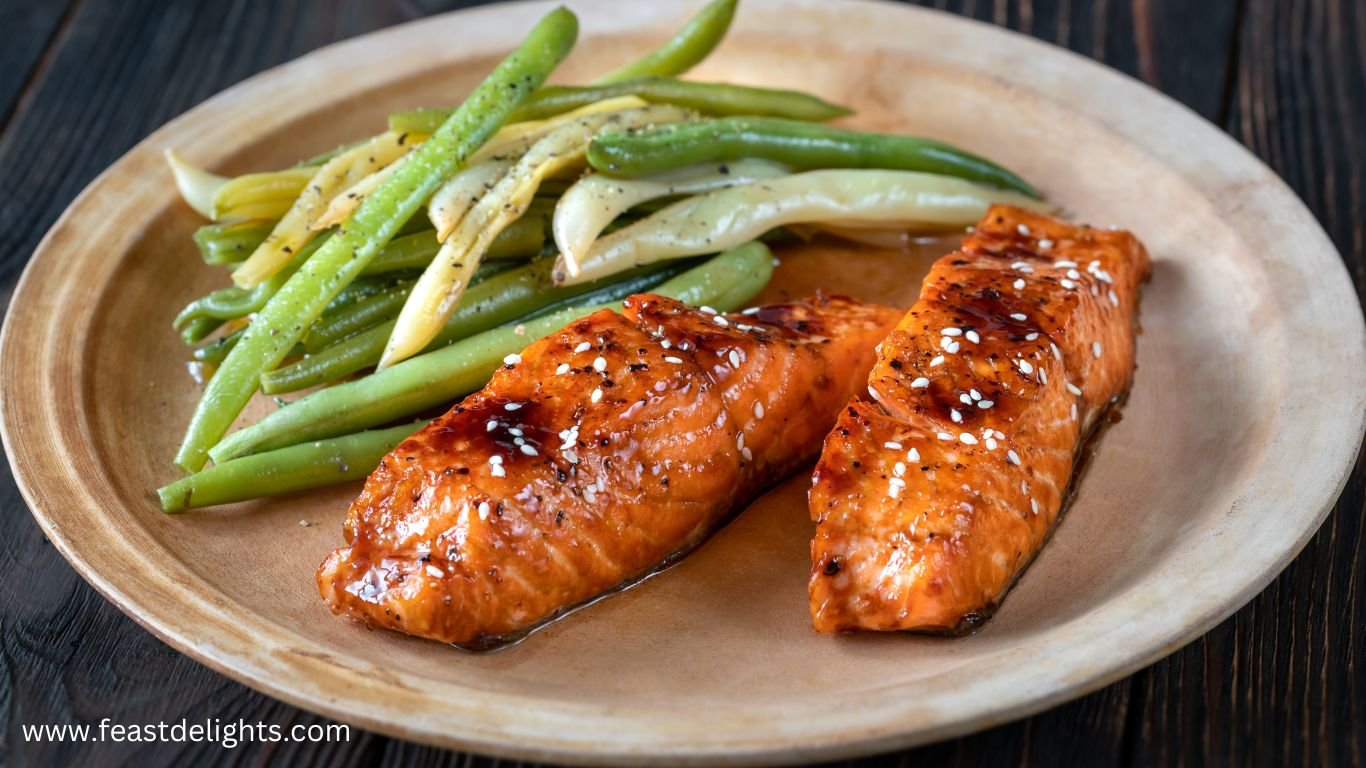
Recipe card
Teriyaki-Style Salmon with Soy and Honey Glaze
Includes 20 minutes refrigerated marinating; preheat the oven during that time. Allow longer for very thick fillets.
Equipment: Small mixing bowl, whisk, shallow covered dish, lined baking tray or nonstick skillet, spatula, clean pastry brush and food thermometer.
Ingredients
Fish
Soy-honey glaze
To finish
Instructions
Whisk and reserve clean glaze
Whisk soy sauce, honey, ginger, garlic, lemon juice, sesame oil and pepper until honey dissolves. Pour some into a separate clean bowl for finishing before any sauce touches raw fish.
Marinate in the refrigerator
Pat salmon dry and coat with the remaining marinade in a covered dish. Refrigerate for 20 minutes. Preheat oven to 200°C (400°F) if baking. Lift fish out and discard used marinade.
Bake or pan-cook
Bake skin-side down on a lined tray about 10–15 minutes, depending on thickness. Alternatively heat a nonstick skillet over medium heat, cook skin-side down about 5–7 minutes, turn carefully and cook another 3–5 minutes as needed.
Apply the glaze
Brush with some of the clean reserved glaze in the last few minutes, using a separate utensil from the serving sauce. Check the centre of the thickest fillet reaches 63°C (145°F); it should flake readily. If using clean sauce as a finishing drizzle, heat it separately if desired and do not dip a used brush into it.
Finish and serve
Transfer to plates and sprinkle spring onion and optional sesame seeds. Serve with rice or vegetables.
Checking doneness and fixing common problems
Thickness matters more than weight when estimating cooking time. Start checking a few minutes before the suggested finish. Insert a thermometer sideways into the thickest part of the fillet, avoiding contact with the hot tray or skillet. Fish should reach 63°C (145°F). The flesh becomes opaque and separates into flakes easily, although colour alone is not a reliable safety check. Remove thinner pieces first if they finish early.
Dark glaze before the centre is ready: Lower the heat and avoid adding more glaze until the fish is nearly cooked. Dry fish: Check the temperature earlier rather than adding extra cooking time automatically. Watery sauce: Pat the fish dry and briefly simmer a clean portion of glaze in a separate small saucepan if you prefer a thicker coating. Sticking: Use a nonstick skillet or parchment-lined oven tray and wait until the surface releases before turning.
Serving ideas and substitutions
Steamed rice absorbs the glaze without adding more salt. Serve with green beans or Korean-style cucumber salad for a crisp contrast. A milder option is fresh cucumber salad with dill. For a heartier side, consider mushroom rice pilaf, keeping its seasoning light. Lime can replace lemon for a sharper citrus flavour. Tamari may replace soy sauce, but check the product’s sodium and allergen information.
Storage and allergens
Keep raw fish cold and wash the chopping board, hands and utensils after contact. Refrigerate leftovers promptly in shallow containers and reheat to 74°C (165°F) if serving hot. Cooked salmon can also be flaked into a cold salad after safe chilling. This recipe contains fish, soy and sesame; ordinary soy sauce often contains wheat. Check the labels of all substitutes. See FDA safe food handling guidance for temperature and refrigeration advice.
Frequently asked questions
Can I use frozen salmon?
Yes. Thaw in the refrigerator according to package instructions and pat dry before marinating.
Can I leave the skin on?
Yes. Cook skin-side down first; the skin helps support the delicate flesh.
Why does the glaze burn?
Honey and garlic brown rapidly over high heat. Use moderate heat and add the clean finishing glaze late.
Can I make the sauce ahead?
Mix it and refrigerate separately from raw fish for up to a day; stir before use.
Can I use tamari?
Yes, use the same volume and check its salt level. Choose certified gluten-free tamari if required.
How do I avoid overly salty salmon?
Use reduced-sodium soy sauce and serve only a small amount of the glaze.
Can I reuse the marinade?
Discard the raw-fish marinade. Reserve a clean portion before marinating instead.
More recipes to try






Spotted a detail that needs correcting? Contact the FeastDelights editors.