Mushroom Risotto with White Wine and Parmesan
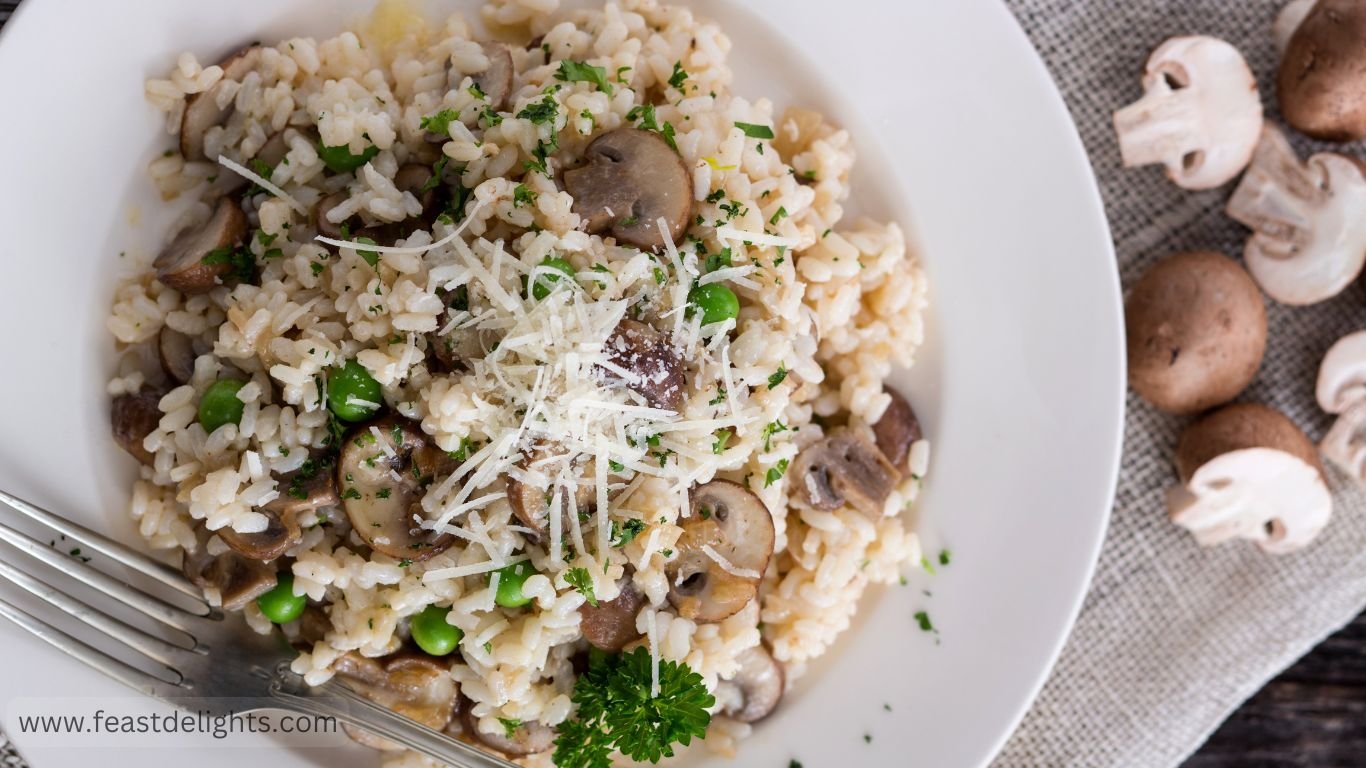
Mushroom risotto is an Italian rice dish with a creamy, gently flowing consistency and tender grains that retain a slight bite. This version combines Arborio rice, browned button mushrooms, dry white wine, warm vegetable stock, butter and Parmesan. The richness comes from the rice starch and the finishing cheese rather than cream. Allow about 50 minutes to prepare four servings, including gradual stock additions and time to brown the mushrooms. Serve immediately while the risotto is loose and glossy, with parsley and a simple green salad.
Mushroom risotto is a creamy Italian rice dish with browned mushrooms, warm vegetable stock, white wine, butter and Parmesan. Properly cooked risotto is loose enough to spread gently on a plate, yet the rice grains retain a slight bite. This version makes four servings in about 50 minutes and does not require cream.
Recipe card
Mushroom Risotto with White Wine and Parmesan
Allow around 35 minutes for browning mushrooms, cooking aromatics, toasting rice, reducing wine and adding stock. The rice simmer takes 18–22 minutes; extra batches or firmer rice may extend the time.
Equipment: Wide heavy-bottomed sauté pan, separate saucepan for stock, ladle, wooden spoon, knife, chopping board, kitchen scale, measuring jug and fine cheese grater
Ingredients
Risotto base
Mushrooms
Risotto base
Finishing
Instructions
Brown the mushrooms
Keep the vegetable stock hot in a separate saucepan. Heat one tablespoon of olive oil in a wide heavy pan over medium-high heat. Cook sliced mushrooms in batches for about 6–8 minutes in total, or until their released moisture evaporates and the edges are browned. Transfer to a plate.
Soften the onion and garlic
Reduce to medium heat. Add the remaining tablespoon of oil and finely diced onion. Cook for four minutes until soft without deeply browning. Add garlic for 30 seconds.
Toast the rice and add wine
Stir the dry Arborio rice into the onion mixture for 1–2 minutes until the edges look translucent. Add white wine and stir until most of the liquid is absorbed.
Ladle in hot stock
Add hot stock a ladle at a time, stirring regularly. Let most of each addition absorb before adding another, keeping the rice moist rather than dry. Maintain a gentle simmer for 18–22 minutes, tasting towards the end. Add extra hot water if the rice needs more liquid than the measured stock.
Finish with mushrooms, butter and cheese
Fold in browned mushrooms. When the rice is creamy with a slight bite but no hard chalky centre, take the pan off the heat. Stir in butter and finely grated Parmesan. Loosen with a little remaining hot stock if needed.
Season and serve immediately
Taste before adding salt and pepper, since the stock and cheese contribute salt. Scatter parsley and serve in warm shallow bowls. The risotto should gently spread on the plate rather than sit in a stiff mound.
Choose the right rice and mushrooms
Arborio is a short-grain rice suited to risotto because it releases starch while retaining its shape. Carnaroli is another suitable choice, but ordinary long-grain rice will not produce the same consistency. Use dry unrinsed rice for this recipe. The listed 300 g is the uncooked weight.
Button mushrooms develop a deeper savoury flavour when browned before they are mixed into the rice. Wipe or rinse them briefly, then dry them well. Cut them into fairly even slices. Cremini or other commercially available edible mushrooms can replace them by weight, though their moisture content and cooking time may differ.
Vegetable stock contributes much of the seasoning. Keep it warm in a separate saucepan so each addition does not interrupt the simmer. Dry white wine adds acidity and aroma; extra stock is a practical substitute. Parmesan and butter are finishing ingredients, not the main source of the creamy texture.
Brown mushrooms without steaming
Use a broad, heavy pan and medium-high heat. Mushrooms initially release moisture; continue cooking until it evaporates and the slices develop browned edges. If they crowd the pan, work in batches. Set them aside while you cook the rice so they retain their texture.
Toast rice and add stock gradually
Reduce the heat before softening the onion. Stir in garlic briefly and then add the dry rice. Toast until the grain edges become a little translucent, without letting the onion or garlic burn. Pour in the wine and cook until most of it is absorbed.
Begin adding hot stock a ladle at a time. Keep the rice at a gentle simmer and stir often, allowing most of the liquid to absorb before adding more. Do not let the pan become dry or allow the rice to scorch. A measured litre is a useful starting quantity, but evaporation and rice variety determine how much liquid you actually need.
Start tasting around 18 minutes after adding stock. The grains should be tender with a slight resistance, not hard or chalky inside. If the rice is still too firm when stock runs out, add a little hot water and continue cooking. If there is too much liquid, simmer briefly before finishing.
Finish for a creamy, flowing texture
Return the browned mushrooms once the rice is nearly ready. Remove the pan from the heat and stir in butter and finely grated Parmesan. This finishing technique helps combine the starch-rich liquid and fat. Adjust the consistency with a splash of remaining hot stock. Serve immediately: risotto continues absorbing liquid even after the pan leaves the stove.
Troubleshooting and variations
For a stiff or gluey risotto, loosen with hot stock before serving. If the rice is still chalky, continue cooking rather than trying to disguise it with cheese. If the dish tastes too salty, use lower-salt stock next time and season after adding Parmesan. A handful of cooked peas or a mixture of cultivated mushrooms gives a different finish. For an alcohol-free version replace wine with stock; cooking with wine does not guarantee all alcohol has disappeared.
The original recipe contains milk from butter and Parmesan. Check wine and prepared stock for sulphites and other allergens as appropriate. Traditional Parmesan uses animal rennet, so use a vegetarian-labelled alternative if following a vegetarian diet.
What to serve with mushroom risotto
Serve it in warm shallow bowls with arugula salad with goat cheese and pomegranate or garlic green beans with lemon. For another Italian rice preparation, explore saffron risotto alla Milanese.
Make ahead and safe rice storage
Slice the mushrooms, dice the onion and grate the cheese in advance, keeping perishable ingredients chilled. Cook the rice just before serving for the best texture. For leftovers, follow the UK food-safety guidance: chill rapidly, ideally within an hour, refrigerate and consume within 24 hours. Reheat only once until steaming throughout; stirring in a little stock improves texture. Do not leave cooked rice sitting in the pan for hours. Freeze rapidly cooled portions if necessary, knowing that the texture may soften.
Editorial note: the ingredient quantities remain unchanged. The cooking estimate has been increased to account for mushroom browning, aromatics, wine reduction and the gradual rice simmer.
Frequently asked questions
Can I use Carnaroli instead of Arborio?
Yes. Both are suitable risotto rice varieties. Start checking texture near the end and adjust stock additions as needed. Long-grain rice will not release starch in the same way.
Should I rinse risotto rice?
For this method, use dry unrinsed Arborio rice. Surface starch helps create the creamy consistency.
Can I make it without wine?
Replace the wine with an equal volume of vegetable stock. Add a little lemon juice at the end if a brighter flavour is desired.
Do I need to stir constantly?
Stir regularly enough to prevent sticking and help distribute the starch. Maintain a gentle simmer and avoid leaving the pan unattended.
Is Parmesan vegetarian?
Traditional Parmigiano Reggiano uses animal rennet. Choose a vegetarian-labelled hard cheese with a similar flavour if needed, and check the stock.
Why is the risotto gluey?
Overcooking, using too little liquid or letting it stand can make it stiff. Loosen with warm stock and serve promptly once the grains are tender.
Can I reheat leftover risotto?
Yes, only if cooled and refrigerated promptly, ideally within an hour, and eaten within 24 hours. Reheat once until steaming throughout, adding a little stock.
More recipes to try






Spotted a detail that needs correcting? Contact the FeastDelights editors.