Moroccan Lamb Tagine with Carrots and Raisins
This Moroccan-inspired lamb tagine combines tender chunks of lamb shoulder with sweet carrots and plump raisins in a gently spiced sauce of cumin, coriander, turmeric, onions and garlic. The meat braises slowly until a fork slips through it easily, while carrots and raisins are added later to retain their texture. Make it in a heavy lidded pot or a suitable cooking tagine, and finish with fresh cilantro and parsley. It serves four to six, with about 20 minutes of preparation and two hours of cooking.
Moroccan lamb tagine with carrots and raisins is a slow-cooked, sweet-savoury stew with lamb shoulder, onions, cumin, coriander, turmeric and fresh herbs. This Moroccan-inspired version serves four to six. Allow about 2 hours 25 minutes, with most of that time spent braising the lamb until tender. The sauce should be fragrant and savoury, with gentle sweetness from the carrots and dried fruit.
Choosing the lamb and spices
Boneless shoulder contains enough connective tissue and fat to suit prolonged moist cooking. Cut the pieces into even 3 cm cubes so they tenderise at a similar rate. Trim large pieces of hard fat but avoid removing every trace of fat. The three ground spices give this version its character: cumin provides an earthy note, coriander a citrus-like fragrance and turmeric a warm colour. A little salt and pepper season the meat, while stock and onions form the braising liquid.
Raisins swell during cooking and sweeten the sauce gradually. Use the measured 80 g rather than adding an unmeasured handful. The carrots go in after the initial braise so they soften without disintegrating. Good Food’s lamb tagine guidance also identifies shoulder as a useful slow-cooking cut, although its ingredients and cooking appliance differ from this recipe.
Do you need a special tagine pot?
The word tagine refers to both the cooking vessel and the dish. A traditional cooking tagine has a shallow base and a conical lid that helps retain moisture. This recipe also works in a heavy Dutch oven with a tight lid. If using a clay pot, check that it is intended for cooking rather than decoration and follow its manufacturer’s instructions on seasoning, heat source and diffuser requirements. Avoid sudden temperature changes. Brown the meat in a separate skillet if the vessel is not designed for high heat.
How to cook Moroccan lamb tagine
Season and brown the meat in batches, taking care not to burn the ground spices. Soften onions and garlic in the same pot, add the stock and scrape up the browned residue. Return the lamb and maintain a gentle covered simmer. Once it begins to soften, add the carrots and raisins. Let the sauce develop slowly rather than attempting to cook the meat faster over high heat.
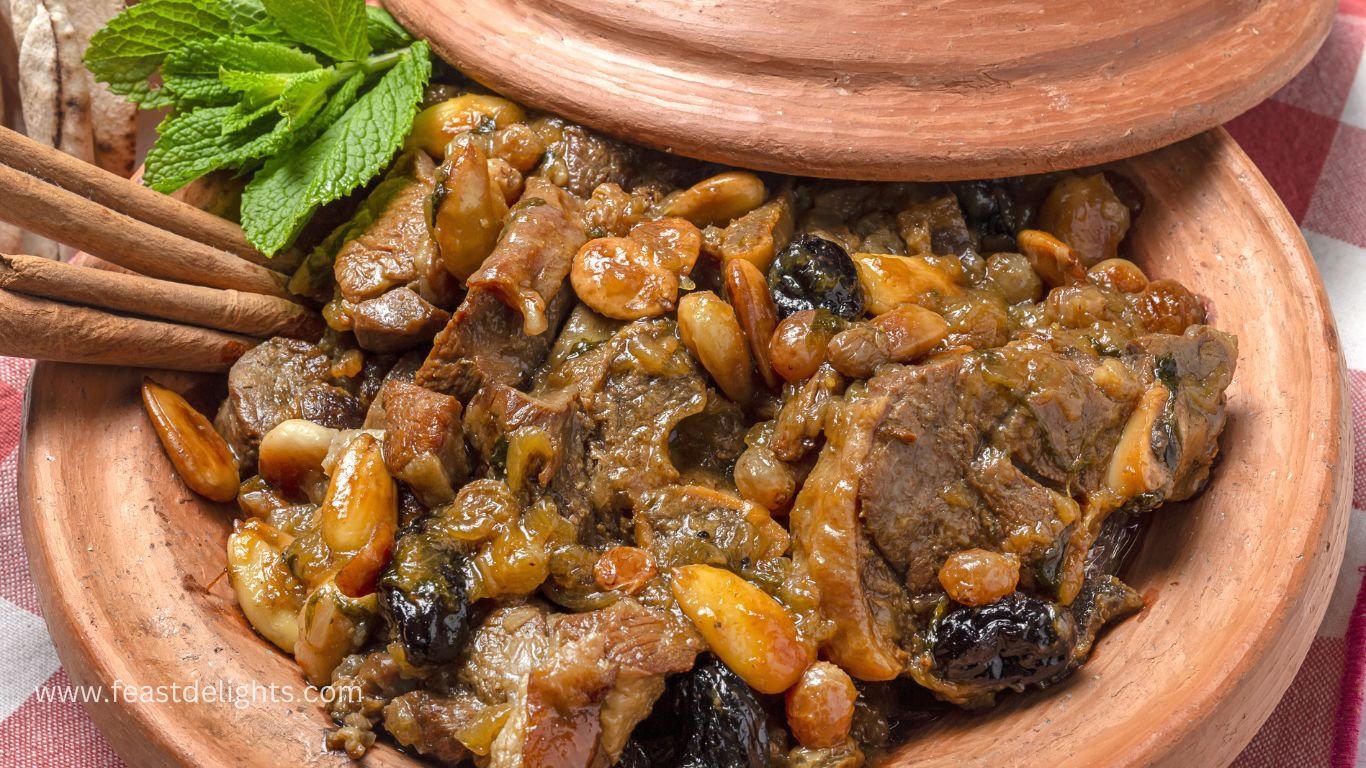
Recipe card
Moroccan Lamb Tagine with Carrots and Raisins
Allow around 10–15 minutes to brown the lamb and soften the aromatics, 60 minutes for the initial braise, 35–45 minutes after adding carrots and raisins, and a few minutes to reduce the sauce if needed. Tougher shoulder pieces may need longer.
Equipment: Heavy 4–5 litre lidded Dutch oven or stovetop-safe cooking tagine, sharp knife, separate board for raw meat, tongs, measuring jug, spatula and instant-read thermometer.
Ingredients
Lamb
Braising ingredients
Seasoning
Fresh herbs
Instructions
Season the lamb
Trim large pieces of hard exterior fat, leaving some fat for flavour. Pat the 3 cm lamb cubes dry, then toss with turmeric, cumin, ground coriander, pepper and some of the salt.
Brown in batches
Heat the olive oil in a heavy Dutch oven over medium-high heat. Brown the lamb in batches, turning to colour several sides, about 3–5 minutes per batch. Do not crowd the pot or scorch the spices. Transfer to a plate. If using a clay tagine, follow its heat-source instructions and brown in a separate skillet if it is not suitable for searing.
Start the braise
Reduce the heat to medium. Add onions and garlic and cook about 4 minutes, stirring until the onions begin to soften. Return the lamb and its juices, add the stock and scrape up the browned residue. Bring to a gentle simmer, cover and cook over low heat for about 60 minutes. Check occasionally that there is still enough liquid.
Add carrots and raisins
Stir in the carrots and raisins. Cover and simmer another 35–45 minutes until the carrots are tender and a fork pierces the lamb easily. Whole-cut lamb should reach at least 63°C (145°F) with a 3-minute rest, but shoulder generally needs much longer cooking for tenderness. If still tough, continue in 15-minute intervals, adding a little water as needed.
Adjust the sauce and serve
If the sauce is watery, uncover and simmer briefly until it coats the lamb lightly. Taste and adjust the remaining salt and pepper. Remove from heat, scatter cilantro and parsley and serve hot.
How to judge tenderness and sauce consistency
Shoulder may be safely cooked well before its connective tissue softens. A fork should slide into a piece readily, and the meat should yield when pressed. If it is still rubbery, continue cooking gently with the lid on. Keep enough liquid in the pot to prevent scorching. Once the lamb is tender, reduce the sauce briefly without the lid if necessary. The result should be spoonable, not dry or swimming in thin stock.
Troubleshooting
Spices taste burnt: Lower the heat after browning and avoid leaving spices in a dry hot pot. Add liquid promptly if the residue begins to darken excessively.
Tough lamb: Give shoulder additional covered cooking time. Do not turn the simmer into a rolling boil.
Overly sweet sauce: Taste after reduction. A little lemon juice at the table can balance the fruit without changing the braise.
Carrots breaking up: Cut thick rounds and add them during the second stage rather than at the start.
Serving ideas and related recipes
Serve with couscous or warm bread to absorb the sauce. Our Moroccan-spiced grilled vegetable skewers can accompany a larger meal, while Moroccan-style lentil stew offers a meat-free alternative. For a different slow-cooked meat dish, see beef and mushroom pot roast.
Storage and allergens
This stew can be cooked ahead, but divide it into shallow containers and refrigerate promptly. Reheat until 74°C (165°F) throughout, following FoodSafety.gov. Check the stock and dried fruit for allergens or sulphites. Couscous commonly contains wheat, so choose an appropriate side if avoiding gluten. Optional yoghurt adds milk.
Frequently asked questions
Can I cook tagine without a tagine pot?
Yes. A heavy Dutch oven with a tight-fitting lid is suitable for this method.
What cut of lamb is best?
Boneless shoulder is preferred because it becomes tender during slow, moist cooking. Lean loin is not a direct substitute.
Why is the lamb still tough?
Shoulder needs enough time for connective tissue to soften. Continue simmering gently, covered, in 15-minute intervals until fork-tender.
Can I substitute another dried fruit?
Chopped dried apricots can replace raisins at the same weight for a different flavour; add them during the final braise.
Why add carrots later?
Adding them after the initial braise helps avoid carrots breaking down before the lamb is tender.
Can I make the tagine a day ahead?
Yes. Refrigerate the cooked tagine promptly in shallow containers and reheat to 74°C (165°F). Add the fresh herbs shortly before serving.
How do I thicken a watery tagine?
Remove the lid and simmer gently until the liquid reduces. If the carrots are already very soft, lift them out temporarily to protect their texture.
More recipes to try






Spotted a detail that needs correcting? Contact the FeastDelights editors.