Fluffy Milk Pancakes with a Rested Batter
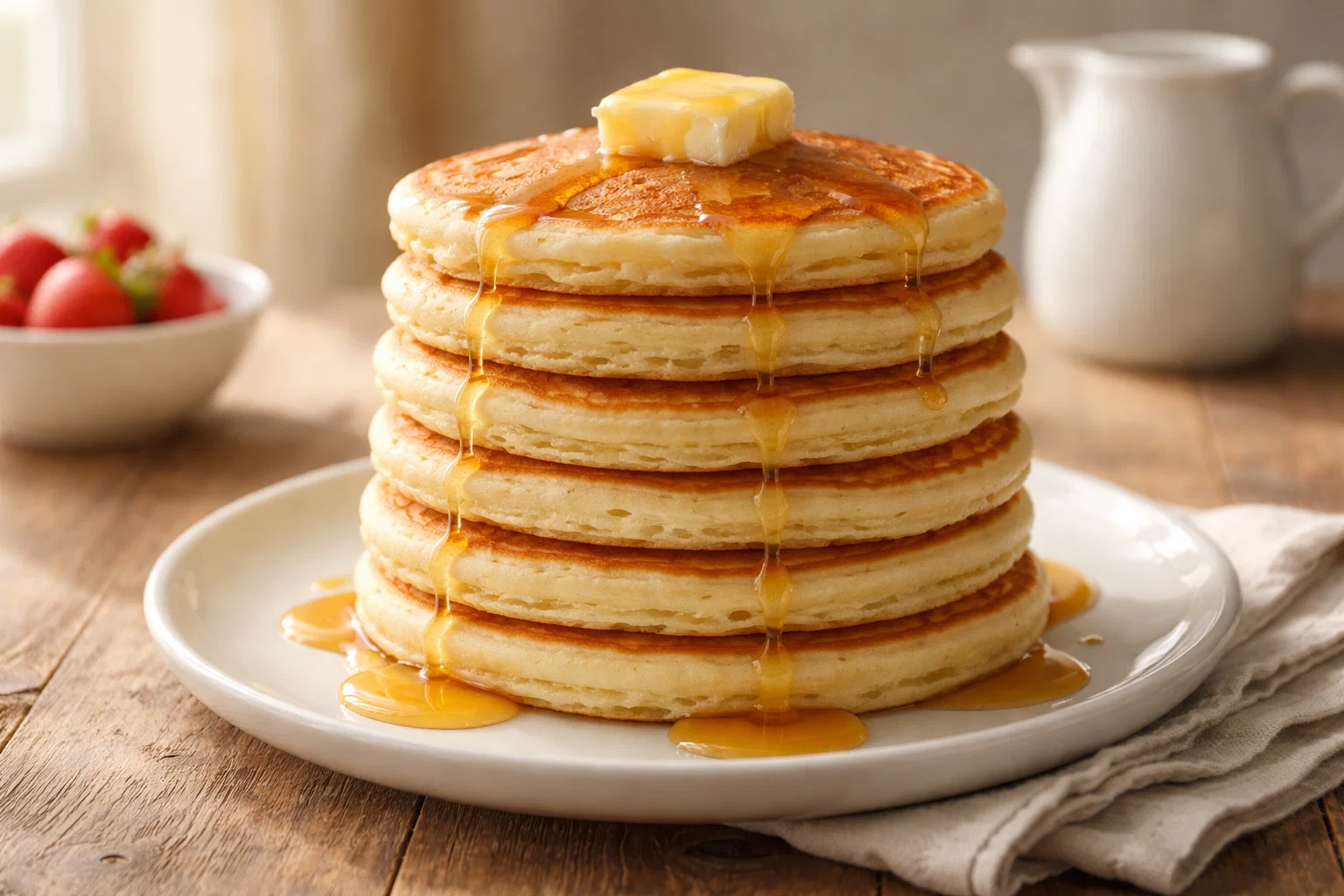
These fluffy milk pancakes are small, golden breakfast pancakes made with plain flour, milk, egg and baking powder. A short ten-minute batter rest lets the flour hydrate, while gentle mixing keeps the cooked pancakes tender. The recipe makes about ten small pancakes in roughly 40 minutes, including resting and cooking in batches. Serve them straight from the skillet with berries, maple syrup or yoghurt. No yeast or special pancake mix is needed.
Fluffy milk pancakes are small breakfast pancakes with golden surfaces and a soft interior. This recipe uses a cup each of milk and flour, one egg and a teaspoon of baking powder. It yields about ten small pancakes in 40 minutes, including a ten-minute rest and cooking in batches.
Recipe card
Fluffy Milk Pancakes with a Rested Batter
Ten minutes active preparation, ten minutes resting, about twenty minutes cooking in batches. Pan size and pancake thickness affect the estimate.
Equipment: Two mixing bowls, whisk, measuring cups and spoons, nonstick skillet, spatula and ladle
Ingredients
Dry ingredients
Wet ingredients
Dry ingredients
Wet ingredients
Instructions
Mix the dry ingredients
Whisk flour, sugar, baking powder and salt in a bowl until evenly distributed.
Whisk the wet ingredients
In a separate bowl, whisk the egg and milk. Stir in cooled melted butter or vegetable oil and optional vanilla.
Combine and rest for ten minutes
Pour the wet mixture into the dry ingredients. Stir gently just until no dry flour remains. Leave small lumps rather than beating the batter smooth. Rest for ten minutes; do not vigorously remix.
Cook in small rounds
Lightly grease a skillet over medium heat. Pour about 3 tablespoons of batter per pancake, leaving room to spread. Cook until bubbles appear, some stay open and the edges look set, about 1–2 minutes. Flip and cook for another 1–2 minutes until golden and the middle has no wet batter. Repeat with remaining batter, adjusting heat and greasing as needed.
Ingredients and batter consistency
All-purpose flour, also called plain flour, provides structure. Spoon it into the measuring cup and level the top rather than packing it down. The milk loosens the mixture, egg helps the pancakes set and baking powder creates small bubbles. Sugar encourages browning. A tablespoon of melted butter gives a richer flavour, while neutral vegetable oil works as an alternative.
This is a relatively loose pancake batter. Small lumps are normal; beating until perfectly smooth can make pancakes tougher. Rest for ten minutes so the flour absorbs moisture. If the batter still spreads unusually thinly, check the measurements before making any adjustments. The original proportions are retained; pancake thickness needs a kitchen trial.
How to get golden pancakes with cooked centres
Heat a lightly greased skillet over medium heat. Test with one small pancake before filling the pan. If it browns almost immediately, reduce the heat; if it remains pale after a few minutes, increase it slightly. Pour roughly three tablespoons per pancake and leave space to flip them comfortably.
Watch the surface rather than relying on the clock alone. Once bubbles form and some remain open, the edges start to look set. Slide a spatula beneath and turn once. The underside should be golden and the centre should be fully cooked, not sticky with raw batter. Do not taste uncooked batter containing flour and egg.
If the pancakes turn dark before cooking inside, lower the heat. If they stick, make sure the pan is clean and lightly greased. Do not press them down with the spatula, which compresses the soft interior.
Substitutions and serving ideas
Use oil instead of butter if preferred. A little vanilla or cinnamon changes the aroma without greatly altering the batter. The recipe contains wheat, egg and milk. A plant milk may work, but use a dedicated recipe for an egg-free version. Try vegan pancakes with plant milk or fluffy water pancakes if avoiding dairy. For another breakfast flavour, see banana pancakes.
Serve with fresh berries, sliced bananas or maple syrup. Plain yoghurt balances sweet toppings. These small rounds can also be served as part of a breakfast platter.
Make ahead and storage
Prepare the dry mixture in advance but add the wet ingredients shortly before cooking. Refrigerate cooked leftovers promptly and warm them in a skillet or toaster if suitable. Freeze cooled pancakes in separate layers and reheat only the portions needed.
Frequently asked questions
Why are my pancakes flat?
Check that the baking powder is fresh, avoid overmixing and use a hot but not smoking skillet.
Can I use oil instead of butter?
Yes. The original recipe allows either. Neutral oil has a milder flavour; butter gives a richer aroma.
How do I know when to flip?
Wait until bubbles remain open on the surface and the edges look less glossy. Check that the underside is golden.
Can I make the batter the night before?
For this baking-powder batter, mix just before cooking. Measure dry ingredients and refrigerate wet ingredients separately ahead of time.
Can I freeze cooked pancakes?
Yes. Cool promptly, separate with parchment and freeze airtight. Reheat thoroughly before serving.
Can I make these dairy-free?
A plain plant milk and neutral oil may work, though the browning and texture can differ. For a fully egg-free version use a recipe designed for that purpose.
More recipes to try






Spotted a detail that needs correcting? Contact the FeastDelights editors.