Spicy Beef Bulgogi with Gochujang and Sesame
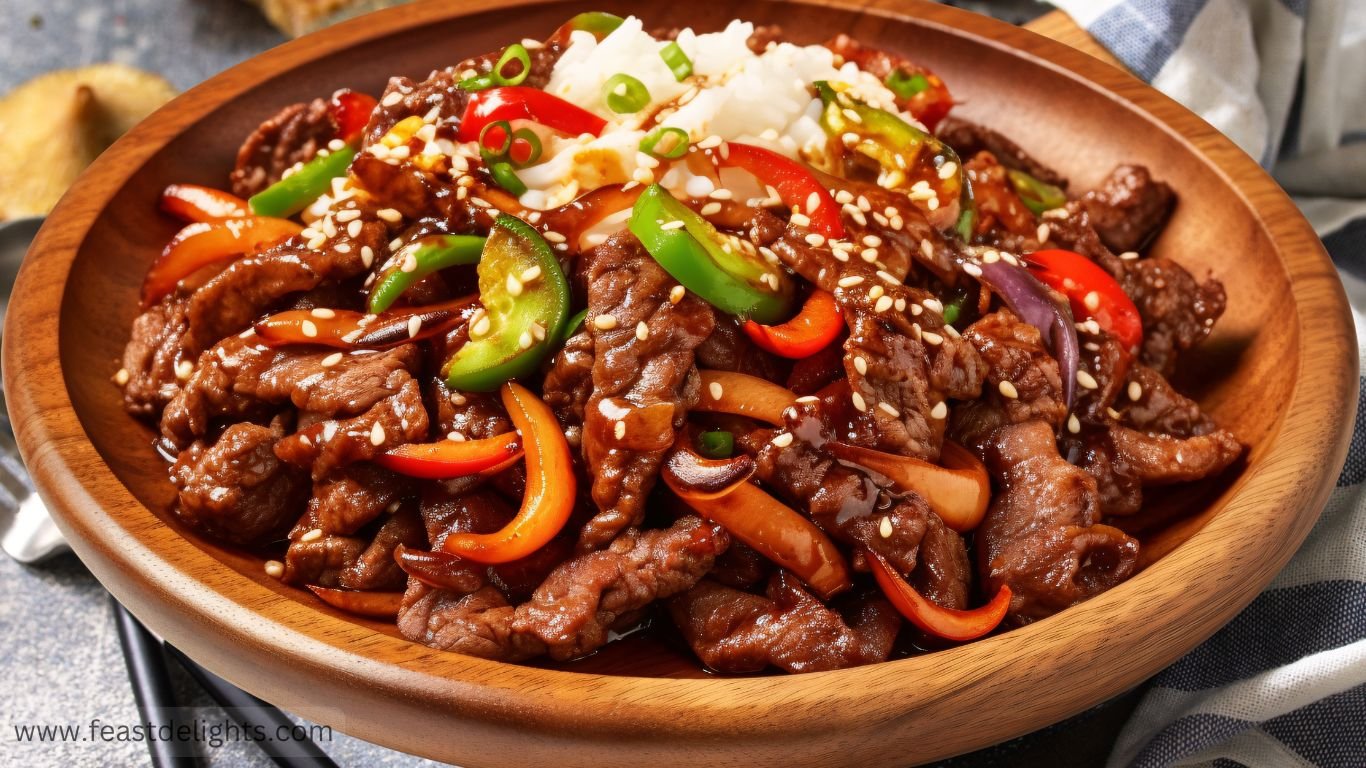
This spicy beef bulgogi is a Korean-inspired skillet dish made with thinly sliced beef, gochujang chilli paste, soy sauce, garlic, ginger and sesame oil. The marinade gives the meat a pronounced sweet, salty and spicy flavour, with browned edges from quick cooking in a hot pan. This version serves four and takes about two hours including refrigerated marinating. It is intentionally hotter than the usual sweet soy-based beef bulgogi. Serve the beef in small portions with plain rice, lettuce leaves and cool cucumber to balance the concentrated seasoning.
Spicy beef bulgogi with gochujang is a Korean-inspired quick-cooked beef dish with a sweet, salty and distinctly hot marinade. This version serves four from 500 g (1.1 lb) beef and takes around 2 hours 5 minutes, including 90 minutes of marinating. Serve with plain rice or lettuce wraps rather than adding more salty sauces.
Choosing the beef and marinade ingredients
Use intact sirloin or ribeye and slice across the grain into thin, even pieces. Chilled beef is easier to slice than warm meat. Gochujang is a fermented Korean chilli paste, not plain dried chilli powder. The earlier recipe interpreted an ambiguous reference to Korean pepper as gochujang; that interpretation is retained here. The paste gives the marinade body, while soy sauce adds salt and savoury flavour, brown sugar encourages browning, and ginger and garlic supply aroma.
Classic beef bulgogi is commonly seasoned with a sweet soy marinade, as described by Korean Bapsang; Maangchi’s spicy beef bulgogi demonstrates a chilli-paste variation. This recipe retains the site’s own stronger soy and gochujang proportions. They are substantial for 500 g beef, so the finished flavour needs kitchen confirmation. Use reduced-sodium soy sauce or reduce the amount and replace it with water for a less salty version. Start with less paste if you prefer milder heat.
Recipe card
Spicy Beef Bulgogi with Gochujang and Sesame
Marinate 1–2 hours (90 minutes counted). Allow about 15 minutes to heat the skillet and cook several batches; actual timing depends on slice thickness.
Equipment: Kitchen scale, sharp knife, separate raw-meat board, non-reactive bowl with lid, wide heavy skillet, tongs, clean serving plate, thin-probe thermometer
Ingredients
Beef
Marinade
Cooking and serving
Instructions
Whisk the spicy marinade
Whisk soy sauce, gochujang, brown sugar, sesame oil, minced garlic, grated ginger and rice vinegar until the paste dissolves. Taste a small amount before adding raw beef to check heat and saltiness; see variation notes for reducing either.
Slice and marinate the beef
Slice the chilled beef across the grain into thin pieces about 2–3 mm thick. Coat with marinade, cover and refrigerate for 1–2 hours. Keep separate from ready-to-eat foods.
90 minHeat a wide skillet
Heat a wide heavy skillet over medium-high heat. Add a little of the measured cooking oil. Lift beef from the marinade with tongs, allowing excess to drip back. Discard unused marinade that contacted raw beef.
Brown the beef in small batches
Cook a single layer of slices at a time, turning once or twice, typically 1–2 minutes per side depending on thickness. Avoid burning the sugary coating. For intact whole-cut beef, check the thickest pieces reach at least 63°C (145°F) and rest for 3 minutes; use fully cooked thin slices rather than relying on colour alone. If using mechanically tenderized or otherwise processed beef, follow its package safety instructions. Repeat with remaining beef and oil.
15 minRest briefly and serve
Rest each cooked batch for at least 3 minutes on a clean plate. Scatter with sesame seeds and chopped herbs and serve with plain rice and fresh vegetables.
How to brown the beef instead of steaming it
Marinate under refrigeration, then let excess liquid drip off before cooking. Heat a wide skillet and work in small batches. Thin slices cook rapidly and can toughen if left in a crowded pan for too long. The sugar in the marinade can scorch, so reduce the heat slightly if the coating turns black before the beef cooks. Wipe away burnt residue safely between batches if necessary. Discard marinade that has touched raw meat.
For intact whole-cut beef, follow the FoodSafety.gov temperature guidance of 63°C (145°F) followed by at least three minutes of rest. Check thicker pieces with a thin probe and make sure all slices are cooked. Keep cooked beef on a clean plate.
Troubleshooting
If the skillet fills with liquid, remove the cooked batch and allow the pan to heat again before adding more. If the beef is tough, slice more thinly across the grain next time. If the finished meat is very salty or hot, serve with unsalted rice and fresh vegetables rather than reducing the remaining marinade into a sauce. Adjust the next batch before adding raw meat.
Serving ideas and variations
Serve with lettuce and a Korean-style cucumber salad. Vegetable Korean pancakes make another side. For a different Korean meal, see beef and vegetable gimbap. Add sliced onion to the skillet separately if desired.
Storage and allergens
Refrigerate cooked beef within two hours (one hour above 32°C/90°F) and use within three days. Freeze up to two months for quality and reheat thawed portions to 74°C (165°F). Contains soy and sesame; ordinary soy sauce and some gochujang contain wheat. Check labels, including for any additional allergens.
Frequently asked questions
Is this the usual mild beef bulgogi?
No. Classic beef bulgogi commonly uses a sweet soy-based marinade. This version includes a generous amount of gochujang for a spicy variation.
What cut of beef works best?
Intact sirloin or ribeye slices are useful for quick cooking. Cut across the grain and avoid thick strips that need longer cooking.
Can I make it less spicy?
Yes. Start with one or two tablespoons of gochujang rather than four. Paste brands vary in heat and saltiness, so taste before adding meat.
Why is my beef steaming instead of browning?
A crowded pan or too much liquid lowers the heat. Let excess marinade drip off and cook smaller batches.
Can I use the leftover marinade as a sauce?
Discard marinade that has contacted raw beef. If you want extra sauce, reserve a clean portion before adding the meat and cook it separately.
Can I prepare the beef ahead?
Slice and refrigerate the beef or mix the marinade in advance. Marinate for one to two hours before cooking for the stated recipe.
More recipes to try






Spotted a detail that needs correcting? Contact the FeastDelights editors.