Ready-Made Gravlax with Mustard, Honey and Dill Sauce
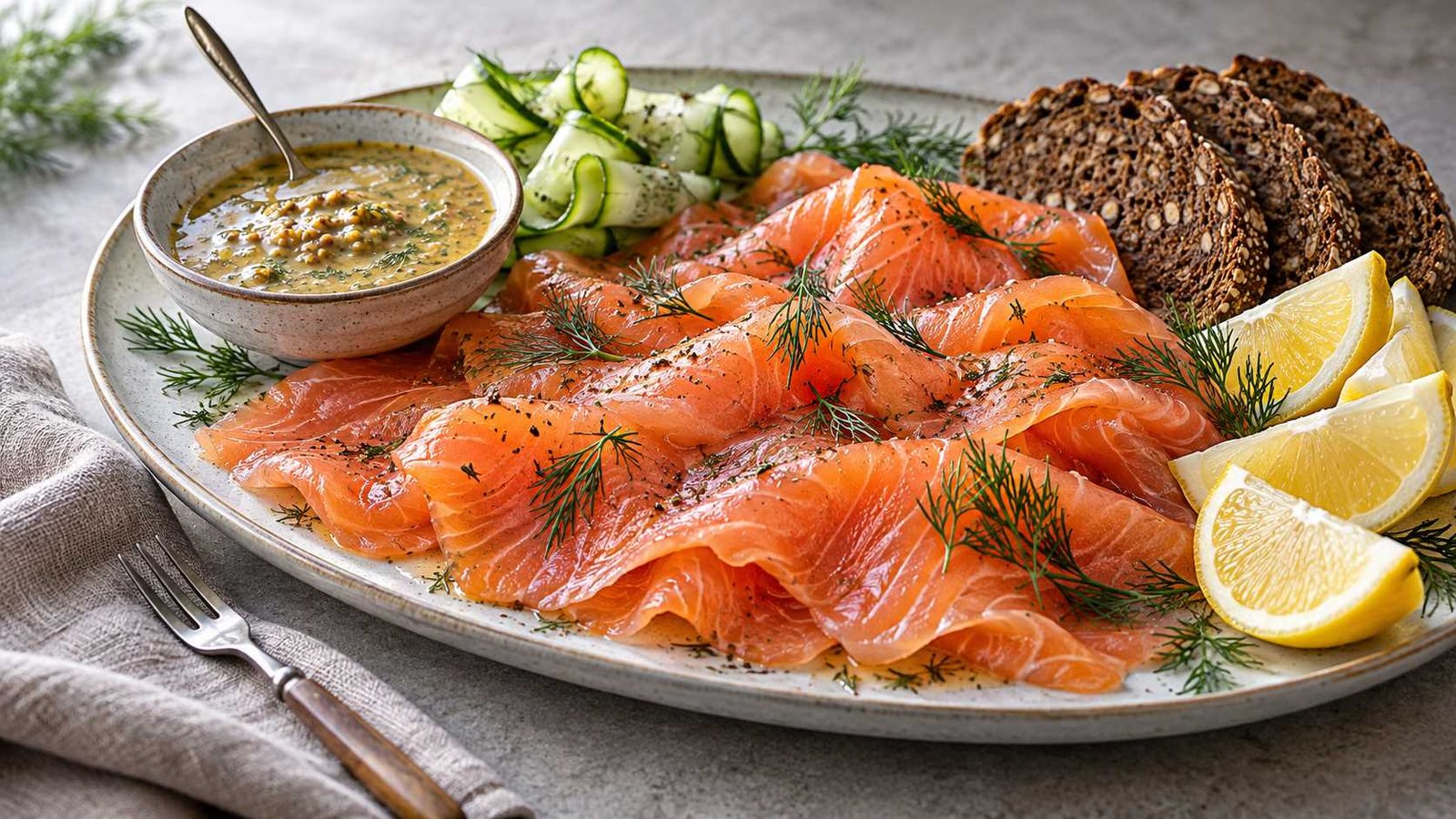
This Scandinavian-style gravlax platter pairs thin slices of commercially prepared cured salmon with a quick mustard, honey and fresh dill sauce. The salmon is served cold, with lemon, rye bread and crisp cucumber for contrast. No cooking or home curing is required: simply choose a refrigerated product labelled ready to eat and assemble the platter just before serving. With 500 g of gravlax, the recipe makes six starter portions in about 15 minutes. Keep the fish chilled and offer the sauce separately.
Gravlax is Scandinavian cured salmon, often flavoured with dill. This 15-minute appetizer uses commercially prepared ready-to-eat gravlax and a simple mustard, honey and fresh dill sauce. The 500 g of fish makes six starter portions, with lemon, rye bread and crisp vegetables. It is an assembly recipe, not a method for curing raw salmon at home.
Choosing the fish and sauce
Buy chilled gravlax that is clearly labelled ready to eat. Check its use-by date and keep it cold on the way home. Thin slices are convenient for a platter. Mustard supplies sharpness, honey softens its bite, and chopped dill complements the fish. Dijon is an option if you like a stronger flavour. Lemon and cucumber add freshness without making the sauce watery. You need only a chilled platter, bowl, spoon and clean cutting board.
Recipe card
Ready-Made Gravlax with Mustard, Honey and Dill Sauce
Uses purchased ready-to-eat gravlax; no curing or cooking time.
Equipment: Chilled serving platter, small mixing bowl, spoon, clean knife and cutting board.
Ingredients
Fish
Mustard-dill sauce
To serve
Instructions
Select and chill the fish
Choose commercially prepared gravlax explicitly labelled ready to eat. Check the use-by date and packaging; keep it refrigerated at 4°C (40°F) or below until plating. Do not substitute uncured raw salmon.
Stir the mustard-dill sauce
Combine mustard, honey and finely chopped fresh dill in a small bowl. Stir until smooth; taste with a clean spoon. Cover and refrigerate until serving.
Prepare the accompaniments
Wash the lemon and cucumber under running water. Slice the lemon thinly and cut cucumber into ribbons or sticks. Arrange rye bread or other crisp vegetables on a separate clean plate.
Arrange a chilled platter
Chill a serving platter briefly in the refrigerator. Open the fish just before serving and arrange the slices loosely with lemon. Spoon the sauce into a separate small bowl so it does not overwhelm the fish.
Serve in small batches
Divide into six starter portions, about 83 g fish each. Serve immediately with bread and cucumber. Keep unused fish refrigerated and replenish the platter with small quantities as needed.
How to balance the mustard-dill sauce
Stir two tablespoons of mustard with one tablespoon each of honey and chopped dill. Taste with a clean spoon: some mustards are considerably sharper or saltier than others. Serve the sauce in a bowl rather than dressing all the salmon in advance. The fish is already cured and seasoned, so no additional salt is needed. Blot excess water from washed cucumber before arranging it with bread.
Serving a chilled celebration platter
Arrange the fish loosely so each slice can be lifted easily. Offer our homemade rye and wheat bread or fresh cucumber salad with dill. A little lemon can brighten each bite. If the sauce is too sharp, adjust with a small amount of honey to taste; if too sweet, add a little mustard. Keep bread separate until eating so it does not become damp.
Food safety and storage
Ready-to-eat does not mean risk-free. Cold cured fish is not fully cooked, and Listeria can grow even under refrigeration. The UK Food Standards Agency advises pregnant people and those with weakened immune systems to avoid ready-to-eat cold cured fish. Older adults also face higher risk. Offer a thoroughly cooked alternative such as baked salmon with lemon Dijon glaze. Salt-curing alone is not a reliable home safety measure. Keep gravlax at 4°C (40°F) or below and follow the package use-by date and opened-product instructions, whichever is earlier. Refrigerate promptly and discard fish left at room temperature for more than 2 hours (1 hour above 32°C/90°F). Store sauce separately, covered and chilled, for up to 2 days. Freeze fish only if the manufacturer permits it; thaw in the refrigerator. Contains fish and mustard; rye bread contains gluten. Check packaged ingredients for additional allergens.
Frequently asked questions
Is gravlax the same as smoked salmon?
Gravlax is cured salmon, typically seasoned with dill; it is not necessarily smoked. Choose the labelled ready-to-eat product for this platter.
Can I make gravlax by salting raw salmon?
This recipe does not provide a raw-fish cure. Salt alone does not establish parasite or bacterial safety.
Can I use a different mustard?
Yes. A mild smooth mustard gives a softer flavour, while Dijon is sharper. Taste before adjusting the honey.
Can I prepare the sauce ahead?
Yes. Keep it covered and refrigerated for up to two days; stir before serving.
Who should avoid cold cured salmon?
Pregnant people and those with weakened immune systems should avoid ready-to-eat cold cured fish according to UK Food Standards Agency guidance. Older adults are also at increased risk from Listeria; offer thoroughly cooked fish instead.
Can I serve this without rye bread?
Yes. Serve with cucumber or another suitable accompaniment and check the labels of all packaged ingredients for allergens.
More recipes to try




Spotted a detail that needs correcting? Contact the FeastDelights editors.