Dogwood Berry Jam with Cornelian Cherries
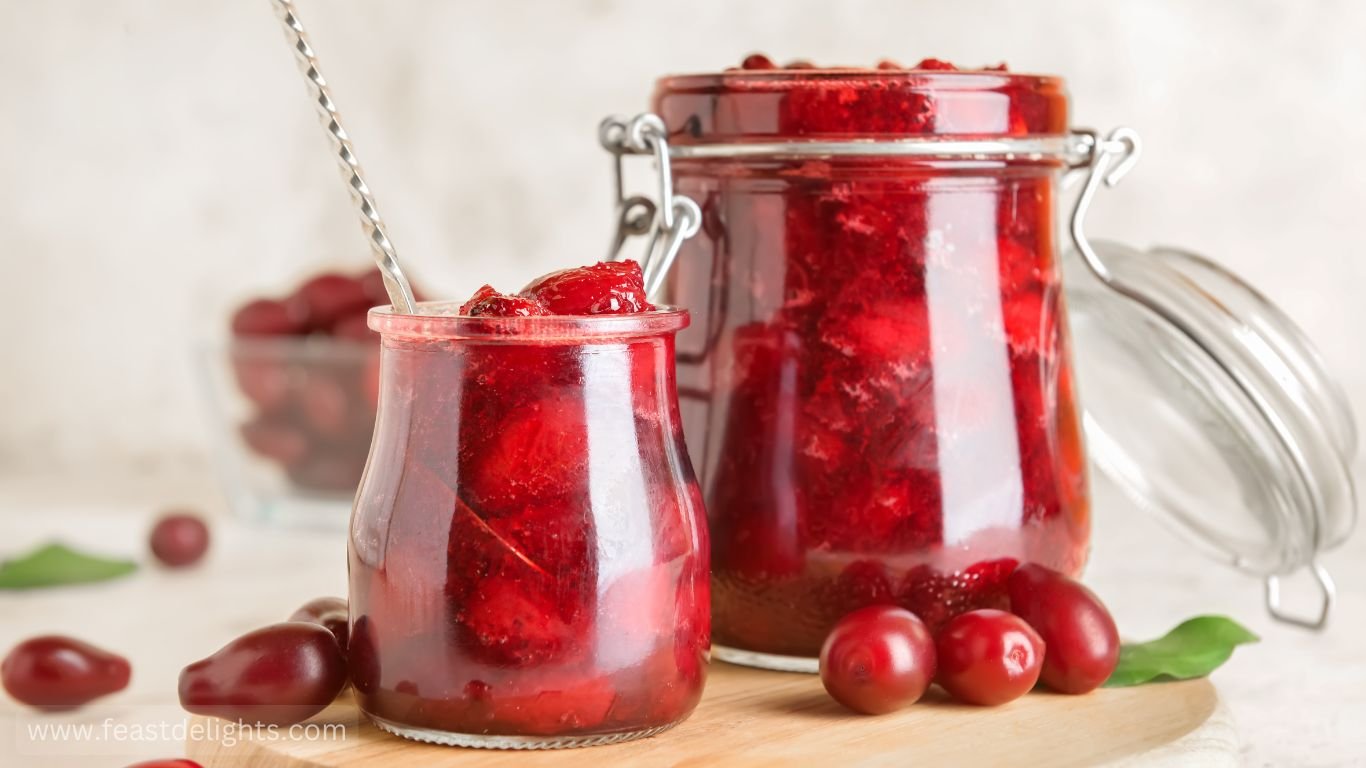
Dogwood berry jam is a tart-sweet fruit spread made here with ripe Cornelian cherries, Cornus mas, sugar and lemon juice. The fruit is softened first, then pressed through a sieve or food mill so the hard pits are removed before the final cook. This small batch yields about two US cups, depending on pulp recovery and reduction. Allow around 70 minutes to prepare and cook, plus cooling if serving chilled. Keep the finished jam in the refrigerator or freezer; this recipe does not provide a pantry-canning process.
Dogwood berry jam has a bright, tart flavour that works well on toast, beside cheese or stirred through plain yoghurt. The fruit for this recipe is specifically the edible Cornelian cherry, Cornus mas, rather than an unspecified ornamental dogwood berry. Ripe fruit softens in a little water, making it easier to separate the flesh from the hard central pits. The strained pulp then cooks with the existing 350 g sugar and a tablespoon of lemon juice until thick enough to spread. Expect a small batch of roughly two US cups, with some variation from the fruit and how firmly it is pressed. Treat the result as a refrigerator or freezer preserve, and judge its texture after a spoonful has cooled.
Use the right edible fruit
Buy food-grade Cornelian cherries identified as Cornus mas from a reliable supplier, or use fruit whose identity and suitability have been confirmed by a knowledgeable local expert. A red berry on a plant called dogwood is not enough identification. Do not use unknown garden or foraged berries on the strength of this recipe.
The North Carolina Extension plant reference for Cornus mas identifies the edible species. The University of Alabama Arboretum notes its culinary use and the astringency of unripe fruit. Choose sound, fully ripe fruit rather than trying to hide hard, unripe berries under more sugar.
Rinse the fruit and remove stems, leaves, damaged pieces and any mouldy fruit. The 500 g quantity, about 1 lb 2 oz, is weighed before removing the pits. Keep the sugar measured against that starting batch, as in the existing formula, rather than accidentally starting with 500 g of already strained pulp.
Four ingredients and a few useful tools
The batch uses 250 ml water, about 1 US cup plus 2 teaspoons; 350 g granulated sugar, about 1¾ US cups; and 1 tablespoon/15 ml lemon juice. The water helps soften the fruit before straining. The final cook then evaporates some moisture, so a watery first stage does not mean the jam has failed.
Use a heavy saucepan, sturdy spoon or spatula, scale, sieve or food mill and heatproof bowl. A wide pan evaporates more quickly, but a very shallow pan can make a small batch catch around the edges. Put a small plate in the refrigerator before cooking for the texture test.
Prepare small clean heatproof containers, using suitable freezer-safe containers if freezing. Glass must be designed for the temperatures involved and for freezing where applicable. Follow the jar manufacturer’s cleaning and sterilising instructions; a jar being clean does not make its filled contents shelf-stable.
Recipe card
Dogwood Berry Jam with Cornelian Cherries
About 70 min preparation/cooking plus roughly 2 hours cooling if serving chilled. Pulp recovery, reduction and container depth affect yield and waiting time.
Equipment: Kitchen scale, heavy saucepan, spoon or spatula, food mill or sieve, heatproof bowl, chilled plate, small clean heatproof fridge/freezer containers
Ingredients
Cornelian cherry preserve
Instructions
Sort and soften the Cornelian cherries
Use 500 g sound ripe Cornelian cherries, Cornus mas, from a reliable edible-fruit source. Rinse and remove stems and damaged fruit. Put in a saucepan with 250 ml water. Bring to a simmer and cook gently for 15–20 minutes, stirring occasionally, until the flesh is soft and skins loosen.
Separate the hard pits
Remove from the heat and cool just enough to handle safely. Press the fruit and cooking liquid through a food mill or sieve over a heatproof bowl. Separate the flesh from the hard pits without crushing them. Check the recovered pulp for stray pits or fragments; discard the pits.
Cook with sugar and lemon
Return the pulp and its liquid to the pan. Add 350 g sugar and 1 tablespoon lemon juice. Stir over medium-low heat until the sugar dissolves, then simmer gently for about 20–30 minutes, stirring and scraping the base often, until glossy and thickening.
Test a cooled spoonful
Take the pan off the heat. Put a teaspoon on a chilled plate and let it cool for about 1 minute. Push gently: it should hold a soft mound or form a slight wrinkle rather than run like juice. If too loose, simmer briefly and repeat. Stop at a spreadable consistency; a firm gel is not guaranteed without added pectin.
Pack and chill or freeze
Spoon into small clean heatproof containers, leaving suitable expansion room if freezing, about 1.25 cm/½ inch or the container's specified gap. Cool promptly and refrigerate at 4°C/40°F or below. Use within 2 weeks, or freeze cooled portions for up to 6 months for quality. This is not a pantry-canning recipe.
Remove the pits before the final cook
Simmer the whole fruit with the water until the skins loosen and the flesh gives easily when pressed. Let it cool enough to handle without scalding, then work small amounts through a food mill or sieve over a bowl. Keep the softened cooking liquid with the pulp; do not discard all the liquid and then add fresh water.
Press gently enough to separate the flesh without crushing the hard pits. Pick over the pulp for stray pits or fragments before returning it to the pan. Do not put fruit that still contains pits through a blender and hope to strain the fragments out afterwards. Although the older URL mentions seeds, this preparation removes the pits for a spreadable preserve.
A coarse food mill leaves more fruit texture. A fine sieve makes a smoother spread but may leave more pulp behind. That difference affects the final yield; do not promise an exact number of filled jars before the fruit has been strained and reduced.
Judge the set on a cold plate
Once sugar and lemon are added, stir over moderate heat until the sugar has dissolved, then simmer with frequent scraping of the base. The mixture should become glossy and thicker, with a spoon track that briefly shows in the pan. Reduce the heat if it spits vigorously or darkens at the edges.
After about 20 minutes of the final cook, put a teaspoonful on the chilled plate. Take the pan off the heat while the sample cools for about a minute. Push the edge gently: a soft mound or slight wrinkle shows how the spread will behave cold. If it runs like juice, simmer a little longer and retest.
This recipe has no added commercial pectin, so the firmness depends on the fruit and reduction. A soft fruit spread is an acceptable result; do not cook indefinitely trying to force every batch into a firm jelly. A cooled sample tells you more than the appearance of boiling syrup.
Troubleshooting and variations
Too loose: first let a sample cool properly. If still too thin, return the pan to a gentle simmer for short intervals and repeat the test. Excessive reduction can give a very sticky preserve and a lower yield.
Too thick: warm the batch gently with a small spoonful of hot water, stir well and test again. Loosen a serving rather than repeatedly altering a stored jar. Any adjusted batch still belongs in the refrigerator or freezer.
Scorched base: transfer the unburnt jam to a clean pan without scraping the blackened layer. Burnt flavour cannot be corrected by adding lemon or sugar. A heavy pan and regular stirring help avoid it.
A small piece of cinnamon can simmer with the strained pulp and be removed before packing. A little finely grated orange zest is another flavour option. The main recipe keeps lemon juice; lime is a taste variation rather than a preservation equivalence. Reducing the sugar changes texture and storage behaviour, so use a separate reduced-sugar formula if that is the goal.
Serving and related fruit spreads
Spread a thin layer on buttered toast, spoon beside a mild cheese or swirl into yoghurt just before eating. For a pastry filling, use only a batch thick enough to stay in place, and avoid assuming this soft preserve will behave like a commercial baking jam. A spoonful also makes a sharp contrast to plain pancakes.
If you are planning a selection of fruit spreads, see refrigerator plum jam, pitted cherry jam or quince jam with lemon. Follow each recipe’s own proportions and storage guidance rather than swapping fruits into this batch without adjustment.
Cooling, refrigerator storage and freezing
Divide the finished jam between small clean containers and cool promptly. Keep refrigerated at 4°C/40°F or below and use within 2 weeks; for longer storage, freeze for up to 6 months for quality. Label the cooking date and remove portions with a clean spoon. Do not leave the jam cooling in a large uncovered pan overnight.
Leave about 1.25 cm/½ inch expansion space in freezer containers, or follow the container manufacturer’s requirement. Cool before freezing and use containers designed to tolerate expansion. Thaw in the refrigerator, keep cold and use the opened thawed portion within a few days.
University of Minnesota Extension distinguishes refrigerator and freezer spreads from canned preserves. Sugar, lemon and a lid do not provide a validated canning process for this particular formula. Do not hot-fill it for cupboard storage or turn jars upside down as a substitute for tested processing.
If mould, fermentation, gas or an off smell develops, discard the whole container without tasting or scraping off the surface. No reheating is needed for serving. If warming a spoonful for a sauce, heat only that portion rather than repeatedly warming the stored jar.
Allergens and nutrition
The four listed ingredients do not include milk, eggs, wheat or nuts. Fruit allergies and cross-contact are still possible, and additions such as buttered toast, cheese or yoghurt introduce their own allergens. Nutrition values are omitted because pulp recovery, final yield and serving size have not been measured for a defensible calculation.
Use ripe, correctly identified Cornelian cherries, remove every pit and stop cooking when a cooled spoonful has the texture you want. Store small containers cold so the tart fruit flavour stays clear.
Frequently asked questions
Which dogwood berries can I use?
This recipe specifies edible Cornelian cherries, Cornus mas. Do not use unidentified ornamental or foraged dogwood fruit. Buy identified edible fruit or have its identity and suitability confirmed by a knowledgeable expert.
Does the 500 g weight include the pits?
Yes. Weigh the sound whole fruit before softening and pitting. Starting with 500 g strained pulp changes the fruit-to-sugar balance of this batch.
Why are the pits removed despite the older URL?
The current method makes a spreadable preserve. Removing the hard pits before the final cook prevents them being hidden in spoonfuls of jam.
Can I blend the whole berries?
Do not blend them with their hard pits. Soften and sieve or mill the fruit first, checking the pulp for fragments.
Will this jam set as firmly as commercial jam?
Not necessarily. There is no added commercial pectin, and fruit varies. Use the cooled-plate test and accept a soft spread rather than overcooking to force a rigid gel.
Can I use frozen Cornelian cherries?
Yes, if correctly identified and suitable for food. Thaw in the refrigerator, retain their released juice and use it as part of the measured water where practical. The cooking and reduction time may differ.
Can I keep a sealed jar in the cupboard?
No. This recipe has no tested pantry-canning process. Refrigerate promptly or freeze in suitable containers.
Can I scrape off a little mould?
No. Discard the entire container if mould or other spoilage appears. Do not taste the jam to decide whether it is safe.
More recipes to try






Spotted a detail that needs correcting? Contact the FeastDelights editors.