Pitted Cherry Jam for the Refrigerator or Freezer
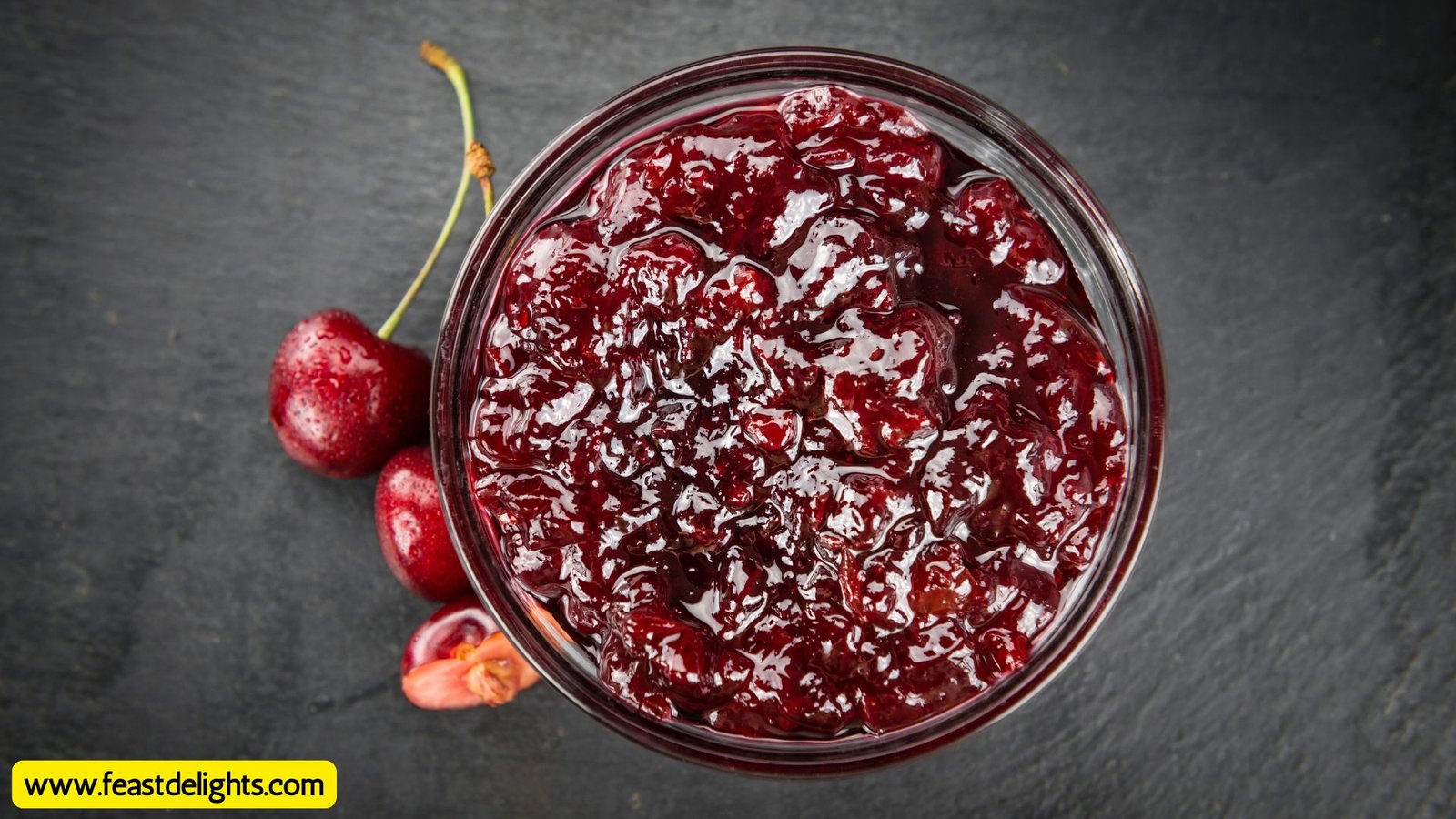
This pitted cherry jam is a soft, fruit-filled spread made with cherries, sugar and a little lemon juice, without added pectin. The cherries release their juice before simmering, then cook down until a cooled spoonful mounds gently. Expect about 1.3 kg of jam, with the exact yield and set depending on the fruit and evaporation. Allow around 95 minutes to prepare, macerate and cook, plus cooling. Keep it in the refrigerator or freezer; this recipe does not include a shelf-stable canning process.
Pitted cherry jam keeps the fruit pieces rather than straining them into a clear jelly. Sweet cherries give a rounder flavour; tart cherries make a sharper spread with the same starting sugar quantity. Because cherries vary in natural pectin, a soft spoonable set is the aim here. Do not chase a very firm gel by boiling until the fruit tastes caramelised. A chilled-saucer test is more useful than judging the boiling jam in the pot. This recipe preserves the existing 1 kg fruit to 800 g sugar ratio and small lemon addition. It is intended for cold storage from the moment it is made.
Pitted cherry jam at a glance
Plan for 35 minutes of preparation, a 30-minute maceration and about 30 minutes of cooking. Cooling is additional. The approximate yield is 1.3 kg, or about 46 oz by weight. Reduction varies, so measure the finished batch before choosing containers. Prepare several small heat-safe refrigerator containers or freezer containers rather than one large jar.
Cherries, sugar and lemon
Weigh 1 kg cherries after removing stalks and pits, about 2.2 lb of prepared fruit. Inspect every pitted cherry for fragments, especially if using a pitter that occasionally misses the stone. Halve larger fruit or roughly chop it for a spread that stays on toast. Discard mouldy or badly damaged fruit rather than trimming it into the pot.
The 800 g granulated sugar is about four US cups, using 200 g per cup. Keep the weight as the primary measure. Sugar helps the mixture thicken and balances tart fruit. Cutting it substantially changes both texture and keeping quality; use a separate reduced-sugar recipe if that is your goal. The tablespoon of lemon juice adds brightness. It does not establish a safe acidity or a canning schedule for this formula.
Up to 100 ml water is included only to prevent scorching if the cherries release little juice. Do not add it automatically. Start with a tablespoon or two when necessary, and add more only if the bottom of the pot is dry. Extra water needs to evaporate before the spread thickens.
Pot and preparation
Use a wide, heavy stainless steel or enamelled pot with ample headroom for bubbling fruit. A thin pan encourages scorching; a narrow deep pot reduces more slowly. Set a small plate in the freezer, prepare a long-handled spoon and have clean containers ready. Hot sugary jam can burn, so keep children away from the hob and avoid leaning over the pot.
Recipe card
Pitted Cherry Jam for the Refrigerator or Freezer
35 minutes preparation + 30 minutes maceration + about 30 minutes cooking = 95 minutes; cooling is additional. Actual reduction time, yield and set need kitchen confirmation.
Equipment: Cherry pitter or small knife, scale, wide heavy non-reactive pot, long-handled spoon, chilled saucer and small clean refrigerator or freezer-safe containers.
Ingredients
Cherry jam
Instructions
Prepare and weigh the cherries
Wash the cherries, remove stalks and pits and inspect for fragments. Weigh 1 kg (2.2 lb) after pitting. Halve or roughly chop larger fruit. Put a small saucer in the freezer.
Macerate for 30 minutes
Combine the prepared cherries with 800 g sugar in the pot. Leave 30 minutes until juice collects around the fruit. Stir once or twice to moisten the sugar.
Dissolve the sugar and simmer
Heat gently, stirring until sugar dissolves. If the base is dry, add a little of the optional water, up to 100 ml only as needed. Bring to an active simmer and cook about 20–30 minutes, stirring along the base frequently. Skim excess foam if desired.
Add lemon and test the texture
Stir in 1 tablespoon lemon juice. Remove the pot from the heat while testing. Cool a little jam on the chilled plate; it should mound softly or wrinkle slightly when pushed. If watery, simmer a few minutes more and retest. A firm gel is not guaranteed without added pectin.
Cool for cold storage
Transfer carefully to small clean heat-safe containers. Cool in shallow portions and refrigerate within 2 hours at 4°C (40°F) or colder. For freezing, use freezer-safe containers and leave expansion space. Do not pantry-store.
How to recognise a soft set
After the cherries stand with sugar for 30 minutes, the bowl should contain visible juice and partly dissolved sugar. Warm gently at first, stirring until the remaining sugar dissolves. Then maintain an active simmer that continues bubbling when stirred, without letting the mixture climb the pan. Stir along the base frequently as it thickens.
Begin testing after about 20 minutes of simmering. Take the pan off the heat while testing so it does not overcook. Place a little jam on the cold plate, chill it briefly and push it with a fingertip. A soft mound or a lightly wrinkled surface is sufficient. The jam will thicken further as it cools, but it may remain looser than shop-bought pectin-set jam.
If a cooled drop runs like juice, return the pan to the heat for a few minutes and retest. If the fruit begins catching or tastes cooked down before a firm wrinkle forms, accept a softer spread. Do not add an arbitrary amount of commercial pectin at the end; different pectin products need different sugar ratios and methods.
Troubleshooting
Jam is loose after chilling: serve it as a cherry topping or gently reduce a small portion further. Fruit ripeness, cherry type, optional water and pan width all affect the result. Fruit sticks to the base: reduce the heat and stir more often. If it has burnt, move the unburnt upper portion to a clean pan without scraping the bottom; a strong burnt taste cannot be removed.
Sugar crystals remain: begin cooking gently so the sugar dissolves before stronger bubbling. Avoid scraping dried sugar from the pan rim into the finished jam. Foam forms: skim it with a spoon near the end for a clearer appearance; a small amount of foam does not mean the jam is spoiled.
Serving and variations
Spread cold jam on toast or spoon it into plain yogurt. Its soft consistency also suits porridge, pancakes or cheesecake. Add small amounts so the sugar does not overwhelm the other food. For a smoother texture, mash some cherries during cooking rather than blending a hot pot. Cinnamon or vanilla can be stirred into an individual serving; keep the main batch simple if you want it to work with several dishes.
For baking, a loose refrigerator jam can leak from small pastries. Choose a recipe that tolerates a soft filling, or thicken a small portion separately and cool it before using. The finished texture of this batch is not a guarantee that it will behave like a firm commercial preserve in every bake.
Cooling, refrigerator storage and freezing
Transfer carefully into small clean heat-safe containers. Cool promptly in shallow portions and refrigerate within two hours rather than leaving the pot on the counter overnight. Keep at 4°C (40°F) or colder and use within two weeks. This is a conservative limit for this formula, not a laboratory-validated shelf life. Use a clean spoon and return the container to the refrigerator after serving.
Freeze in suitable containers, leaving about 1–2 cm (1/2 inch) expansion space. Use within six months for quality and thaw in the refrigerator. Mark each container with its date. Once thawed, keep refrigerated and use within two weeks, counting any refrigerator time before freezing toward that limit.
Discard the entire container if mould, fermentation, unexpected gas or an off smell develops. Do not scrape mould from the surface and eat the remainder. Do not invert hot jars, use wax seals or store this jam in a pantry. For cupboard storage, begin with a tested cherry-jam recipe and follow its exact ingredients, jar size, processing time and altitude adjustment.
Allergens and related recipes
The listed ingredients contain no milk, egg, wheat or nuts, but check packaged ingredients and avoid cross-contact where allergies matter. For another cold-stored spread, see gooseberry jam. Use suitably thick preserves for grated shortcrust jam pie. For a savoury use of cherries, try the separate cherry sauce with red wine and balsamic.
Chill the jam before judging its final texture. A soft set is useful for toast, yogurt and pancakes, and small frozen portions let you keep the rest of the batch fresh.
Preservation references: National Center for Home Food Preservation storage guidance and cold-plate testing for jam without added pectin. These references support the handling principles; this formula is not presented as a tested canning recipe.
Frequently asked questions
Can I use frozen cherries?
Yes, use unsweetened pitted cherries and keep their released juice. Thaw in the refrigerator, weigh 1 kg and expect reduction to take longer if there is more liquid.
Why is this jam softer than shop-bought jam?
Cherry pectin varies and this recipe adds no commercial pectin. Aim for a soft spread and judge it only after cooling.
Can I reduce the sugar?
Substantial reduction changes the set and storage behaviour. Choose a separate reduced-sugar recipe with its own cold-storage instructions.
Does a sealed lid make it safe for the pantry?
No. A lid drawing down is not a validated preservation process. Refrigerate or freeze this batch.
Do sweet and tart cherries need different amounts?
Both can be used at the listed weight, but flavour and set differ. Keep the given sugar ratio for this recipe and expect a sharper result with tart cherries.
Can I remove a patch of mould and use the rest?
No. Discard the entire container rather than removing only the visible mould.
More recipes to try

Cream Cheese Chocolate Truffles Rolled in Cocoa

Cream Cheese Cheesecake Danish with Lemon and Vanilla

Fresh Fruit Salad with Orange Honey Dressing

Ptichye Moloko Bird’s Milk Mousse with Chocolate Glaze
Bird’s Milk Jello with Creamy Mousse and Raspberry Jelly

Cream Horn Trubochki with Vanilla Cream Filling
Spotted a detail that needs correcting? Contact the FeastDelights editors.