Crispy Fried Camembert with Honey and Toasted Nuts
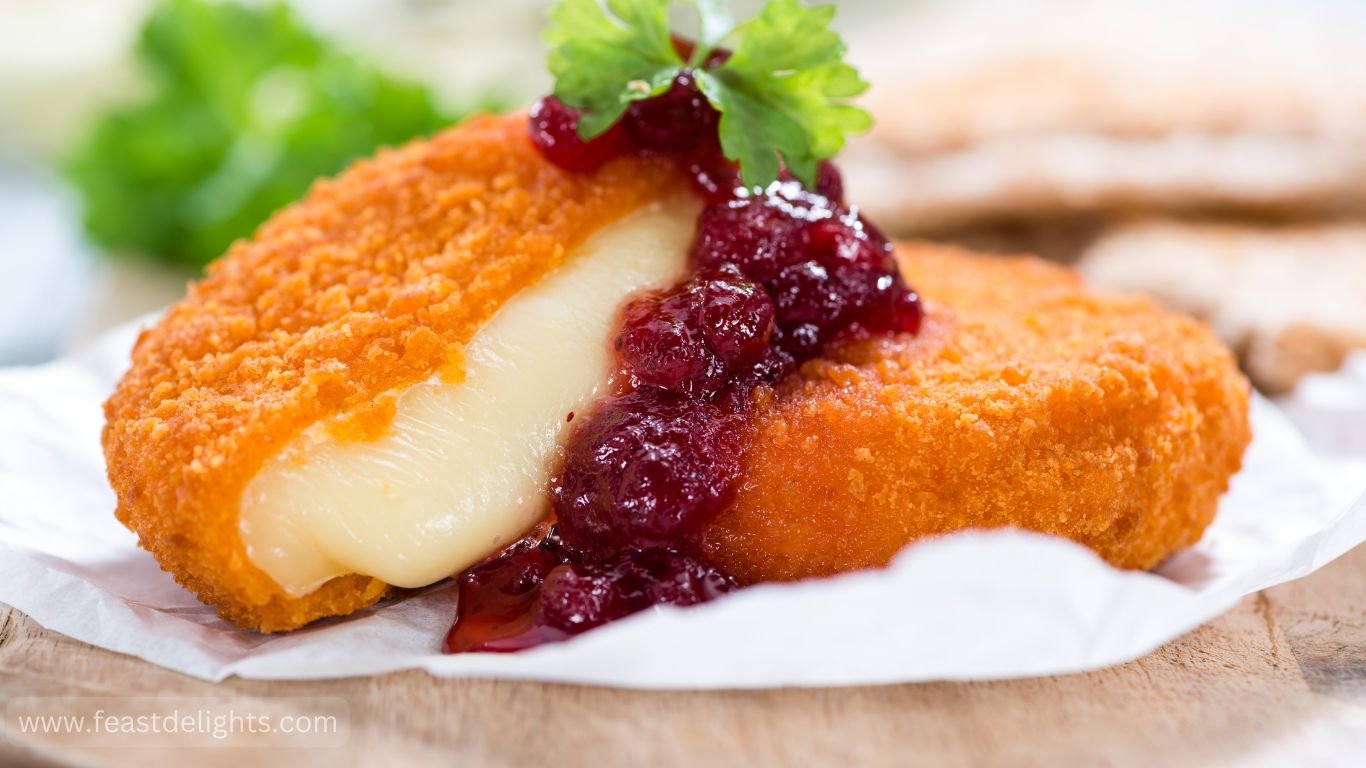
Crispy fried Camembert wedges have a golden breadcrumb shell and a soft, rich cheese centre, finished with a little honey and chopped toasted nuts. Chilling the cheese first and applying two layers of crumbs helps seal the cut surfaces before frying. The wedges cook quickly in small batches of hot oil, so have the serving plate and toppings ready before starting. Two 250 g rounds make twelve wedges for sharing as an appetiser. Serve immediately while the coating is crisp, with cranberry sauce or tart apple slices if desired.
Crispy fried Camembert is a sharing appetiser with a golden breadcrumb shell and soft cheese inside. This recipe makes twelve wedges from two rounds, using a double coating to reduce leaks. Allow at least 80 minutes for chilling, about 20 minutes of preparation and approximately 10 minutes for frying in batches.
Recipe card
Crispy Fried Camembert with Honey and Toasted Nuts
Allow at least 60 minutes to chill cheese and another 20 minutes after breading. Fry in small batches; allow time for oil to return to temperature.
Equipment: Sharp knife, three shallow bowls, tray, parchment, refrigerator, deep heavy saucepan or deep fryer, frying thermometer, dry slotted spoon, cooling rack or paper towels, serving plate
Ingredients
Cheese
Coating
Frying
To serve
Instructions
Chill and portion the Camembert
Keep both Camembert rounds refrigerated for at least one hour until firm. Use a clean sharp knife to cut each round into six equal wedges. Keep the rind on; it helps the wedges hold their shape. Return wedges to the refrigerator if they become soft.
Prepare the breading station
Place flour, beaten eggs and breadcrumbs in three separate shallow bowls. Mix the black pepper into the crumbs. Have a lined tray ready and keep the garnish separate from the raw egg station.
Double-coat and chill
Dust each wedge with flour, shaking off excess. Dip in beaten egg and coat thoroughly with breadcrumbs. Repeat the egg and breadcrumb stages, paying special attention to the pointed tip and cut edges. Refrigerate the coated wedges for 20 minutes. Discard leftover flour, egg and crumbs that have contacted the cheese.
Heat the frying oil safely
Heat neutral frying oil in a heavy deep saucepan or fryer to approximately 175°C (350°F), checking with a frying thermometer. Use enough oil to submerge wedges while keeping the saucepan no more than one-third full. Keep the pan stable, dry utensils nearby and a suitable metal lid to hand. Never leave heating oil unattended.
Fry in small batches
Lower a few wedges gently into the oil with a dry slotted spoon, keeping hands away from splashes. Fry about 45–60 seconds or as needed until the coating is evenly golden and fully cooked. Turn gently if needed. Remove to a rack or paper towels, allowing oil to recover to temperature between batches. If the coating remains uncooked or the cheese leaks before it is cooked through, do not serve that wedge; adjust the coating and cooking of the next batch.
Drain, garnish and serve
Transfer to a serving plate, drizzle with the measured honey and scatter over toasted nuts. Serve promptly while the coating is crisp; the molten centre may be very hot.
Choosing and chilling Camembert
Choose rounds that are firm when cold rather than extremely ripe and runny. Keep the edible rind on; it gives each wedge some support as the cheese warms. Use a sharp knife to divide each wheel into six wedges, wiping the blade if necessary. If the cut surfaces become soft before coating, return them to the refrigerator.
Fine breadcrumbs cover the corners and exposed surfaces more evenly than very coarse flakes. Flour helps the egg adhere and the egg helps bind the crumbs. A little black pepper adds flavour without distracting from the Camembert. Use neutral oil suitable for high-temperature frying; the stated volume is a guide, and the actual amount depends on the vessel.
How to create a secure double coating
Arrange three shallow bowls in sequence: flour, egg and breadcrumbs. Shake off loose flour before dipping in egg. After the first crumb layer, repeat the egg and crumbs so the entire wedge is sealed, especially the pointed end. Use separate utensils or hands for wet and dry ingredients to avoid large clumps. Chill the breaded wedges for twenty minutes before frying.
Discard flour, egg and breadcrumbs left over from breading. Do not save these for other recipes because they have contacted raw egg. Wash your hands and prepare the honey and nuts on a clean surface before heating the oil.
Fry safely and check the coating
Use a deep, heavy saucepan with sufficient headroom and never fill it more than one-third with oil. Heat to approximately 175°C (350°F), using a thermometer to check the temperature. Do not add water or wet utensils to hot oil. Lower a few wedges gently and fry until evenly golden and the coating is cooked through, usually around one minute. A comparable short frying technique is described in Food Network’s fried Camembert recipe.
Never leave hot oil unattended. If it starts smoking, turn off the heat safely. If a pan of oil catches fire, turn off the heat if safe, cover with an appropriate metal lid if safe to do so, and never use water or move the pan. Leave and call emergency services if the fire cannot be safely contained.
Troubleshooting leaking cheese and oily crumbs
Cheese escapes: check the pointed ends and cut faces for gaps. Chill the next batch longer if soft and avoid prolonged frying. Greasy coating: fry fewer pieces at once and let the oil recover to the target temperature. Crumbs darken too quickly: check the thermometer, reduce excess heat and remove burnt crumbs safely between batches. Do not serve wedges with uncooked egg coating.
Serving ideas and variations
Drizzle the drained wedges with a little honey and scatter chopped toasted nuts over them. Tart apple slices or berry preserves contrast with the rich cheese. Try our homemade cranberry sauce with orange as an alternative accompaniment. For a party spread, consider cranberry Brie puff pastry bites or baked garlic cheese balls as distinct alternatives.
Make ahead and store leftovers
Bread the wedges up to four hours before cooking and keep covered in the refrigerator. Fry immediately before serving for the crispest coating. Refrigerate any cooked leftovers within two hours, or one hour above 32°C (90°F), and use within two days. Reheat in the oven to 74°C (165°F); expect some loss of crispness and possible leakage. Freezing is not recommended for texture.
Allergens and food safety
Contains milk, wheat, egg and nuts. Identify the nuts used and check ingredient labels and shared frying oil for cross-contact. Use cheese made from pasteurised milk, and pasteurised eggs if available. A golden coating does not establish that the centre has been heated thoroughly. The NHS pregnancy food guidance advises thoroughly cooking mould-ripened soft cheeses including Camembert; anyone who needs to avoid underheated soft cheese should choose another dish if the centre cannot be confirmed steaming hot. Do not give honey to infants younger than twelve months.
Frequently asked questions
Why does my Camembert leak into the oil?
The wedges may be too warm, the crumb layer may have gaps or the frying time may be too long. Chill thoroughly and cover every cut edge with two even layers of crumbs.
Can I prepare fried Camembert ahead?
Bread and refrigerate the wedges for up to four hours at 4°C/40°F or below. Fry just before serving for the best crust.
Do I remove the rind?
No. The rind is edible and helps hold the wedge together. Keep it intact when cutting and coat the exposed cut faces thoroughly.
Can I use Brie instead?
A similarly firm chilled Brie is a plausible alternative, but a very ripe, runny round is harder to coat and may leak sooner.
Why are the breadcrumbs oily?
The oil may have cooled too much because too many wedges were added. Fry a few at a time and allow the oil to return to approximately 175°C before the next batch.
Is quickly fried Camembert suitable during pregnancy?
Do not assume the short frying time heats the centre thoroughly. NHS guidance advises that mould-ripened soft cheeses such as Camembert must be thoroughly cooked during pregnancy. If you cannot confirm the cheese is steaming hot throughout, choose another appetiser.
More recipes to try


Spotted a detail that needs correcting? Contact the FeastDelights editors.