Cold Beetroot Kefir Soup with Egg and Cucumber
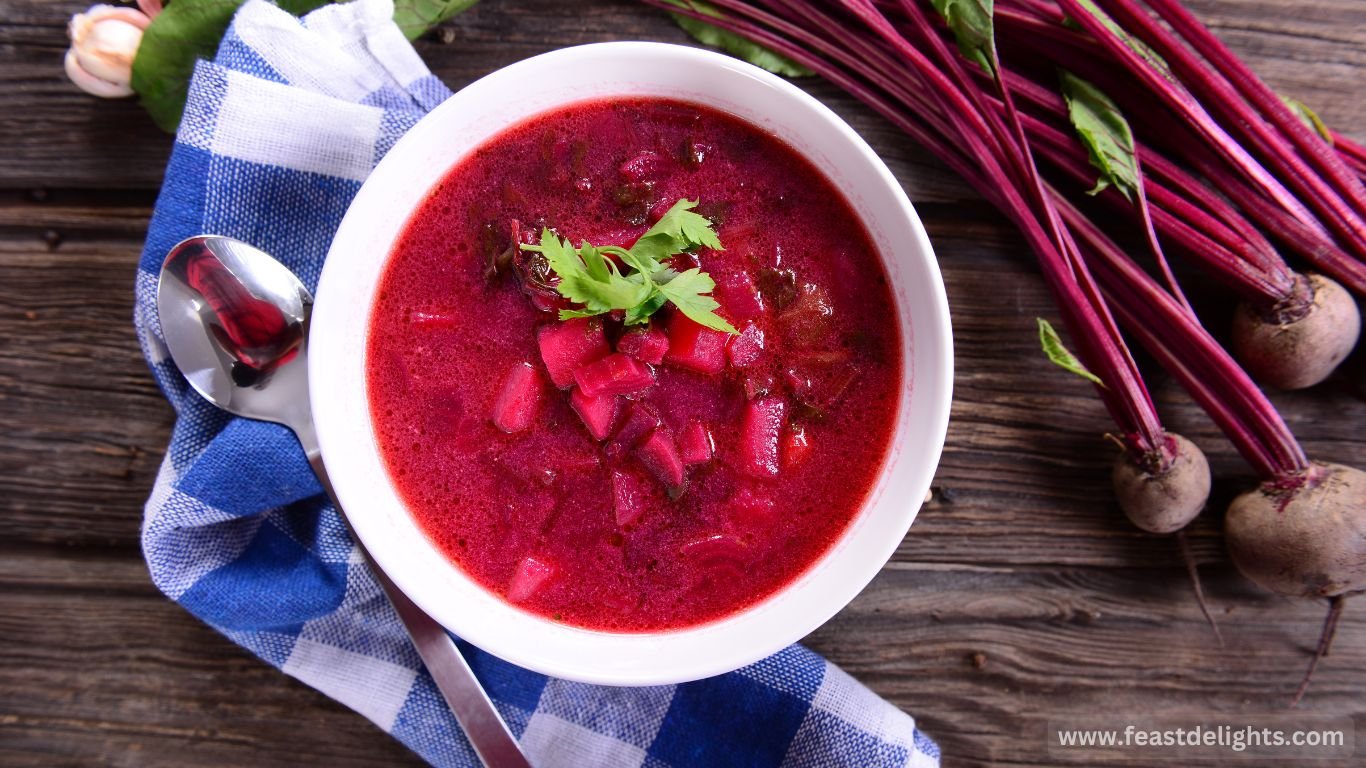
Cold beetroot kefir soup combines sweet cooked beetroot, tangy plain kefir and chilled beet broth with cucumber, dill, spring onions, potatoes and hard-boiled eggs. The bright pink soup is creamy but refreshing, with crisp cucumber and tender vegetables in every spoonful. This Eastern European-style version makes six bowls. Allow approximately two hours and twenty minutes for preparation, cooking and the final hour of chilling, plus any additional cooling time. Finish each serving with sour cream and fresh dill.
Cold beetroot and kefir soup is a refreshing Eastern European summer dish, distinct from hot borscht. The beet cooking liquid gives the soup its colour and earthy sweetness, while kefir adds acidity and a creamy texture. Chill the cooked ingredients before combining them with the dairy. This version serves six and takes approximately 30 minutes of preparation, 50 minutes of cooking and at least 60 minutes of final chilling. Additional time may be needed to cool the beet broth safely before mixing.
Ingredients and their roles
Four medium beets provide the soup’s characteristic colour and sweet, earthy flavour. Choose beets of similar size so they soften at roughly the same time. Wash them thoroughly and cook whole in their skins in the measured litre of water (about 4¼ US cups). Reserve the cooking liquid. Keep enough water in the pan to cook the beets safely; cover and simmer gently to limit evaporation.
Three medium potatoes make this a substantial lunch. Boil them separately so the beet broth remains relatively clear, then peel and dice when cool. Two hard-boiled eggs add richness. One cucumber gives a crisp contrast, while a bunch each of spring onions (scallions) and dill supplies freshness. Wash the vegetables and herbs, trim away tough stems and chop them finely.
Use 500 ml (about 2 US cups plus 2 tablespoons) plain, unsweetened, commercially pasteurised kefir. A thinner cultured buttermilk can be tried instead, although its flavour and consistency will differ. Four tablespoons of sour cream are reserved for serving. The recipe contains milk and eggs.
Equipment and planning
Use two or three saucepans, a colander, grater, knife, cutting board, large mixing bowl and shallow cooling containers. Start the beets first, then cook potatoes and eggs in parallel to keep the preparation within the estimated timing. An ice-water bath helps cool the broth rapidly before refrigeration. Keep the kefir refrigerated until needed.
Recipe card
Cold Beetroot Kefir Soup with Egg and Cucumber
140 minutes includes the minimum 60-minute final chill; cook vegetables and eggs in parallel. Additional time may be required to chill the broth and cooked ingredients before assembly.
Equipment: Two or three saucepans, grater, knife, cutting board, colander, mixing bowl, shallow cooling containers
Ingredients
Vegetables and eggs
Broth
Seasoning
To serve
Instructions
Simmer the beets and chill the broth
Wash whole beets thoroughly. Simmer covered in the measured water for 40–50 minutes until a knife slides into their centres. Reserve the broth and cool both promptly in shallow containers; refrigerate.
Boil and cool the potatoes
Boil potatoes separately until tender. Drain, cool promptly, peel and cut into small cubes.
Hard-boil eggs and chop fresh vegetables
Cook eggs until whites and yolks are firm. Cool quickly, peel and chop. Wash and chop cucumber, spring onions and dill.
Combine the chilled ingredients
Peel and grate the cooled beets. Stir into chilled beet broth and plain kefir. Add potato, egg, cucumber and herbs; season with salt and pepper.
Chill for one hour and serve
Cover and refrigerate at least one hour at 4°C (40°F) or below. Stir, ladle into six bowls and divide the sour cream among servings.
Cooking and chilling the vegetables
Simmer the whole beets for 40–50 minutes or until a thin knife slides into the centre without much resistance. Large beets may take longer. Lift them out and transfer the liquid to shallow heat-safe containers. Cool promptly, using an ice bath if convenient, then refrigerate. Cook potatoes until tender without letting them collapse; cool and dice into small spoon-sized pieces. Hard-boil eggs until the whites and yolks are firm, then cool in cold water and refrigerate if not using immediately.
Mixing for a smooth pink broth
Peel and grate the chilled beets. Stir them into the cooled cooking liquid and kefir, then add the diced potatoes, chopped eggs, cucumber and herbs. Season with the measured salt and pepper, tasting before adding extra. The soup should have a pourable, creamy broth rather than the consistency of a purée. Cover and chill for at least one hour. Stir before serving, because grated beet and chopped vegetables naturally settle.
Troubleshooting and variations
If the broth is too thick, add chilled potable water a little at a time. If too thin, use slightly less cooking liquid at assembly and reserve the remainder. If the kefir separates, the broth may have been too warm; whisk gently and ensure all components are cold next time. If the soup tastes too sour, soften individual portions with sour cream. For a sharper finish, add a few drops of lemon juice at serving. Leave out the potato for a lighter variation, although the yield will change. Add cucumber shortly before serving if you prefer maximum crunch.
Serving and related soups
Ladle into chilled bowls and divide the sour cream among the six servings. Add extra dill if desired, and serve with dark rye bread or boiled potatoes. For a hot alternative, see vegetarian Ukrainian borscht or beet borscht with cabbage and beans. For another cold soup, try chilled chicken okroshka with kefir.
Make ahead and food safety
Cook and chill the beetroot, broth, potatoes and eggs ahead, then assemble with cold kefir and washed fresh vegetables. Do not leave a large pot of broth to cool slowly overnight at room temperature. Keep covered at 4°C (40°F) or colder, and use within two days of cooking the vegetables and eggs. Refrigerate cooked ingredients in shallow containers within two hours (one hour above 32°C/90°F). Serve cold and return leftovers promptly to the refrigerator. Freezing is not recommended because the kefir may separate and the cucumber can become watery. Follow USDA guidance on cooling and refrigerating leftovers.
Frequently asked questions
Is cold beetroot soup the same as hot borscht?
No. This version uses chilled beet broth and kefir with cucumber, dill and eggs, whereas hot borscht has a different cooking and serving method.
Why must the beet broth cool first?
Cold broth prevents the kefir from warming or separating and helps keep the assembled soup safely chilled.
Can I use cooked beetroot from a packet?
Yes, if plain and ready to eat, but you will need a suitable chilled broth and the timing and flavour will differ.
Can I substitute buttermilk for kefir?
Plain cultured buttermilk may be used, though it generally gives a thinner broth.
Can I make this soup ahead?
Yes. Chill the cooked components promptly and refrigerate the finished soup. Use within two days of cooking the vegetables and eggs.
More recipes to try






Spotted a detail that needs correcting? Contact the FeastDelights editors.