Christmas Garlic Roast Beef with Potatoes and Carrots
This Christmas roast beef brings a garlic-seasoned beef joint, golden potatoes and tender carrots together in one roasting pan. Browning the meat first adds savoury flavour, while roasting the vegetables around it lets them pick up the pan juices. A food thermometer helps you judge doneness without relying on a fixed minutes-per-kilogram rule. The recipe serves eight, with an estimated total time of two hours and 25 minutes; allow a generous margin for the particular cut and thickness of your joint.
Christmas roast beef with potatoes and carrots is a festive main course built around a two-kilogram beef joint, rubbed with garlic and olive oil and roasted with vegetables. It serves eight. Allow roughly two hours and 25 minutes, with extra time in reserve for thicker joints. The essential tool is a meat thermometer: the beef must reach a safe internal temperature before leaving the oven.
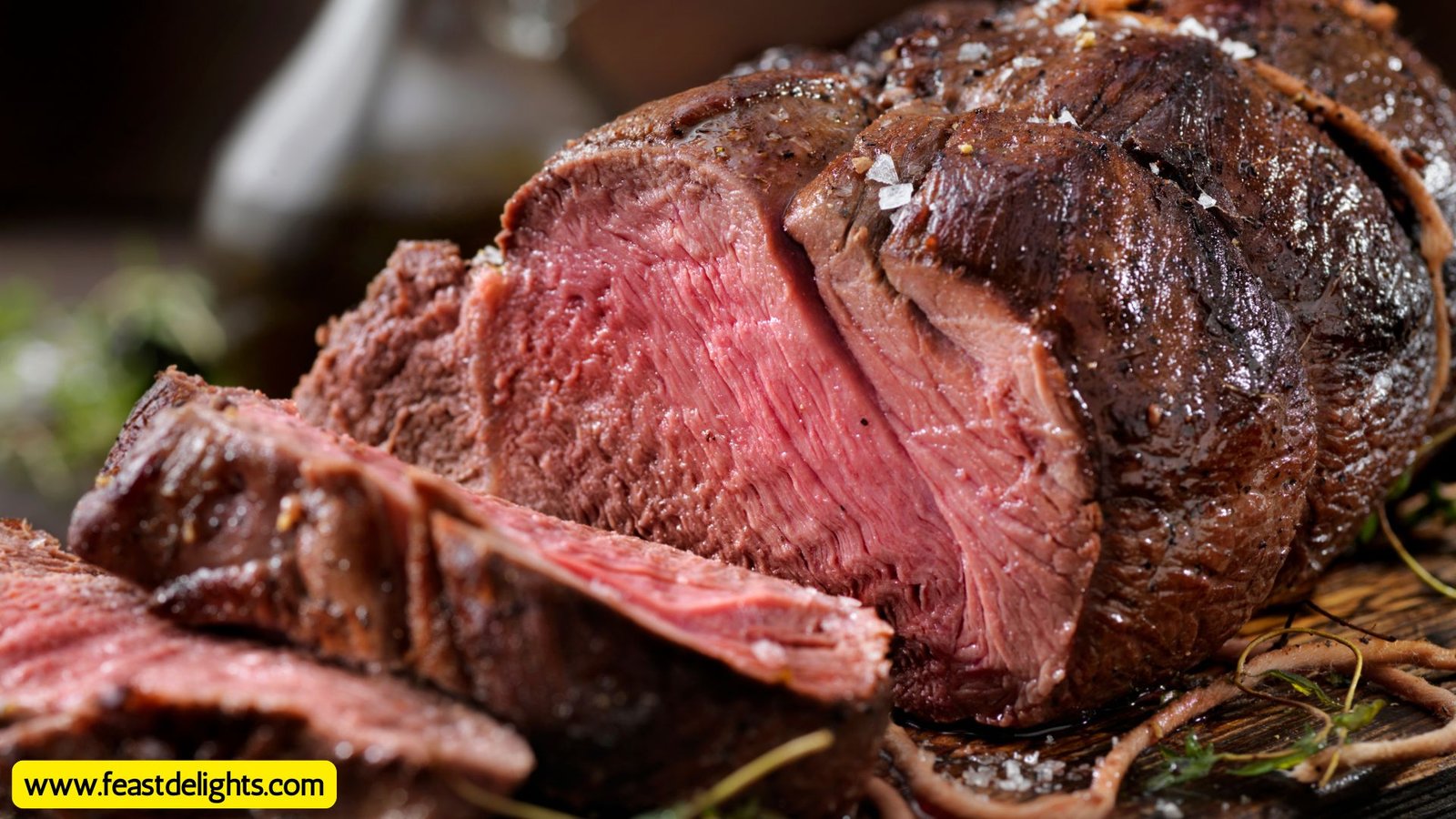
Recipe card
Christmas Garlic Roast Beef with Potatoes and Carrots
Includes about 100 minutes estimated searing and roasting and 20 minutes resting. Actual roasting time can be substantially longer for a thick or tightly rolled joint. Check the centre temperature rather than relying on the clock.
Equipment: Kitchen scale, sharp knife, separate cutting boards, heavy skillet, large roasting pan, tongs, instant-read or oven-safe meat thermometer, carving board with juice channel and foil.
Ingredients
Roast beef
Roasting vegetables
Finishing
Instructions
Prepare the beef and oven
Preheat conventional oven to 180°C (350°F). Pat beef dry and season with salt and pepper. Cut potatoes and carrots into even chunks.
Brown the joint
Heat some measured olive oil in a heavy skillet and sear beef on all sides. Rub minced garlic over browned meat and transfer to a roasting pan.
Roast with potatoes and carrots
Arrange potatoes and carrots around beef with remaining oil as needed. Roast, turning vegetables once. Remove fully cooked vegetables to a clean dish if ready before beef.
Check the centre temperature
Begin checking beef after about 60 minutes. Continue roasting until a thermometer in the thickest part reads at least 63°C (145°F), or higher for desired doneness. Do not rely on the estimated cooking time alone.
Rest, carve and serve
Rest beef on a clean board about 20 minutes (at least 3 minutes). Remove string, slice across grain and serve with vegetables, optional parsley and hot pan juices.
Choosing the beef joint and vegetables
Choose a 2 kg (about 4.4 lb) whole-cut roasting joint such as boneless rib or sirloin, tied into an even shape. Ask the butcher for a cut suited to dry roasting; a tough stewing joint needs a different, slower moist-heat method. The shape and thickness of a roast affect cooking time as much as its weight. A tightly rolled or bone-in joint may take longer than a flatter boneless joint, and any special cooking instructions on the label should be followed.
Cut 1 kg (about 2.2 lb) of potatoes into roughly 4 cm chunks. Floury or all-purpose potatoes suit this roast; waxy potatoes stay firmer. Cut four carrots into thick, similarly sized pieces. Reserve some of the two tablespoons of oil for coating the vegetables if needed. The measured garlic, salt and black pepper are the main seasonings; the optional parsley adds a fresh finish.
Brown the beef without burning the garlic
Preheat a conventional oven to 180°C (350°F). Pat the beef dry with paper towels and season with salt and pepper. Heat some of the measured oil in a heavy skillet over medium-high heat. Brown the joint on all sides using tongs. Rather than scorching minced garlic in the hot pan, rub it over the browned meat immediately before roasting. Keep raw-beef utensils separate from cooked food. There is no requirement to bring a large roast fully to room temperature; prepare it shortly before cooking and keep it refrigerated until needed.
Roast the beef and vegetables together
Transfer the joint to a large roasting pan, with the fattier side facing upwards where applicable. Arrange the potatoes and carrots around it in a single layer. If the pan is crowded, use a separate tray rather than piling the vegetables up. Roast in the preheated oven, turning the vegetables once they have begun to colour. Check them with a knife and lift them onto a clean covered dish if they become tender before the meat is ready. If they have been in contact with raw meat juices, make sure they are cooked thoroughly before serving.
Start checking the roast after around 60 minutes and continue as needed. The card’s 100-minute cooking estimate is a planning allowance, not a guarantee. FoodSafety.gov publishes roasting charts for different beef cuts, which illustrate how widely cooking times vary. Insert a thermometer into the thickest part of the roast, away from bone and large pockets of fat. Whole beef roasts should reach at least 63°C (145°F) before removal from the heat, followed by at least three minutes of resting. For a more well-done result, continue to a higher temperature as desired. Do not judge safety from the colour of the juices.
Rest and carve
Move the cooked beef to a clean carving board and loosely tent it with foil. Rest for about 20 minutes, allowing at least three minutes for food safety. Use this time to finish the vegetables if needed. Remove any butcher’s string before slicing. Identify the direction of the muscle fibres and carve across them into thin slices. Bring the pan juices to a boil if using them as a sauce, skimming excess fat if desired.
Troubleshooting
Roast is taking longer: continue at the stated oven temperature and check the centre periodically. Garlic is browning too quickly: shield the surface loosely with foil. Vegetables are pale: spread them out and finish in the oven while the beef rests. Beef is difficult to slice: remove string and cut across the grain. Meat is dry: use the thermometer earlier next time and avoid cooking far beyond your preferred safe temperature.
Serving ideas and variations
Offer horseradish sauce, hot pan juices and optional parsley. For a traditional accompaniment, see roast beef with homemade Yorkshire puddings. Add garlic green beans with lemon and herbs for colour. For a different festive beef cut, try herb and garlic prime rib. Fresh rosemary or thyme can be added if desired, without changing the measured seasoning.
Make ahead, storage and allergens
Cut the carrots ahead and refrigerate them covered. Prepare the meat and potatoes close to cooking time. Cool leftovers in shallow containers rather than leaving the whole roast at room temperature. Follow official cooking and reheating guidance. The measured ingredients contain none of the major US allergens, but sauces and purchased seasonings may introduce milk, wheat, mustard or other allergens. Check labels.
Frequently asked questions
How long does a 2 kg beef joint take to roast?
The card allows about 100 minutes for searing and roasting, but the cut, shape and oven affect timing. Check the thickest part with a thermometer.
Can I use a boneless rib joint?
Yes. Rib or sirloin are suitable for dry roasting; follow any cut-specific packaging instructions.
What if the vegetables cook before the beef?
Transfer fully cooked vegetables to a clean covered dish and finish roasting the beef separately.
Does the beef need to rest?
Yes. Rest for at least 3 minutes after reaching 63°C (145°F); about 20 minutes also helps with carving.
Can I add herbs to the roasting pan?
Yes. Rosemary or thyme complements the garlic, but neither is required.
More recipes to try






Spotted a detail that needs correcting? Contact the FeastDelights editors.