Broken Glass Jelly Cake with a Biscuit Base
A no-bake dessert of colourful jelly cubes and sour-cream filling set over a crisp biscuit base.
Broken glass cake with biscuits is a chilled dessert built from colourful jelly cubes, sweetened sour cream and a crisp biscuit base. Set the jelly flavours separately for three to four hours, then cut them into small pieces so they distribute through the cream. The base is made by arranging Savoiardi biscuits or crackers in a cake tin. Gelatin is soaked in cold water and warmed gently until dissolved before it is mixed into the sour cream and sugar. Fold the jelly cubes through the cream mixture, pour it over the biscuit base and refrigerate for four to six hours until firm. Because this version uses biscuits rather than sponge, the base adds a distinct layer beneath the creamy filling. Keep the cake chilled and slice only after it has set fully.
Broken Glass Cake with Biscuits
A no-bake dessert of colourful jelly cubes and sour-cream filling set over a crisp biscuit base.
Helpful tips
- Prepare each jelly flavour separately and chill it until firm before cutting into cubes.
- Soak the gelatin in cold water for 10 to 15 minutes before warming it.
- Warm the gelatin only until dissolved; do not boil it.
- Arrange the biscuits in the tin before pouring the jelly and sour-cream mixture over them.
Serving ideas
- Serve cold so the gelatin-set filling holds its shape.
- Cut neat slices with a clean knife.
- Add fresh berries alongside each portion.
- Offer tea or coffee with the chilled cake.
Storage
Keep covered in the refrigerator and return leftovers to the cold promptly after serving.
Ingredients and directions
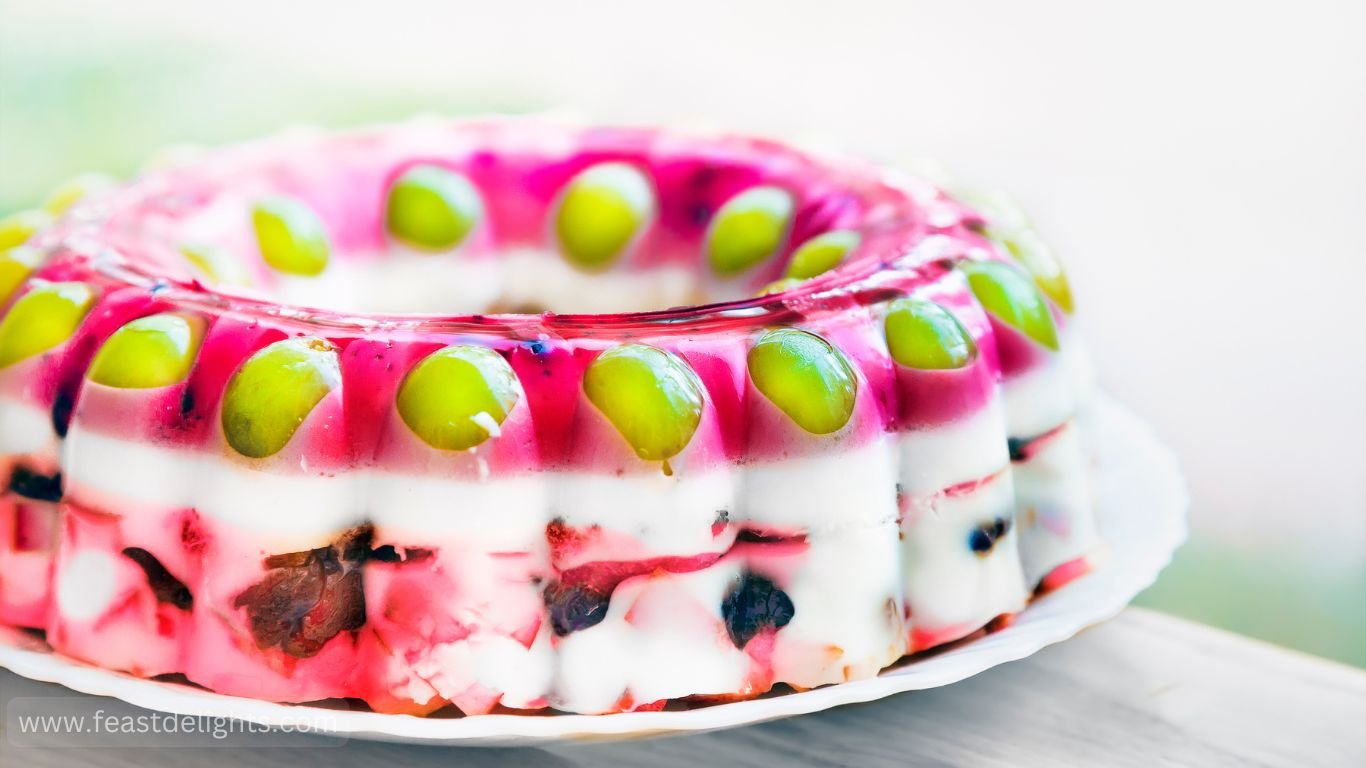
Recipe card
Broken Glass Jelly Cake with a Biscuit Base
Equipment: Jelly moulds or containers, mixing bowl and cake tin.
Ingredients
Instructions
Set the jelly
Prepare each jelly flavour separately according to the packet. Chill for 3–4 hours until firm, then cut into small cubes.
240 minPrepare the gelatin cream
Soak gelatin in cold water for 10–15 minutes. Stir sour cream and sugar together. Warm the gelatin gently until dissolved, then mix it into the cream.
Build the base
Arrange biscuits in the base of a cake tin.
Assemble
Fold the jelly cubes into the sour-cream mixture and pour it over the biscuit base.
Chill until firm
Refrigerate for 4–6 hours before slicing.
360 min
How to tell when it is ready
The colourful jelly should be firm enough to cut into cubes, and the assembled sour-cream layer should hold its shape before slicing.
Tips
- Prepare each jelly flavour separately and chill it until firm before cutting into cubes.
- Soak the gelatin in cold water for 10 to 15 minutes before warming it.
- Warm the gelatin only until dissolved; do not boil it.
- Arrange the biscuits in the tin before pouring the jelly and sour-cream mixture over them.
Troubleshooting
- If the biscuit base floats, press it down firmly and chill it before pouring in the cream layer.
- If the finished cake is loose, extend the final chill; do not unmould until it holds together.
Substitutions
- Savoiardi give a softer base than plain crackers. Choose one base and arrange it in an even layer.
Serving suggestions
- Serve cold so the gelatin-set filling holds its shape.
- Cut neat slices with a clean knife.
- Add fresh berries alongside each portion.
- Offer tea or coffee with the chilled cake.
Make ahead
Set the jelly flavours ahead of time; cut them only when firm. Allow several hours for the assembled cake to set before slicing.
Storage
Keep covered in the refrigerator and return leftovers to the cold promptly after serving.
Use several jelly colours for the characteristic mosaic appearance.
More recipes to try





Spotted a detail that needs correcting? Contact the FeastDelights editors.