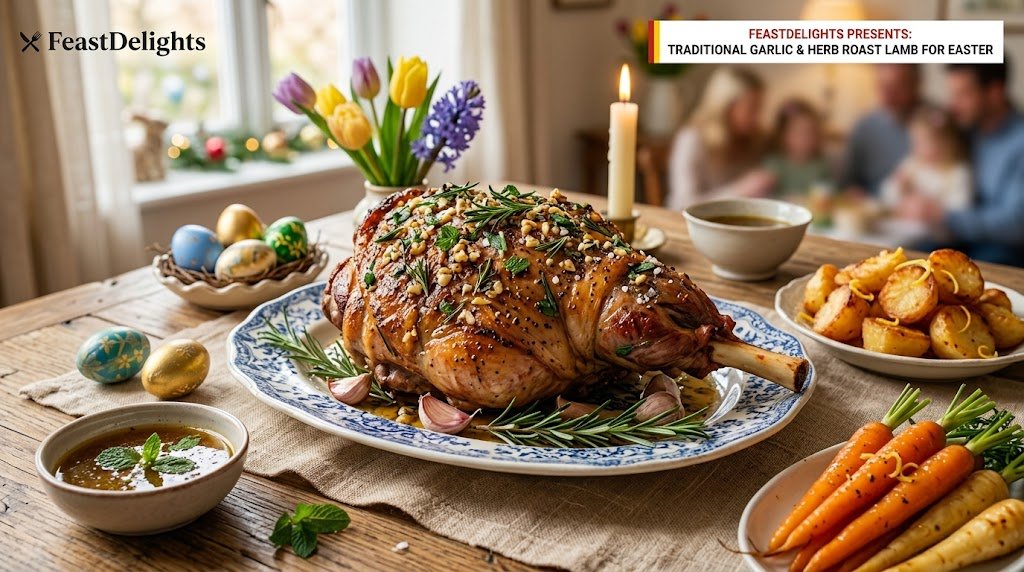
Easter Roast Lamb Shoulder with Garlic, Rosemary and Mint
This Easter roast lamb shoulder is rubbed with garlic, olive oil, dried rosemary and mint, then roasted with a little stock or water until the meat is tender. An overnight refrigerated marinade lets the herbs flavour the surface, and a covered roasting pan helps retain moisture while the shoulder's connective tissue softens. The recipe serves six to eight. Plan for about 12 hours including the shortest overnight marinade, with extra time for a large or thick shoulder that needs longer cooking.
Easter roast lamb shoulder with garlic, rosemary and mint is a festive main course with aromatic seasoning and tender meat. This recipe uses a 2 kg shoulder and serves six to eight. Allow about 12 hours including the shortest overnight marinade; the actual oven time depends on the shape of the joint and how tender you want it.
Recipe card
Easter Roast Lamb Shoulder with Garlic, Rosemary and Mint
Includes minimum 8 hours refrigerated marinating, an estimated 3 hours 20 minutes roasting and 20 minutes resting. Begin tenderness checks after 2.5 hours; allow 4 hours or longer if needed. Exact cooking time depends on cut and shape and requires kitchen confirmation.
Equipment: Kitchen scale, knife, non-reactive covered marinating dish, roasting pan, foil or fitted lid, oven gloves, meat thermometer, carving board and carving knife.
Ingredients
Lamb
Herb rub
Roasting liquid
Instructions
Season and refrigerate overnight
Pat lamb dry. Mix garlic, oil, rosemary, mint, salt and pepper. Rub over meat, cover and refrigerate 8–12 hours.
Preheat the oven
Preheat conventional oven to 180°C (350°F). Transfer the lamb to a suitable roasting pan.
Roast covered with stock
Pour water or stock around the joint. Cover loosely with foil or a lid and roast; begin checking after 2.5 hours, adding hot water if needed. Allow 3–4 hours or longer until tender.
Check safety and tenderness
Verify at least 63°C (145°F) at the thickest part away from bone. Continue cooking until a fork enters easily and the shoulder is tender; uncover briefly near the end for browning if desired.
Rest and carve
Transfer to a clean board and rest 20 minutes (at least 3). Remove any string, carve across grain or pull tender meat apart and serve with boiled pan juices.
Choosing a lamb shoulder
Use a 2 kg (about 4.4 lb) bone-in or boneless shoulder. Shoulder contains more connective tissue than leg and needs longer cooking to soften it. A bone-in shoulder has a different shape and edible yield from a boneless rolled joint, so use a thermometer and tenderness checks rather than a fixed time per kilogram. Follow any special instructions on the packaging. Choose an ovenproof roasting pan large enough to hold the joint with space around it.
Garlic and herb marinade
Mix four minced garlic cloves with two tablespoons (30 ml) olive oil, one tablespoon each dried rosemary and dried mint, salt and black pepper. Rub over the patted-dry meat, cover and refrigerate for 8–12 hours. The measured dried herbs give a pronounced aroma; fresh herbs can be used as an alternative, but their strength differs. Do not leave raw lamb marinating at room temperature. Keep the bowl and utensils separate from ready-to-eat food.
Covered roasting and tenderness
Preheat a conventional oven to 180°C (350°F). Transfer the lamb to the roasting pan, with the fattier side up where practical. Pour 250 ml (about one US cup) water or stock around the meat, not over the herb coating. Cover with foil or a fitted lid and roast. Check the pan periodically and add a little hot water if it is drying out. Start checking the meat after 2½ hours; shoulder may need 3–4 hours or more depending on size, shape and oven. The original shorter cooking estimate is not a reliable tenderness guarantee. For comparison, Good Food’s slow-roasted shoulder method uses an extended covered roast at a lower temperature.
Check the thickest part of the lamb away from bone. Whole-cut lamb must reach at least 63°C (145°F) before removing it from the oven, followed by a minimum three-minute rest, according to FoodSafety.gov. That is a safety minimum, not a promise of tender shoulder. Continue covered cooking until a fork or skewer slides easily into the meat and the connective tissue has softened. If you want more browning, remove the cover near the end and monitor the surface to prevent the garlic burning.
Rest and serve
Transfer to a clean board, cover loosely and rest about 20 minutes. Remove any string from a rolled joint. Slice across the grain where the meat holds its shape, or separate tender sections with a fork. Skim excess fat from the pan juices and bring them to a boil if serving as a sauce.
Troubleshooting
Meat is tough: continue covered roasting with enough liquid; reaching the safe minimum temperature does not mean the shoulder is tender. Pan is dry: add hot water or stock around the joint and cover again. Herbs are darkening: shield the surface with foil. Juices taste salty: dilute with unsalted stock rather than reducing them further.
Serving ideas and variations
Serve with garlic and rosemary roasted potatoes or roasted vegetables with squash and peppers. For a separate preparation with a fresh sauce, see roast lamb with mint and lemon sauce. Add optional lemon wedges at the table. Use unsalted stock if available and adjust the pan juices before serving. A leg of lamb is not a direct timing substitute because it has different connective tissue and roasting requirements.
Make ahead and allergens
Season the lamb the night before, refrigerate covered and roast on the day of serving. Refrigerate leftovers promptly in shallow portions rather than leaving the whole joint out. The measured meat and herbs contain no obvious major allergens, but stock may contain celery, wheat or other allergens. Check labels and follow USDA leftover guidance.
Frequently asked questions
Can I use a boneless shoulder?
Yes. Use the same weight, but check tenderness and temperature because the shape and cooking time may differ.
Why does shoulder need longer than leg?
Shoulder has more connective tissue, which needs time and gentle moist heat to soften.
Is 63°C enough for tender shoulder?
It is the safety minimum for whole cuts when followed by a three-minute rest, but shoulder generally needs longer cooking to become tender.
Can I skip the overnight marinade?
You can season shortly before roasting if necessary, but the original method uses eight to twelve hours for the herb flavour.
Should I cover the roasting pan?
Yes, during most of roasting. Uncover near the end if you want more browning.
More recipes to try






Spotted a detail that needs correcting? Contact the FeastDelights editors.