Roasted Red Pepper and Eggplant Ajvar with Garlic
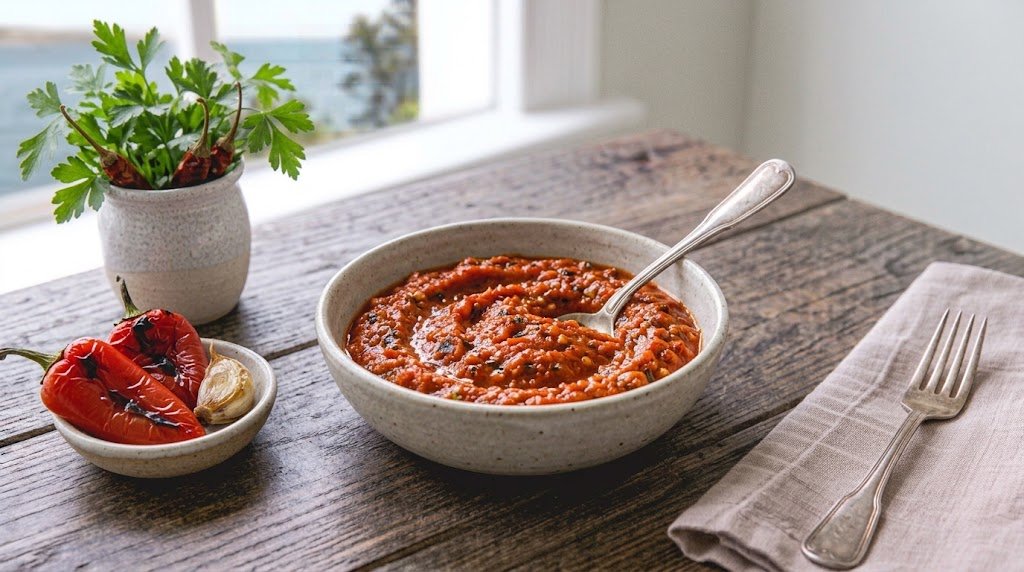
Ajvar is a rich Balkan pepper spread with a soft, slightly smoky texture and a concentrated sweet red pepper flavour. This version combines roasted red bell peppers with eggplant, garlic, olive oil and red wine vinegar. Roast until the vegetables are tender and the pepper skins blister, then peel and simmer the flesh to remove excess moisture. The recipe targets three cups of spread, ideal for bread, grilled meat or vegetables. Allow about one hour and forty-five minutes, including steaming the peppers, and refrigerate or freeze the finished ajvar.
Ajvar roasted pepper spread is a savoury Balkan condiment made here with red bell peppers, eggplant, garlic and olive oil. The roasted vegetables are peeled, chopped and reduced until thick enough to spread. Allow about 105 minutes for a batch targeting three cups, plus cooling as needed.
Ajvar has different regional and household formulas; this pepper-and-eggplant version is consistent with the broader Balkan preparation described by Recipes From Europe.
Recipe card
Roasted Red Pepper and Eggplant Ajvar with Garlic
Roast 35–45 minutes and simmer 25–35 minutes, with a 10-minute covered steam after roasting. Cooling may add time; use the texture cues.
Equipment: Rimmed baking tray, tongs, heatproof bowl with cover, knife, sieve, wide heavy saucepan, spatula and shallow storage containers
Ingredients
Vegetables
Seasoning
Instructions
Roast peppers and eggplant
Preheat conventional oven to 230°C (450°F). Wash the vegetables and prick the eggplant in several places so steam can escape. Place on a rimmed baking tray. Roast about 35–45 minutes, turning carefully as needed, until pepper skins blister and eggplant flesh is very soft. Remove any pieces that finish earlier.
Steam, peel and drain
Place hot peppers in a heatproof bowl and cover for about 10 minutes. When safe to handle, peel off loose charred skins, remove stems and seeds and drain excess juice. Split the softened eggplant and scoop out the flesh, discarding skin and any large tough seeds.
Chop the roasted flesh
Finely chop the drained vegetables or pulse briefly in a processor. Aim for a coarse, spreadable purée rather than a thin liquid.
Simmer to a thick spread
Combine purée, olive oil, minced garlic, salt and pepper in a wide heavy saucepan. Simmer gently uncovered for 25–35 minutes, scraping the bottom frequently as it thickens. Stir in vinegar near the end. A spoon drawn across the pan should leave a visible trail without watery liquid pooling.
Cool and store
Divide the spread into shallow clean containers. Refrigerate promptly within two hours of cooking, or one hour above 32°C/90°F. Serve chilled or at room temperature in small portions; freeze extras. Never pantry-can this formula.
Roast for flavour, then peel
Choose ripe red bell peppers with firm flesh. Their sweetness is more important than adding sugar. Eggplant gives the spread body, so retain the original proportion. Prick the eggplant before roasting to let steam escape. Use a rimmed tray to catch vegetable juices and turn peppers carefully so all sides blister. Remove vegetables when their flesh is soft rather than waiting for every piece to finish together.
Cover the roasted peppers for ten minutes to loosen their skins. Peel when cool enough to handle and discard stems, seeds and large charred patches. Scoop soft eggplant flesh away from its skin. Drain obvious pools of liquid before chopping; adding all the juices can make the reduction unnecessarily long.
Reduce the spread gently
Pulse briefly for a coarse purée or chop by hand. Simmer with oil and garlic in a wide heavy saucepan. A wide pan helps moisture evaporate, but stir more often towards the end because thick vegetable purée can stick. Add the vinegar near the end for brightness. A finished spoonful should hold a soft mound without a ring of liquid. Yield depends on vegetable moisture and reduction, so measure the cooled batch rather than assuming exactly three cups.
Troubleshooting and serving
If ajvar tastes bitter, check whether large pieces of blackened skin remain or garlic has scorched. Reduce heat and avoid scraping burnt residue into the spread. If it is watery, continue simmering uncovered. For a hotter version, add a little roasted chilli. Serve with rye and wheat bread or grilled foods. Compare roasted pepper and tomato lyutenitsa and zucchini caviar with fresh tomatoes for other vegetable spreads.
Refrigeration and freezing only
Vegetable purée with garlic and oil is not automatically shelf-stable. This formula has no tested canning process or measured final acidity; vinegar is used for flavour. Cool in shallow containers, refrigerate within two hours (one hour above 32°C/90°F) at 4°C (40°F) or below, and use within three days. Freeze extra portions for up to three months for quality, leaving expansion room. Thaw in the refrigerator. See USDA leftover guidance. Check ingredient labels and cookware for allergens.
Frequently asked questions
Is ajvar always made with eggplant?
No. Balkan recipes vary; some use peppers alone. This version keeps its original eggplant proportion.
Should I remove every bit of charred skin?
Remove as much loose skin as practical because large blackened pieces can taste bitter. A few small flecks are not a problem.
Why is my ajvar watery?
Vegetables may not have drained enough. Simmer gently uncovered until no liquid pools around the spread.
Can I make it spicy?
Yes, a little roasted hot pepper or chilli is a flavour variation. Keep the original refrigerator storage precautions.
Can I store ajvar for winter?
Freeze portions rather than pantry-canning this unvalidated recipe. Added vinegar does not establish shelf stability.
Can I use a blender?
Yes, pulse briefly to retain texture. Prolonged blending produces a smoother spread.
More recipes to try






Spotted a detail that needs correcting? Contact the FeastDelights editors.