Tomato-Apple Adjika with Carrots and Hot Peppers
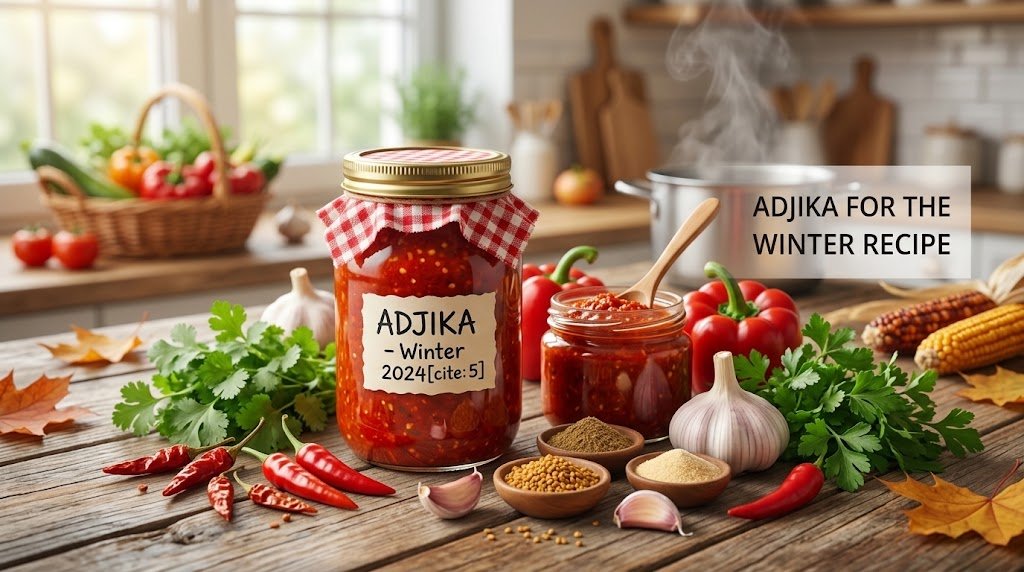
This cooked tomato-apple adjika combines ripe tomatoes, sweet peppers, hot peppers, carrots, apples and garlic in a thick, sweet-tangy sauce. The carrots and fruit soften the sharpness of the chillies without removing their heat. Simmer the blended vegetables until spoonable, then add the measured food-grade vinegar. The batch yields approximately 2–2.5 litres, depending on how much liquid evaporates. Serve it with potatoes, grilled meats or beans. This recipe is for short-term refrigeration or freezing only, not shelf-stable home canning.
Tomato-apple adjika is a cooked, spicy vegetable sauce with the sweetness of apples and carrots, ripe tomatoes and the warmth of hot peppers and garlic. This version produces roughly 2–2.5 litres in about 100 minutes of preparation and cooking. It is intended for refrigeration or freezing, not canning. Use it as a condiment rather than a large portion of sauce if your peppers are particularly hot.
Unlike our Abkhaz-style chilli and garlic adjika, this adaptation uses a substantial tomato, apple and carrot base. The cooked tomato pepper adjika is another distinct refrigerator sauce, and fresh horseradish adjika uses a different uncooked method.
Choosing vegetables and seasoning
Use ripe, sound tomatoes; watery varieties take longer to reduce. Sweet peppers give body and colour, while the 200 g hot pepper portion can produce considerable heat depending on variety. Wear gloves when trimming chillies and avoid touching your face. Remove the inner pale ribs for less heat; seeds may carry capsaicin from surrounding tissue. Carrots and apples add sweetness and texture, so peel carrots and core apples before weighing out the usable produce if practical. The original weights remain the basis for the sauce.
Onion and garlic deepen the flavour. Sugar balances acidity and salt seasons the large batch. Use food-grade vinegar labelled 9% acidity, not cleaning vinegar or concentrated acetic acid. Coriander, fennel and black pepper are optional seasonings. Their amounts can be adjusted for taste because this is not a canning formula.
Equipment and safe preparation
Use gloves, a knife, cutting board, blender or food processor, deep heavy pot, long spoon and shallow heat-safe storage containers. Blend in batches and avoid forcing large carrot pieces into the blender. A deep pot provides space for bubbling sauce; stir with a long spoon to reduce splashes.
Recipe card
Tomato-Apple Adjika with Carrots and Hot Peppers
Simmer 40–50 minutes plus 5 minutes after adding vinegar. Cooling for storage is additional; refrigerate promptly.
Equipment: Gloves, knife, cutting board, blender or food processor, deep heavy pot, long spoon, shallow heat-safe containers and freezer-safe containers.
Ingredients
Produce
Seasoning
Instructions
Wash and trim the produce
Wash tomatoes, peppers, carrots and apples under running water. Peel carrots, onions and garlic; core apples and remove stems from peppers and tomatoes. Wear gloves when handling hot peppers; remove the pale inner ribs and seeds if a milder sauce is desired. Cut produce into blender-sized chunks.
Blend to an even texture
Blend tomatoes, sweet and hot peppers, carrots, apples, onion and garlic in batches. Pulse to a fine or slightly coarse purée. Do not overfill the blender. Transfer each batch into a large heavy pot.
Simmer until spoonable
Add sugar, salt and optional coriander, fennel and black pepper. Bring to a simmer over medium heat, then reduce heat to maintain gentle bubbling. Cook uncovered for 40–50 minutes, stirring frequently and scraping the bottom, until all vegetables are soft and the sauce is spoonably thick. Add a little water only if needed to prevent sticking.
Stir in the vinegar
Stir in the measured 100 ml of food-grade 9% vinegar and simmer for 5 more minutes. Taste a small cooled spoonful carefully because the chillies may be intense. The vinegar is for flavour; it does not establish a safe canning process.
Cool and store cold
Divide the cooked sauce into clean, shallow heat-safe containers. Refrigerate promptly within 2 hours (1 hour above 32°C/90°F), or freeze cooled portions in suitable freezer containers with expansion space. Never pantry-store or home-can this formula.
How to judge the sauce consistency
Simmer uncovered at a moderate pace so steam escapes. Carrot pieces should become soft, and the sauce should coat a spoon without a watery layer separating immediately. Stir more often as the sauce thickens, particularly near the bottom and corners of the pot. If it catches, lower the heat and add a little water. If it remains thin, allow more reduction rather than adding flour or starch. The final yield depends on tomato moisture and pot width.
Why this is not a winter canning recipe
The tomato, carrot, onion, apple and pepper mixture has no documented validated home-canning process. Adding vinegar or sealing hot sauce in jars is not sufficient to establish shelf stability. A safe process depends on the exact formulation and tested processing conditions. The National Center for Home Food Preservation recommends using research-tested salsa recipes for canning. Do not try to adapt this recipe to water-bath, steam or pressure canning, or rely on a sealed lid as evidence of safety. For winter use, freeze portions instead.
Variations and serving
For a less fiery refrigerator sauce, use milder chillies or substitute some sweet pepper. A tart-sweet apple balances the sugar and vinegar. Pulse the vegetables coarsely for a rustic texture or blend smoothly for a more uniform sauce. Spoon a small amount over garlic roasted potatoes, cooked beans, or grilled meat. Keep the condiment separate when serving so each person can choose the amount of heat.
Cooling, storage and freezing
Divide the cooked sauce into shallow containers and refrigerate within two hours, or one hour above 32°C (90°F), following FoodSafety.gov cooling guidance. Store at 4°C (40°F) or colder and use within three days. Freeze surplus in small portions at −18°C (0°F) or colder; leave expansion space and label the date. Use within three months for best quality. Thaw in the refrigerator, stir if liquid separates and use promptly. Use a clean spoon each time. Never keep sealed jars of this sauce in the pantry.
The listed ingredients are plant-based. Check vinegar and spice labels for allergens, including sulfites where applicable, and avoid cross-contact. The original ingredient proportions are retained; the earlier five-day refrigerator recommendation has been shortened as a conservative cooked-food storage precaution.
Frequently asked questions
Is this adjika safe to can for winter?
No. There is no validated canning process for this exact vegetable and fruit blend. Refrigerate or freeze it only.
Does 9% vinegar make this sauce shelf-stable?
No. Vinegar concentration alone does not establish the finished acidity, heat penetration or safe processing conditions.
How can I make a milder sauce?
For this refrigerator-only version, remove the inner ribs of the chillies or replace some hot peppers with sweet peppers. Wear gloves, and taste a cooled sample.
Can I use 5% vinegar?
This recipe specifies 9% food-grade vinegar for its flavour profile. A weaker vinegar changes the taste; regardless of vinegar choice, the sauce must remain refrigerated or frozen.
Why is my adjika watery?
Tomato moisture varies. Simmer uncovered, stirring frequently, until the sauce holds a soft mound on a spoon.
Can I freeze it in jars?
Use freezer-safe straight-sided containers with expansion room. Ordinary glass jars can crack; do not use unsuitable jars.
Is this the same as traditional Abkhaz adjika?
It is an Eastern European-inspired cooked tomato and apple adaptation. Abkhaz-style pepper and garlic adjika has a different composition and texture.
More recipes to try






Spotted a detail that needs correcting? Contact the FeastDelights editors.