Slow-Braised Beef Bourguignon with Bacon and Red Wine
Beef bourguignon is a Burgundy-style beef stew slowly braised in red wine with bacon, onions, carrots and herbs. Large pieces of beef chuck become fork-tender during the gentle oven simmer, while the wine and stock form a deeply savoury sauce. This home-style version makes six generous servings and uses chopped onions rather than a separate pearl-onion garnish. Allow about four hours including browning and braising, or add two to four hours if you choose the optional refrigerated wine marinade.
The slow transformation of beef chuck is what makes this stew worth the time. A hard sear builds flavour at the beginning, but the actual braise needs gentle heat. Red wine, bacon and thyme give this French-inspired version its characteristic richness. This recipe makes six servings using 1.5 kg (about 3.3 lb) of beef chuck. Allow approximately four hours from preparation through the finished sauce, plus two to four additional hours if marinating.
What is beef bourguignon?
Boeuf bourguignon is associated with Burgundy in France, where red wine is a defining part of the regional cooking tradition. France’s tourism website identifies it among the region’s traditional wine-based dishes. This home-style version keeps the beef, bacon, wine and aromatics but uses chopped onions and carrots throughout the braise. It does not require the separate mushroom and pearl-onion garnish found in many versions.
Choosing the beef, wine and vegetables
Beef chuck is useful because its connective tissue softens with time and moist heat. Trim large, hard pieces of exterior fat but leave moderate marbling. Cut cubes roughly 4 cm (1½ inches) across. Smaller pieces may cook faster but are more likely to break apart, while uneven pieces make it difficult to judge doneness. Shin or shoulder can be used if chuck is unavailable, with cooking time adjusted to tenderness.
Choose a dry red wine rather than a sweet dessert wine or heavily salted cooking wine. A Burgundy Pinot Noir is a regional choice, but another balanced dry red can work. There is no need for an expensive bottle. The recipe uses 750 ml of wine and 500 ml of broth; the final flavour depends on their concentration as the stew cooks. Low-salt stock is helpful because bacon contributes salt and the sauce may be reduced later.
Dice the bacon so it renders evenly. Chopped onions soften and add sweetness to the sauce. Cut carrots into substantial slices rather than fine dice, since they will cook for several hours. Tomato paste adds body and depth; briefly cooking it before adding liquid helps distribute its flavour. Bay leaves and thyme should be removed before serving.
Optional marinating and preparation
The wine marinade is optional. If using it, cover the beef with the measured wine and refrigerate for two to four hours. Drain the meat before cooking and pat the surfaces dry. Wet meat releases steam and browns less readily. Reserve the wine only to cook it fully in the stew; it has been in contact with raw beef. The USDA’s marinade guidance recommends boiling used marinade before it is reused. Keep raw-meat utensils separate from serving equipment. Marinating does not replace proper cooking.
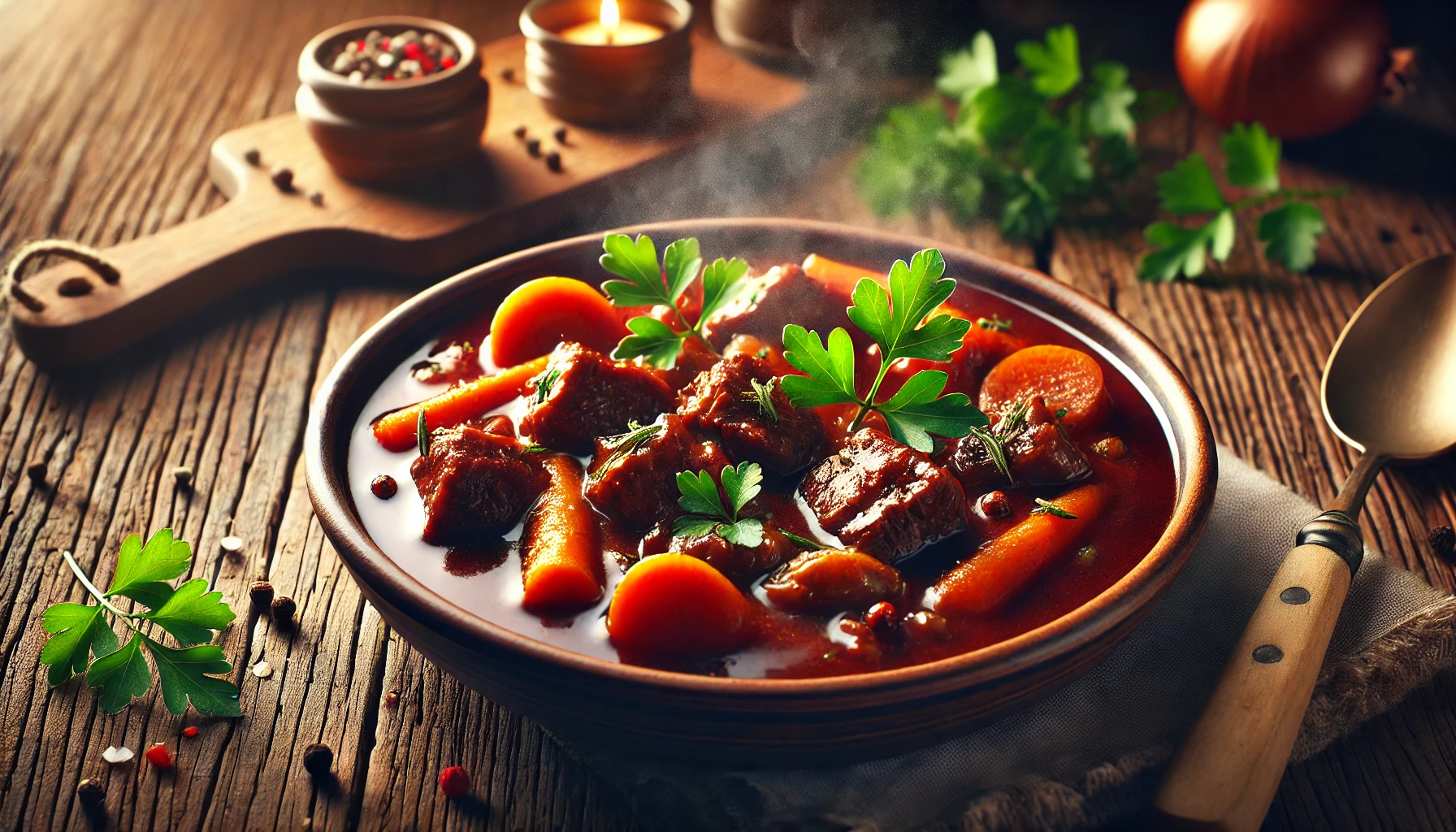
Recipe card
Slow-Braised Beef Bourguignon with Bacon and Red Wine
30 minutes prep, about 30 minutes stovetop browning and finishing, and 2½–3 hours oven braising. Optional 2–4 hour refrigerated marinade is additional, not included in the 4-hour total.
Equipment: Large 6–7 litre oven-safe Dutch oven with lid, knife, separate board for raw beef, tongs, slotted spoon, paper towels, measuring jug, ladle
Ingredients
Meat
Aromatics and seasoning
Braising liquids
Aromatics and seasoning
Instructions
Prepare beef and optional wine marinade
Cut beef into 4 cm (1½-inch) cubes and trim large hard pieces of fat. Optionally cover with the measured wine and refrigerate 2–4 hours at 4°C (40°F) or below. Drain, reserve wine solely for cooking in the stew and pat meat dry with paper towels. Do not use raw-meat marinade as an uncooked sauce. If skipping the marinade, simply pat beef dry.
Brown bacon and beef in batches
Preheat conventional oven to 160°C (325°F). Brown diced bacon in a Dutch oven over medium heat until its fat renders; transfer to a plate. Increase to medium-high heat, add a little measured oil if needed and brown the beef in uncrowded batches on several sides. Transfer each batch to the plate; do not cook the centres through at this stage.
Soften vegetables and tomato paste
Reduce heat to medium. Add onions and carrots and cook about 5 minutes, stirring to release browned residue. Stir in garlic and tomato paste for about 1 minute until fragrant. Add a splash of the measured wine if the base begins sticking.
Braise slowly until fork-tender
Return beef and bacon. Pour in the wine (including reserved marinade if used), broth, bay leaves and thyme. Bring to a boil if using the marinade, then reduce to a gentle simmer. Cover and transfer to the oven for 2½–3 hours, checking near the end; the beef should yield easily to a fork. If still tough, continue in 20–30 minute intervals and add a little hot stock if needed.
Adjust the sauce and serve
Remove bay leaves and thyme stems. If the sauce is thin, lift out tender meat and simmer sauce uncovered on the stovetop until it lightly coats a spoon. Return meat, skim excess fat if desired, taste and adjust salt and pepper. Serve hot.
How to build a deep sauce without burning it
Brown the bacon first to render its fat, then remove it so it does not burn during the beef browning. Use a heavy oven-safe pot and give each piece of beef space. When the pan is crowded, moisture accumulates and the beef simmers rather than browns. Let a crust develop before turning each cube, and work in several batches if necessary. The goal is browned surfaces, not fully cooked centres.
The browned deposits on the bottom of the pot are useful flavour. After the onion and carrot soften, stir in garlic and tomato paste briefly. When the wine goes in, scrape gently with a wooden spoon to dissolve those deposits. Dark brown residue is useful; black, burnt residue is not. If the pot has burnt badly, do not scrape the char into the sauce.
Why the braise should simmer gently
Bring the liquids to a simmer before covering the pot and transferring it to the oven. At 160°C (325°F) the liquid should bubble gently rather than boil violently. The exact timing depends on the cut, cube size and actual oven temperature. Check the beef around two and a half hours: a fork should enter with little resistance and the meat should separate under gentle pressure. If it is firm and rubbery, it generally needs more time rather than higher heat.
Check that the pot has not dried out, particularly if its lid fits loosely. Add hot broth or water if necessary. Once the beef is tender, avoid excessive stirring because the cubes can fall apart. Remove the herbs. If the sauce needs further concentration, lift the beef out temporarily and simmer the sauce uncovered until it lightly coats a spoon. Return the meat before serving and adjust salt only after reducing.
Troubleshooting
Tough beef: continue gentle cooking with enough liquid; do not turn up the oven simply to rush it. Greasy sauce: skim excess rendered fat or chill the stew promptly and remove the firm fat before reheating the next day. Thin sauce: reduce separately from the tender meat. Overly sharp wine flavour: allow adequate braising, then taste the reduced sauce; a little extra unsalted broth may help balance it. Do not add large amounts of sugar automatically. Carrots falling apart: cut thicker slices next time or add a portion later in the braise.
Serving and variations
Mashed potatoes, buttered noodles or crusty bread help carry the sauce. Add steamed green beans or a simple green salad for contrast. If you like mushrooms and small onions, brown them separately and add near the end, rather than overcrowding the pot with raw mushrooms during the beef sear. They are optional additions, not part of the measured base recipe.
For a different flavour profile, try our slow-simmered beef stew with paprika, beef and barley stew, or beef and stout stew. A wine-free version of this recipe can use beef stock in place of wine and a little vinegar to balance the finished sauce, but its flavour will be different. Cooking with wine does not guarantee the finished dish contains no alcohol.
Make ahead, storage and allergens
This stew is suitable for making a day ahead. Refrigerate portions in shallow containers at 4°C (40°F) or below within 2 hours (1 hour above 32°C/90°F), for up to 3 days. Freeze airtight for up to 3 months for best quality. Thaw in the refrigerator and reheat to 74°C (165°F), stirring gently and adding stock if needed. Divide the large batch rather than leaving a full Dutch oven to cool slowly at room temperature. Contains pork and wine; wine may contain sulphites, and broth or bacon may contain celery, wheat, milk or other allergens depending on the product. Check labels and choose accompaniments according to dietary requirements.
Serve the beef when it is tender and the sauce has reached the consistency you prefer.
Frequently asked questions
What cut of beef is best?
Chuck or shoulder has connective tissue that softens during a long, moist braise. Shin or boneless short rib can work but may need longer. Lean steak is less suitable.
Do I have to marinate the beef?
No. The optional 2–4 hour refrigerated wine marinade adds flavour but is not essential; the long braise is the principal tenderising step.
Why is my beef still tough after three hours?
Connective tissue may not yet have softened. Keep the pot at a gentle simmer, check that sufficient liquid remains and continue cooking until fork-tender.
Can I make beef bourguignon without wine?
Use unsalted beef stock for the wine and add a little vinegar at the end to taste. This produces a different alcohol-free beef stew, not the same Burgundy wine flavour.
Where are the mushrooms and pearl onions?
Many versions use both as a separate garnish. This version retains the original chopped onion and carrot formula. You can sauté mushrooms and small onions separately and add them near the end as an optional variation.
Why is the sauce thin?
A tightly covered pot loses little liquid. Remove tender beef and reduce the sauce uncovered, then return the meat. Avoid boiling the beef hard during reduction.
Does all the alcohol disappear during cooking?
No. A long braise reduces alcohol, but does not guarantee its complete removal. Use an alcohol-free adaptation if that matters.
Can I make it a day ahead?
Yes. Chill promptly in shallow containers. Remove solidified excess fat if desired, then reheat thoroughly before serving.
More recipes to try






Spotted a detail that needs correcting? Contact the FeastDelights editors.