Yeast Doughnuts Made with Water
A simple yeast dough for soft homemade doughnuts, made with warm water rather than milk.
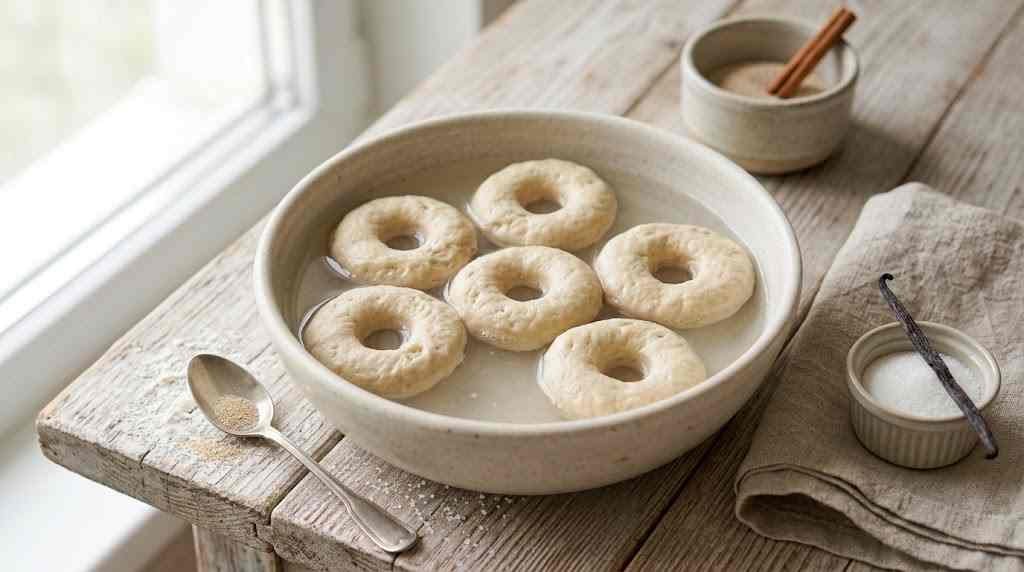
Yeast doughnuts made with water start with a simple yeast mixture, flour, sugar, oil and a little salt. Warm water helps dissolve the yeast and sugar; after about 10 minutes the mixture should look foamy before it is added to the dry ingredients. Knead until a soft dough forms, then leave it covered in a warm place for one to one and a half hours, until doubled. Roll the dough about one centimetre thick, cut the doughnut shapes and let them rest again before frying. Cook each side for one to two minutes in hot oil until golden, then drain on paper towels. Once cooled, finish with icing sugar or glaze. The dough uses water rather than milk, making this a useful pantry-style version of homemade doughnuts.
Recipe card
Yeast Doughnuts Made with Water
Equipment: Mixing bowl, rolling pin, doughnut cutter or two round cutters, deep heavy pan and thermometer.
Ingredients
Instructions
Activate the yeast
Dissolve dry yeast and sugar in warm water. Leave for about 10 minutes until foamy.
10 minMix the dough
Combine flour, salt and vanilla sugar. Add the yeast mixture and vegetable oil. Knead into a soft dough.
Let the dough rise
Cover and leave in a warm place for 1–1.5 hours, until doubled.
90 minShape and rest
Roll the dough about 1 cm thick and cut doughnut shapes. Leave them to rest for 20–30 minutes.
25 minFry
Heat oil in a deep pan. Fry the doughnuts for 1–2 minutes on each side until golden. Drain on paper towels.
20 minFinish
Dust cooled doughnuts with icing sugar or add glaze.
Yeast Doughnuts Made with Water
A simple yeast dough for soft homemade doughnuts, made with warm water rather than milk.
Helpful tips
- Use warm, not hot, water when dissolving the yeast and sugar.
- Wait for the yeast mixture to become foamy before mixing the dough.
- Let the covered dough rise until doubled, not just for a fixed time if the room is cool.
- Fry in small batches and drain the doughnuts on paper towels before finishing.
Serving ideas
- Dust with icing sugar after the doughnuts have cooled.
- Add a simple glaze for a sweeter finish.
- Serve warm with tea or coffee.
- Offer fresh fruit alongside the doughnuts.
Storage
Doughnuts taste best soon after frying. Cool before covering; refrigerate promptly if a perishable filling or topping is added.
How to tell when it is ready
The yeast should foam during activation, the first dough rise should roughly double its volume, and the fried doughnuts should be evenly golden outside without raw dough inside.
Tips
- Use warm, not hot, water when dissolving the yeast and sugar.
- Wait for the yeast mixture to become foamy before mixing the dough.
- Let the covered dough rise until doubled, not just for a fixed time if the room is cool.
- Fry in small batches and drain the doughnuts on paper towels before finishing.
Troubleshooting
- If the yeast does not foam, check its freshness and the water temperature before mixing the flour.
- If the doughnuts brown too quickly, lower the oil heat and test one cut piece before frying a full batch.
Substitutions
- Choose either icing sugar or a glaze for the finish; add either after the fried doughnuts have drained and cooled enough to hold it.
Serving suggestions
- Dust with icing sugar after the doughnuts have cooled.
- Add a simple glaze for a sweeter finish.
- Serve warm with tea or coffee.
- Offer fresh fruit alongside the doughnuts.
Make ahead
Allow time for both rises before frying. Rise time varies with room temperature; shape the dough only when the first rise has approximately doubled it.
Storage
Doughnuts taste best soon after frying. Cool before covering; refrigerate promptly if a perishable filling or topping is added.
Allow the shaped doughnuts a second short rest before frying for a softer texture.
More recipes to try
Spotted a detail that needs correcting? Contact the FeastDelights editors.